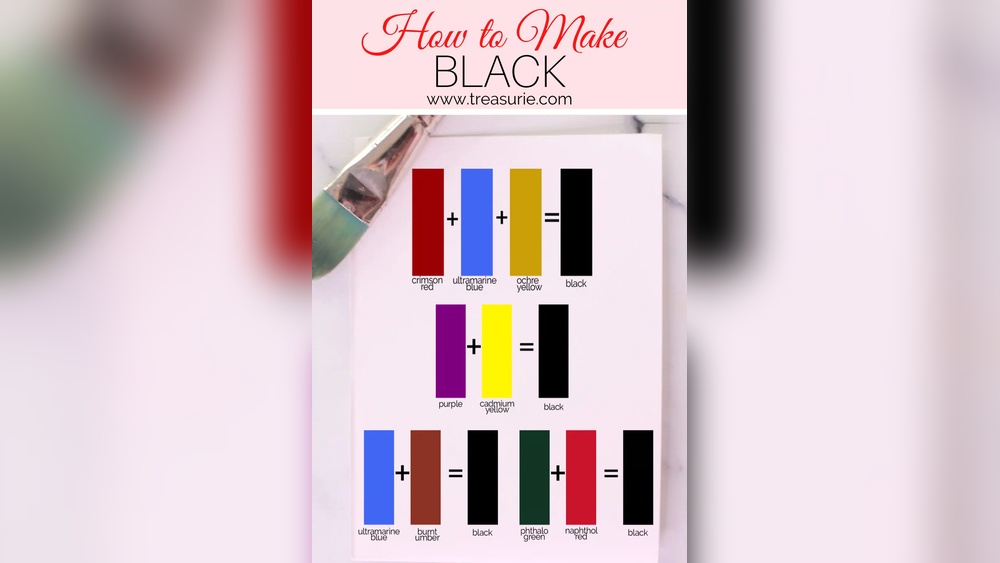
Do you want to create the perfect black color but don’t know where to start? Whether you’re mixing paints for art, design, or DIY projects, knowing how to make black yourself gives you full control over its tone and depth.
Black isn’t just one shade—it can lean warm, cool, or even have subtle hints of other colors. In this guide, you’ll discover simple, effective ways to mix black using colors you probably already have. By the end, you’ll be able to craft rich, custom blacks that suit your exact needs.
Keep reading to unlock the secrets of making your own black color!
Colors To Mix For Black
Creating the color black by mixing paints involves combining specific colors. True black is hard to achieve by mixing just two colors. Yet, mixing certain color pairs produces very dark shades close to black. These dark mixtures add depth and richness to your artwork.
Understanding which colors to mix helps you control the tone and warmth of the black shade. Experimenting with different combinations lets you find the perfect black for your project.
Blue And Brown
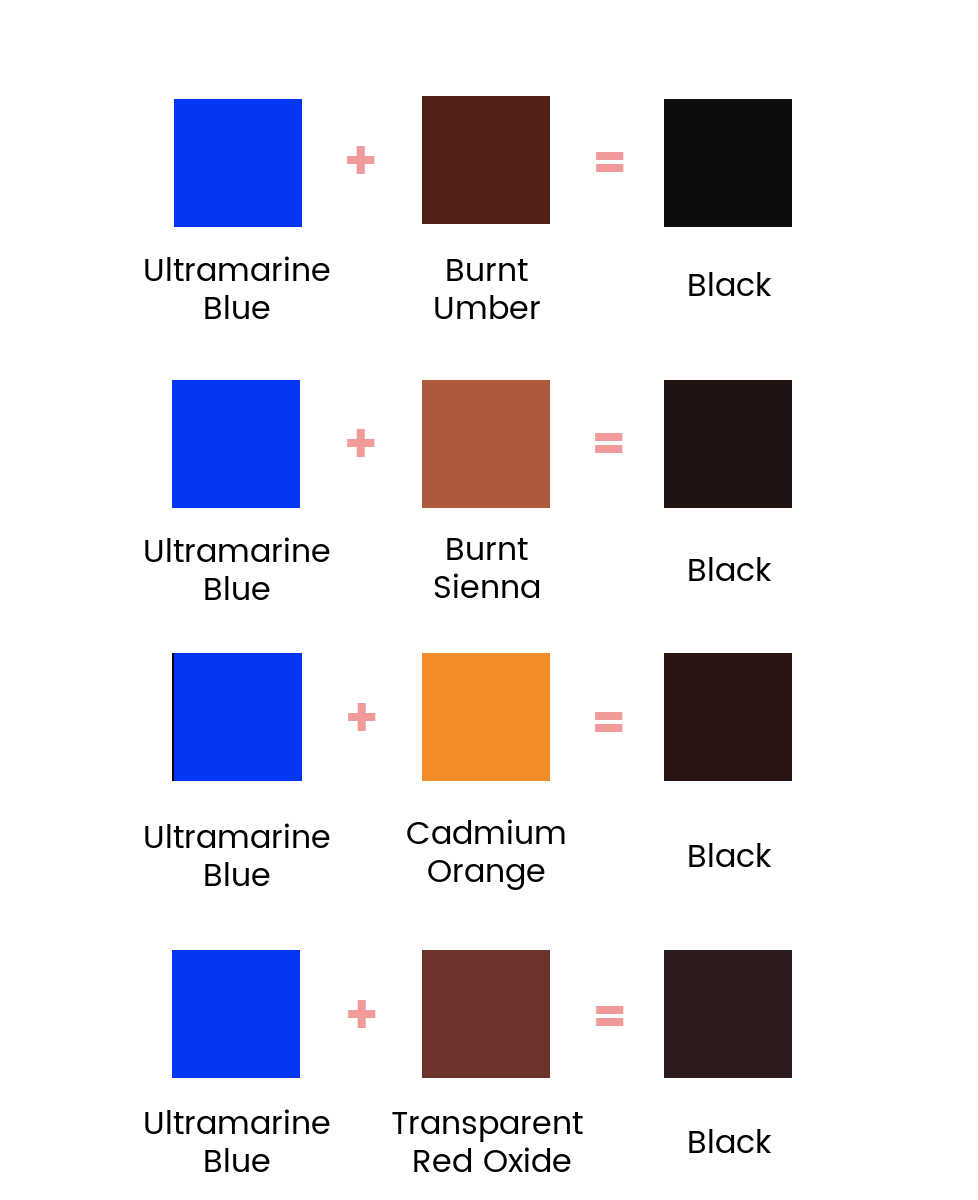
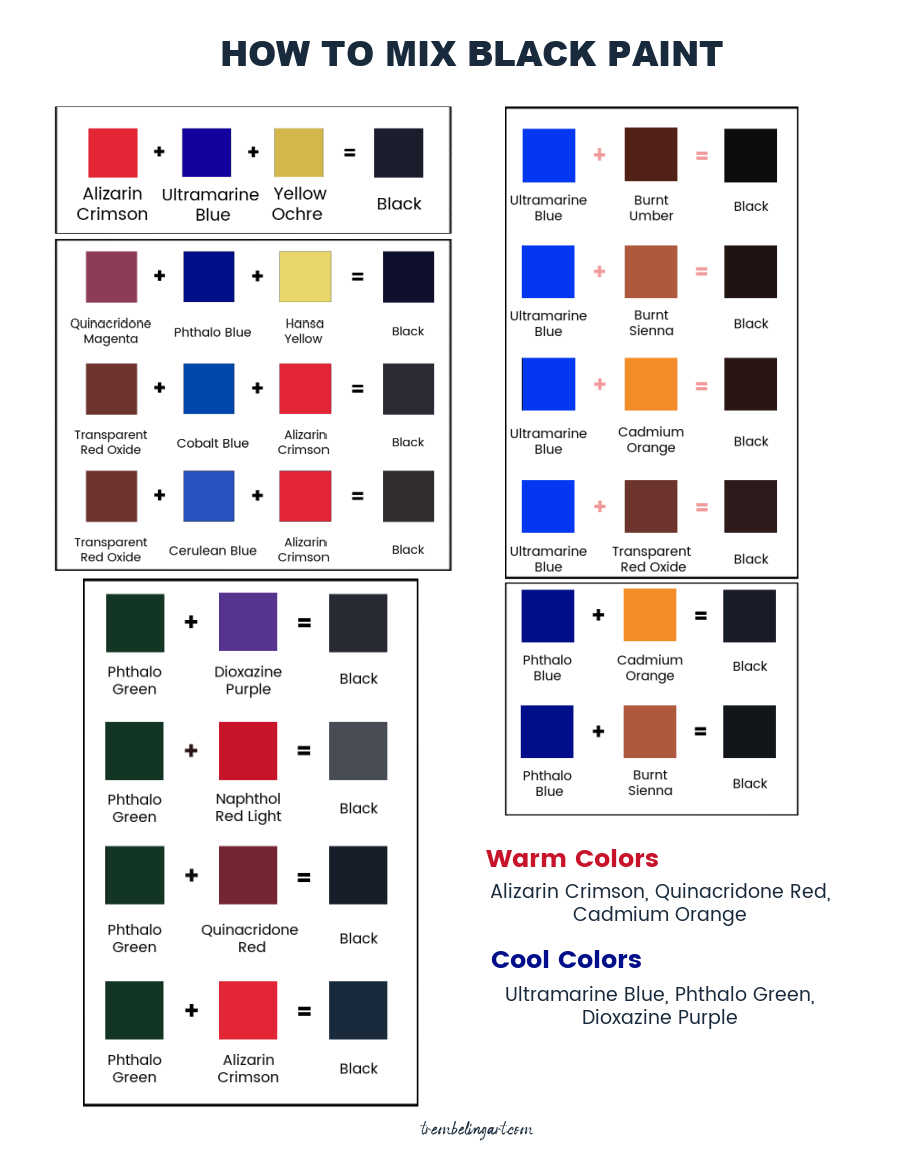
Mixing a dark blue like ultramarine with a dark brown such as burnt umber creates a rich black. Adjusting the amounts changes the black’s warmth or coolness. This mix is popular for painting shadows and dark areas.
Complementary Colors
Colors opposite on the color wheel produce dark near-black shades when mixed. Combining these colors balances their brightness, resulting in deep tones. Use complementary pairs to create natural-looking blacks.
Blue And Orange
Mixing blue and orange yields a dark color close to black. This combination blends cool and warm tones effectively. It is useful for making shadows with a slight color hint.
Red And Green
Red and green also mix into a dark shade near black. This pair combines a warm and a cool color to create a muted dark tone. It works well for earthy and natural color palettes.
Yellow And Purple
Mixing yellow and purple produces a dark color leaning towards black. These complementary colors neutralize each other’s brightness. This mixture is helpful for subtle dark shades in paintings.
Using Primary Colors
Using primary colors to create black is a classic technique in painting and color mixing. Primary colors—red, blue, and yellow—are the base of all other colors. By blending these in the right amounts, you can produce a dark, nearly black shade without using black paint.
This method works well for artists and hobbyists who want natural black tones. It also helps to understand how colors interact and how to control the darkness and warmth of your black color.
Mixing Red, Blue, And Yellow
Start by mixing equal parts of red, blue, and yellow paint. This combination often creates a muddy brown. Adjust the amount of each color to darken the mix. More blue can cool the color, while more red or yellow adds warmth. Keep adding small amounts until the color looks almost black.
Using Complementary Colors From Primaries
Complementary colors are opposite each other on the color wheel. Mixing these creates a dark shade. For example, mix red and green or blue and orange. Since green and orange come from primaries, you first mix yellow with blue or red to create them. Then, blend them to get near black.
Adjusting The Shade And Tone
Once you have a dark base, change the tone by adding a little more of one primary color. This adjustment can make the black warmer, cooler, or neutral. Experiment with small amounts to avoid shifting the color too much. This control gives you a unique black suited to your artwork.
Mixing Complementary Colors
Mixing complementary colors is a simple way to create dark shades close to black. Complementary colors sit opposite each other on the color wheel. When combined, they neutralize each other. This results in deep, rich tones that can look like black. You cannot make true black with just two colors, but these combinations get very close.
Blue And Orange
Blue and orange are strong complementary colors. Mixing them in equal parts usually creates a dark, muted color. You can adjust the mix to make it cooler or warmer. Using a dark blue like ultramarine and a bright orange gives a rich, near-black shade. This mix is popular for artists who want a dark tone without pure black.
Red And Green
Red and green are another pair of complementary colors. Mixing them produces a deep, dark color with a slight brownish tint. The shade depends on the tones of red and green used. For example, mixing a bright red with a forest green creates a near-black color. This mix is useful for natural and earthy dark colors.
Yellow And Purple
Yellow and purple also sit opposite on the color wheel. Mixing these two produces a dark, muted color with a hint of brown or gray. The exact shade changes based on the yellow and purple tones. A bright yellow mixed with a deep purple often results in a near-black color. This mix is less common but effective for creating dark shades.
Credit: trembelingart.com
Combining Blue And Brown
Combining blue and brown is a popular way to create a deep, dark color close to black. This mix uses common paint colors and simple steps. It is useful for artists who want a natural black shade without pure black paint.
Blue adds cool tones, while brown brings warmth. Together, they balance each other to form a rich dark color. Adjusting the amounts changes the shade from cooler to warmer black.
How To Mix Blue And Brown For Black
Start with equal parts of dark blue and brown paint. Use a dark blue like ultramarine or navy. For brown, try burnt umber or burnt sienna.
Mix the two colors on a palette until smooth. Add more blue for a cooler black. Add more brown for a warmer black. Test small amounts first to avoid waste.
Choosing The Right Shades
Use strong, dark blue and brown shades for best results. Light or bright colors will not produce a dark black. Ultramarine blue and burnt umber are ideal choices.
Experiment with different browns to see how the color changes. Burnt sienna gives a reddish tone. Raw umber creates a cooler dark color.
Tips For A Rich Black Color
Mix slowly and test the color on paper or canvas. Adjust the ratio to suit your project’s needs. Thin layers of paint help blend the colors evenly.
Keep your palette clean to avoid muddy colors. Use a palette knife for better mixing. Store mixed paint in an airtight container for later use.
Achieving True Black
Achieving true black can be tricky using paint or pigments. True black absorbs all light and reflects none. Most color mixes only create very dark shades, not pure black. Knowing the right methods helps you create deep, rich black tones for your art or design projects.
Mixing the right colors and adjusting amounts is key. Some combinations come closer to true black than others. Experiment with these common mixes to find the perfect black for your needs.
Blue And Brown
Mix a dark blue like ultramarine with a dark brown such as burnt umber. This mix creates a rich, dark color close to black. Adjust the ratio to make the black warmer or cooler. Adding more blue gives a cooler black, while more brown warms it up.
Complementary Colors
Mix colors opposite each other on the color wheel. For example, blue and orange or red and green. These pairs cancel out brightness and produce very dark shades. The result is not pure black but a deep near-black color. It works well for shadows and dark tones.
Blue And Orange
Combine blue and orange to get a dark, muted color. Adjust how much of each you use to control the shade. This mix can produce a neutral dark that looks almost black in dim light.
Red And Green
Mix red and green to create a dark color with a slightly warm tone. This pair also produces a near-black shade. Use it in art to add depth without using pure black paint.
Adjusting Warm And Cool Blacks
Adjusting warm and cool blacks adds depth and character to your artwork or design. Not all blacks are the same. Some blacks carry warm tones, while others lean cool. Knowing how to tweak these tones helps create the perfect black for your project.
Warm blacks have hints of red, brown, or orange. They feel cozy and rich. Cool blacks, on the other hand, include blue or green undertones. They appear crisp and modern. Small color adjustments can shift your black from warm to cool or vice versa.
Adding Warmth To Black
To make black warmer, mix in small amounts of red, brown, or orange paint. Burnt sienna or burnt umber are great choices. Add these colors slowly to avoid overpowering the black. The result is a soft, inviting black with a warm glow.
Creating Cool Black Tones
Mix blue or green into black to cool it down. Ultramarine blue works well for this. A touch of phthalo green can also add a cool tint. These cool blacks feel calm and sleek. They work well for modern or tech-inspired designs.
Balancing Warm And Cool Blacks
Sometimes, you want a black that is neither too warm nor too cool. Mix small amounts of warm and cool colors into your black base. Adjust the ratio until you find a balanced black. This custom black suits many styles and settings.
Tips For Perfect Shades
Creating the perfect shade of black requires more than just mixing colors randomly. It takes attention to detail and careful adjustment of color proportions. These tips help you achieve deep, rich black tones that suit your project perfectly.
Experimenting with different color combinations can give you unique shades of black. Small changes in the mix can shift the tone from warm to cool or from soft to intense.
Mix Dark Blue And Brown For Rich Black
Start by mixing a dark blue like ultramarine with a dark brown such as burnt umber. This blend creates a strong black shade with a natural feel. Change the amounts to make the black warmer or cooler depending on your need.
Use Complementary Colors For Near-black Shades
Mix colors opposite each other on the color wheel. Blue and orange or red and green work well. These pairs produce very dark, almost black shades that add depth to your palette.
Adjust Proportions Slowly
Add small amounts of one color at a time. Mix well before adding more. This method prevents overshooting the perfect shade and keeps your black balanced.
Test On Different Surfaces
Colors can look different on paper, canvas, or fabric. Always test your black mix on the material you will use. This helps ensure the shade looks right in the final piece.
Credit: trembelingart.com
Common Mixing Mistakes
Mixing colors to make black can be tricky. Many beginners make simple mistakes that stop them from getting true black. These errors can lead to muddy colors or shades that look brown or gray instead of black. Understanding common mixing mistakes helps create a rich, deep black color every time.
Using Only Two Colors
Many try to make black with just two colors. True black is hard to achieve this way. Mixing only two colors often creates dark browns or grays. Use three or more colors for better results. Combining complementary colors and dark tones works best.
Ignoring Color Proportions
Wrong color amounts cause dull or muddy black. Too much of one color can shift the shade. For example, too much red makes the black look brownish. Adjust the amounts slowly. Small changes make a big difference in the final color.
Using Bright Or Light Colors
Bright colors do not create black. Light colors only lighten the mix. Avoid using white or pastel colors when mixing black. Dark, rich colors like ultramarine blue and burnt umber work well. These colors help build a solid black tone.
Not Mixing Thoroughly
Uneven mixing causes patchy black with streaks. Mix colors well to blend them completely. Use a palette knife or brush to combine colors fully. Proper mixing ensures a smooth, consistent black color.
Black Variations With Tints
Black variations with tints offer a way to soften pure black by adding small amounts of lighter colors. This creates shades that are less harsh and more versatile. These tinted blacks bring depth and subtlety to art, design, and decor.
By mixing black with white or other light colors, you get a range of grays and muted tones. These variations work well for backgrounds, shadows, and textures. They add interest without overwhelming other colors.
What Are Tints Of Black?
Tints of black are created by adding white or light colors to black. This lightens the black and creates softer shades. The result is a range of grays with different warmth or coolness.
How To Make Gray Tints
Mix black paint with white paint slowly. Add a little white at a time to reach the desired gray. More white makes the shade lighter and less intense.
Warm Black Tints
Add small amounts of warm colors like red, yellow, or orange to black. This creates warm black tints with a brown or reddish tone. These tints feel cozy and inviting.
Cool Black Tints
Mix black with cool colors like blue or green. This makes cool black tints with a bluish or greenish hint. These tints give a calm and modern look.
Using Black Tints In Design
Black tints work well for backgrounds and shadows. They add depth without using full black. Tinted blacks also help balance bright colors in a design.

Credit: drawlish.com
Tools And Materials Needed
Before starting to make the color black, gather the right tools and materials. Having everything ready helps you create a rich, deep black with ease. This section lists the basic items needed for mixing black paint or color.
Paints Or Pigments
Choose dark colors like blue, brown, red, green, or orange. These colors combine well to form near-black shades. Use high-quality paints for better results.
Mixing Palette
Use a flat surface like a plastic or wooden palette. This space lets you blend colors smoothly. Clean palettes prevent unwanted color mixing.
Palette Knife Or Brush
Use a palette knife or brush to mix colors. A palette knife helps blend thick paints evenly. Brushes work well for liquid or thin paints.
Containers For Water Or Medium
Keep a small container of water or paint medium nearby. It helps adjust paint thickness and smooth blending. Clean water prevents color contamination.
Paper Towels Or Cloth
Have paper towels or a cloth for cleaning tools. Wipe brushes and palette knives between mixing different colors. This keeps colors pure and sharp.
Protective Covering
Cover your workspace with newspaper or plastic. This protects surfaces from paint spills and stains. Easy cleanup saves time and effort.
Frequently Asked Questions
What Two Colors Make Black?
Mix blue and orange or red and green to create a very dark, near-black color. Mixing ultramarine blue with burnt umber also works well. True black requires all three primary colors mixed equally.
What Colors Make Black Coloring?
Mix equal parts of red, blue, and yellow to create black. Alternatively, blend complementary colors like blue and orange or red and green for near-black shades. Mixing dark blue and dark brown also produces a rich black tone.
What Colors Make You Black?
Mix equal parts of red, blue, and yellow to create true black. Alternatively, blend complementary colors like blue and orange or red and green for dark, near-black shades. Mixing dark blue with dark brown also produces rich black tones.
Do Green And Purple Make Black?
Green and purple mixed do not create true black. They produce a dark, muted color close to black but not pure black. Mixing all three primary colors—red, blue, and yellow—in equal parts yields a better black shade.
What Two Colors Make Black Paint?
Mixing blue and orange or red and green creates a very dark, near-black color.
Can I Make Black By Mixing Only Two Colors?
True black is hard to make with two colors, but dark shades close to black are possible.
How To Create Black Using Primary Colors?
Mix equal parts of red, blue, and yellow to get a muddy black shade.
Which Complementary Colors Make Black?
Pairs like blue and orange or red and green produce near-black shades when mixed.
How To Adjust Black’s Warmth Or Coolness?
Add more brown for warmth or more blue for a cooler black tone.
Is Mixing Dark Blue And Brown Effective For Black?
Yes, ultramarine blue combined with burnt umber or burnt sienna gives a rich black.
Conclusion
Creating black color takes practice and patience. Mixing two complementary colors gives a dark shade close to black. Using all three primary colors in equal parts creates a true black. Adjust the amounts to find the perfect tone. Experiment with blue, brown, orange, red, green, and yellow for different blacks.
Keep trying until you get the depth you want. This simple guide helps you mix black easily at home or in art projects. Enjoy exploring colors and making your own black shades.