
Have you ever stopped to wonder exactly how many colors exist around you? It might seem like a simple question, but the answer is far from straightforward.
Your eyes can see millions of shades, yet you probably only name a handful every day. What if I told you that the world of color is much bigger—and more fascinating—than you think? You’ll discover why the number of colors is practically endless, how your brain interprets them, and why some colors remain unnamed.
Ready to see the rainbow in a whole new light? Keep reading to unlock the vibrant secrets hiding in plain sight.
Color Spectrum Basics
The color spectrum is the range of all colors visible to the human eye. It shows how light breaks into different colors. These colors form a natural order, often seen in rainbows or prisms.
Understanding the basics of the color spectrum helps explain how many colors exist. It reveals how colors blend and how we perceive them.
What Is The Color Spectrum?
The color spectrum is a continuous band of colors. It ranges from red to violet. Each color has a specific wavelength of light. Red has the longest wavelength, violet the shortest. Between these, other colors like orange, yellow, green, and blue appear.
The Seven Main Colors
Traditionally, the color spectrum has seven main colors. They are red, orange, yellow, green, blue, indigo, and violet. These colors show the purest form of visible light. They appear clearly in natural phenomena like rainbows.
How Light Creates Colors
Light is made of waves. Different wave lengths create different colors. When light passes through a prism, it bends. This bending splits light into many colors. Our eyes detect these waves as colors.
Why Colors Blend Continuously
Colors in the spectrum do not have clear edges. They flow smoothly from one to the next. This means infinite shades exist between the main colors. Our eyes can see many of these subtle differences.
Visible Light And Wavelengths
Visible light is the small part of the electromagnetic spectrum that humans can see. It contains many colors, each defined by its unique wavelength. Wavelengths measure the distance between light waves. They determine the color we perceive with our eyes.
Each color in visible light has a specific range of wavelengths. These ranges create the colors of the rainbow and many shades between them. Understanding wavelengths helps us grasp how many colors are visible to humans.
What Is Visible Light?
Visible light is a type of energy that travels in waves. These waves have different lengths, called wavelengths. The human eye can detect wavelengths between about 380 and 700 nanometers. This range covers all colors we can see.
Wavelengths And Color
Colors depend on wavelength size. Longer wavelengths appear red. Medium wavelengths appear green. Shorter wavelengths appear violet. The colors blend smoothly from one to another, creating a full spectrum.
The Spectrum Of Colors
The visible spectrum includes red, orange, yellow, green, blue, indigo, and violet. These colors are often called the rainbow colors. Each has a distinct wavelength range. Together, they form the colors we see every day.
How Wavelengths Affect Color Perception
Light wavelength changes how we see color. Different wavelengths reflect off objects differently. Our eyes and brain work together to interpret these signals. This process creates the vibrant world of colors around us.
Primary And Secondary Colors
Colors shape how we see the world. Understanding primary and secondary colors helps us grasp the basics of color theory. These colors form the foundation for all other hues we recognize.
Primary Colors
Primary colors are the building blocks of color mixing. They include red, blue, and yellow. These colors cannot be made by mixing other colors. All other colors come from combining these three.
Artists and designers use primary colors to create a wide range of shades. Each primary color has a unique wavelength of light. This makes them distinct and pure.
Secondary Colors
Secondary colors are made by mixing two primary colors. The three secondary colors are green, orange, and purple. Green comes from mixing blue and yellow. Orange is a mix of red and yellow. Purple results from combining red and blue.
These colors expand the palette and add variety. They help in creating more complex and rich color schemes. Secondary colors often appear in nature and art, making them familiar and appealing.
The Role Of Human Vision
Human vision shapes how we see and understand colors around us. Our eyes do not just detect light. They interpret it through complex processes inside the brain.
Colors exist because of the way our eyes respond to light waves. Different wavelengths create different colors in our perception. This makes color a personal experience, unique to each person.
How The Eye Detects Color
The human eye uses two main types of cells to see. Rods detect light and dark, while cones detect color. There are three types of cones, each sensitive to red, green, or blue light.
These cones work together to mix colors. They send signals to the brain, which creates the full spectrum of colors we see. This process is called color vision.
Limitations Of Human Color Perception
Not all colors are visible to humans. Some colors exist beyond what our eyes can detect. For example, ultraviolet and infrared light are invisible to us.
Color blindness is another limitation. It affects how some people see colors, often mixing red and green. This shows how vision varies among individuals.
How Many Colors Can We See?
Humans can see about one million different colors. This number comes from how cones respond to light combinations. Small changes in light create new shades.
Lighting, background, and the observer’s eyes change how colors appear. Because of this, the number of colors can seem endless.
Color Perception Variations
Color perception varies widely among people. What one person sees as blue, another might see as greenish-blue. This difference happens because eyes and brains process colors uniquely. Light, surroundings, and even culture affect how colors appear to us.
These variations mean the number of colors we can see is not fixed. It depends on many factors, making the total number of colors almost endless. Understanding these differences helps explain why color naming is so complex.
Individual Differences In Color Vision
Not everyone sees colors the same way. Some people have color blindness, which changes how they perceive colors. Others may see more shades because of extra types of color receptors in their eyes. These differences create a wide range of color experiences.
Impact Of Lighting On Color Perception
Lighting changes how colors look. A red apple appears different in sunlight than under a fluorescent lamp. Shadows, brightness, and color temperature all influence what we see. This means the same object can show many colors in different lights.
Cultural Influence On Color Naming
Languages do not all name colors the same way. Some cultures have fewer color words, grouping many shades under one name. Others have many words for small color differences. This affects how people think about and recognize colors.
Infinite Shades And Tones
Colors blend in countless ways, creating endless shades and tones. Light, surroundings, and eyes shape how we see colors. While basic colors are few, the variety around us feels infinite.
Colors are not limited to a simple list. Every color can have many shades and tones. These variations come from mixing colors with white, black, or gray. This creates lighter or darker versions of the same color.
Our eyes can see millions of these tiny differences. Each shade changes how a color feels and looks. This makes the world vibrant and full of endless color possibilities.
Why Shades And Tones Matter
Shades and tones help artists and designers express emotions. A dark shade might feel serious or calm. A bright tone feels happy or energetic. This helps us communicate without words.
In nature, shades and tones show depth and distance. Mountains look blue from far away because of light and air. This effect adds beauty and realism to what we see.
How Light Changes Colors
Light affects how we see color shades and tones. A color under sunlight looks different than under a lamp. The angle and type of light change the color’s appearance.
This is why colors can look warm or cool depending on the lighting. It makes every moment unique and full of color surprises.
Colors Beyond Basic Names
We use simple names like red or blue daily. But colors include many subtle differences we don’t name. These small changes make each color unique.
Technology helps us see and create these fine shades. Screens and printers mix colors to show millions of tones. This keeps expanding how we experience color.
Named Colors Across Cultures
Colors have names in every culture. These names help people describe what they see daily. But the number and type of named colors vary greatly around the world.
Some cultures have only a few color names. Others have many detailed names. This shows how humans connect language with the world around them.
Basic Color Names In Different Languages
Most languages start with basic color names like red, blue, and green. These are often the first colors a child learns. Some languages group colors differently. For example, some do not separate blue and green.
Unique Color Names And Shades
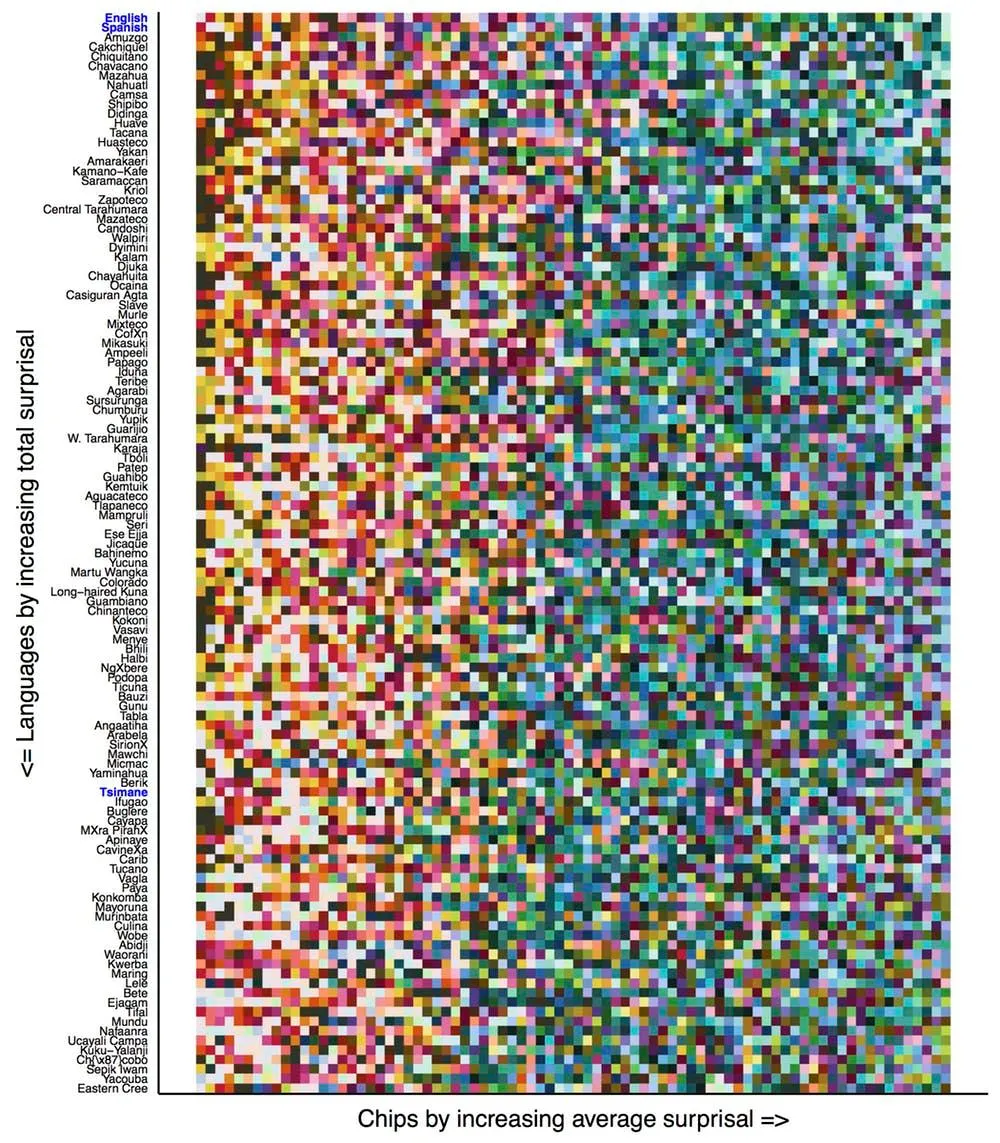
Some cultures name colors that others do not. The Himba tribe in Namibia, for instance, has many names for green shades. This helps them spot details in nature better. Meanwhile, Russian has separate names for light blue and dark blue.
Colors And Cultural Meaning
Color names often carry special meanings. In Japan, the color “mizu” means a soft blue-green, linked to water. In India, “saffron” is a sacred orange shade. These names show how culture shapes color perception.
How Language Shapes Color Perception
Studies show language can change how people see colors. People may find it easier to tell apart colors if their language has different names. This means color is not just physical but also learned through culture.
Credit: www.smithsonianmag.com
Scientific Methods To Measure Colors
Scientific methods help us understand and measure colors accurately. These methods use tools and systems to identify colors beyond what the eye can see. They allow scientists to study color in a precise way.
Measuring colors involves looking at light waves, color codes, and how humans perceive colors. Each method reveals different details about colors and their properties.
Colorimetry: Quantifying Color
Colorimetry measures colors using numbers. It uses devices called spectrophotometers to capture light reflected or emitted by objects. These devices break down light into wavelengths and measure their intensity. This data translates into color values that computers and scientists can read.
Colorimetry helps compare colors under different lights. It is useful in industries like printing and textiles where exact color matching is important.
Visible Spectrum Analysis
The visible spectrum shows colors that human eyes can see. Scientists use instruments to split white light into its colors. Each color corresponds to a specific wavelength. Red has the longest wavelength and violet the shortest.
This analysis explains why we see millions of colors. Small changes in wavelength create new colors. It also helps define primary colors and their mixtures.
Color Spaces And Models
Color spaces organize colors in a system. Common models include RGB, CMYK, and CIE XYZ. RGB mixes red, green, and blue light to create colors on screens. CMYK uses cyan, magenta, yellow, and black for printing.
The CIE XYZ model is based on human vision. It maps all visible colors into a three-dimensional space. These models help standardize color representation worldwide.
Psychophysical Methods
Psychophysical methods study how humans perceive color. They involve experiments where people compare and describe colors. This helps scientists understand color vision and differences in color perception.
These methods reveal why some people see colors differently. They also help create colorblind-friendly designs and improve color accessibility.
Colors Beyond Human Sight
Colors beyond human sight exist in the vast electromagnetic spectrum. These colors cannot be seen by our eyes. They include ultraviolet, infrared, and other wavelengths.
Our eyes detect only a small portion called visible light. This range includes all the colors we know, from red to violet. But many colors lie outside this range.
Ultraviolet Light: Colors Beyond Violet
Ultraviolet (UV) light has shorter wavelengths than violet. Humans cannot see UV light without special tools. Some animals, like bees, can see UV colors. These colors help them find flowers and food.
Infrared Light: Colors Beyond Red
Infrared (IR) light has longer wavelengths than red. We cannot see infrared colors but can feel them as heat. Night-vision cameras use infrared to show images in the dark. Many animals use infrared to sense their environment.
Other Invisible Colors In The Spectrum
Beyond ultraviolet and infrared, other waves exist. X-rays and gamma rays have very short wavelengths. Radio waves and microwaves have very long wavelengths. These waves carry energy but do not produce visible colors.
Why Humans See Only A Small Range
Our eyes evolved to see colors in the visible spectrum. This range suits our daily needs and environment. Seeing ultraviolet or infrared is not useful for most human tasks. Technology helps us detect these invisible colors today.

Credit: www.vox.com
Applications Of Color Knowledge
Understanding colors goes beyond just naming them. Color knowledge plays a vital role in many fields. It helps people make better choices in design, marketing, and safety. Colors can influence emotions, actions, and even decisions. Here are some key applications of color knowledge.
Design And Art
Artists and designers use color to create mood and harmony. Choosing the right colors can make artwork stand out. In graphic design, colors guide the viewer’s eye. They help communicate messages clearly and attract attention. Color theory helps combine colors that work well together.
Marketing And Branding
Colors shape how customers see a brand. Companies pick colors that fit their message. For example, blue suggests trust, red creates excitement. Proper color use can increase sales and loyalty. Marketers test colors to find what appeals most to their audience.
Safety And Warning Systems
Colors signal danger or safety quickly. Red often means stop or danger. Yellow warns of caution. Green shows safety or go. Using colors in signs helps people react fast. This reduces accidents and improves safety in public places.
Healthcare And Therapy
Colors affect mood and healing in healthcare. Some colors help calm patients, reduce stress. Hospitals use soft colors to create a peaceful space. Color therapy uses color to improve mental and physical health. It supports relaxation and emotional balance.
Technology And Digital Media
Screens and digital devices rely on color accuracy. Correct colors improve user experience and readability. Web designers choose colors for visibility on all devices. Color calibration ensures images look natural and consistent. This makes digital content more engaging and clear.

Credit: www.ncifm.com
Frequently Asked Questions
How Many Colors Exist In Total?
The total number of colors is infinite due to variations in light, surroundings, and individual perception. Humans typically recognize about 11 basic colors.
What Are The 7 Pure Colors?
The 7 pure colors, known as spectral colors, are red, orange, yellow, green, blue, indigo, and violet.
Are There Only 16777216 Colors?
No, there are not only 16,777,216 colors. This number refers to 24-bit color depth. Humans can perceive millions more shades beyond this range. Color perception varies with lighting, surroundings, and individual differences, making the total number of colors essentially infinite.
What Are The 12 Types Of Colors?
The 12 types of colors include primary (red, blue, yellow), secondary (green, orange, purple), and tertiary colors (red-orange, yellow-orange, yellow-green, blue-green, blue-purple, red-purple). These form the basic color wheel used in art and design.
How Many Colors Can The Human Eye See?
The human eye can see about one million distinct colors under good conditions.
What Are The Basic Colors Everyone Knows?
Basic colors include red, blue, yellow, green, black, and white.
Why Do We See So Many Color Shades?
Colors change with light, surroundings, and individual eye differences.
Are There Infinite Colors In The World?
Yes, color variations are practically infinite due to light and perception.
How Many Colors Are In The Visible Light Spectrum?
There are seven main colors: red, orange, yellow, green, blue, indigo, violet.
What Is The Difference Between Color And Shade?
Color is the main hue; a shade is a darker or lighter version.
Conclusion
Colors surround us every day, yet their true number is vast. The human eye can see millions of shades. Still, we use only a few basic color names. Light, environment, and individual sight change how we see colors. This makes the total number of colors nearly endless.
Understanding colors helps us appreciate the world’s beauty more deeply. Keep exploring colors, and you will find something new each time.