Yes, with the right paint, prep, and conditions, you can paint successfully in cold weather.
I’ve spent years painting homes and working with manufacturers’ guidelines, so I understand the technical and practical sides of "Can I Paint in the Cold." This article breaks down what happens to paint at low temperatures, which products and methods work best, and clear steps you can take to get a durable finish when temperatures drop. Read on for tested tips, common pitfalls, and real-world advice so your next cold-weather painting job goes smoothly.
How cold affects paint performance
Cold changes how paint behaves. Paint gets thicker, solvents evaporate slower, and curing slows or stops below the manufacturer’s minimum temperature. That raises risks of poor adhesion, brush marks, and a weak film that can peel later.
Here are the main effects to know:
- Increased viscosity makes paint harder to spread evenly.
- Slower evaporation extends tacky time and raises dust pickup risk.
- Improper curing can reduce film strength and adhesion.
- Condensation or frost on the surface prevents bonding.
Understanding these changes answers the real question behind "Can I Paint in the Cold" — yes, but only by controlling temperature, humidity, and timing. Follow the product label and avoid painting when the surface is colder than the paint’s minimum temperature.
Best paint types and products for cold weather
Choosing the right paint makes cold-weather painting realistic. Some paints are formulated to cure at lower temperatures and maintain flow.
Consider these options:
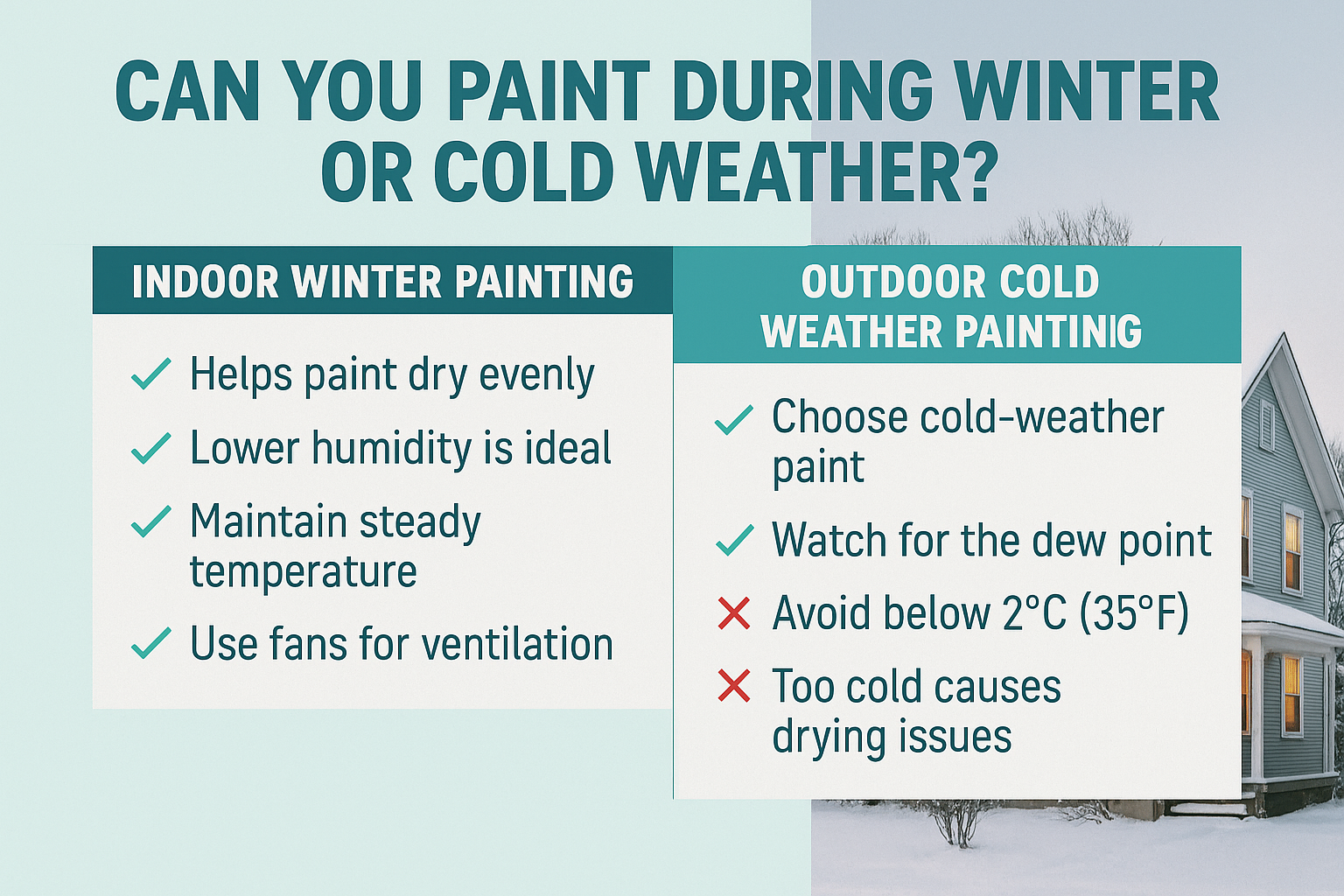
- Cold-weather latex or acrylic paints rated to 35°F (2°C) or lower for exteriors.
- Alkyd or oil-based paints that can handle chill better for trim, but require solvent cleanup.
- Fast-curing primers made for low temps to help adhesion and block stains.
- Additives and extenders that improve flow and drying without compromising cure time.
Always check the label for the minimum application temperature and whether the paint needs the surface to be a certain number of degrees above the dew point. Using a paint specifically labeled for low-temperature use directly impacts whether your answer to "Can I Paint in the Cold" will be successful.

Preparing surfaces when it's cold
Good surface prep becomes even more important in cold weather. Moisture, frost, and trapped dirt are common and ruin adhesion.
Prep checklist:
- Inspect for frost or condensation and only paint when surfaces are dry.
- Remove loose paint, dirt, and chalk with a scraper and stiff brush.
- Make minor repairs and use a compatible primer rated for low temps.
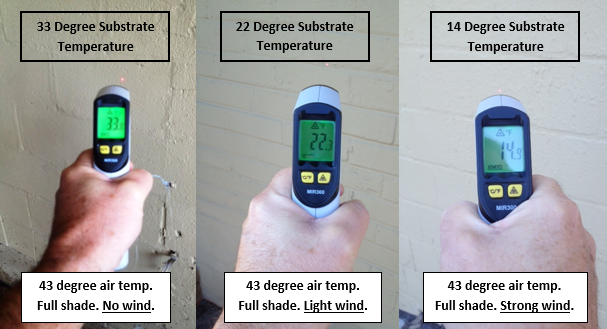
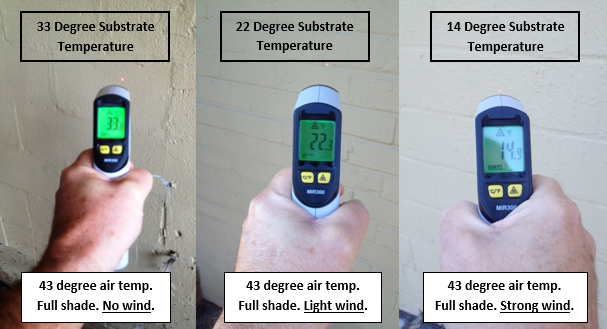
- Check surface temperature with an infrared thermometer; it should meet the paint label’s minimum.
If the surface is cold but dry, use a heat source or wait until the temperature rises above the recommended minimum. Proper prep directly affects the answer to "Can I Paint in the Cold" — poor prep almost always causes failure.

Step-by-step: How to paint in cold conditions
Follow a clear process to protect film formation and adhesion.
- Verify minimum temperatures listed on the paint label and product data sheet. If the product needs 35°F or higher, do not paint below that.
- Check surface and air temperature throughout the job with a reliable thermometer. Watch dew point and forecast for temperature drop overnight.
- Prepare the surface thoroughly: dry, clean, and prime as needed with cold-rated primers.
- Use cold-weather paint and mix it well. Keep paint warm before use by storing cans indoors.
- Apply thin, even coats to avoid long tacky times and trapping solvents. Allow extra dry time between coats as recommended.
- Provide gentle heaters and ventilation if you are working in an enclosed space, keeping temperatures steady above minimum without creating hot dry blasts that cause cracking.
This process reduces risks and answers "Can I Paint in the Cold" with practical, repeatable steps that professionals use.
Tools, heaters, and safety for cold-weather painting
Right tools and safety practices make cold painting safer and more effective. Portable heaters and proper ventilation are key, but they come with responsibilities.
Essentials and tips:
- Use forced-air or radiant heaters to keep the workspace above minimum application temperature.
- Maintain good airflow to remove solvents, but avoid drafts that carry dust onto wet paint.
- Wear appropriate PPE: respirator with organic vapor cartridges, gloves, and warm clothing.
- Use extension poles and quality brushes/rollers that work with thicker paint.
- Keep paint cans warm indoors until ready to use to improve flow.
Safety note: Heating enclosed spaces increases VOC concentration. Always ventilate and follow heater safety instructions. Addressing equipment and safety is part of answering "Can I Paint in the Cold" responsibly.
Common problems, troubleshooting, and fixes
Problems happen more in cold. Recognize issues early and apply fixes.
Common issues and quick fixes:
- Poor adhesion or peeling — likely due to moisture or surface below minimum temperature; remove failed coating and repaint under correct conditions.
- Long tacky time — give extra drying time and avoid recoating until tack is gone; use thin coats.
- Brush marks and uneven sheen — warm paint slightly and use thinner coats for better leveling.
- Blistering or blister-like texture — usually trapped moisture; defer painting until dry and the surface is warm enough.
If you face persistent curing issues, switch to a paint rated for lower temperatures or postpone the project. Realistically asking "Can I Paint in the Cold" means being ready to stop and wait when conditions fail to meet guidelines.
My experience painting in cold weather
I once painted exterior trim on a mild winter day thinking temps above 35°F were safe. After two nights of near-freezing temps, the finish dried tacky and showed poor adhesion in spots. I stripped problem areas, used a low-temp primer, added thin coats, and used a gentle heater during application. The result held up for years.
Lessons I learned:
- Never assume daytime warmth equals safe conditions overnight.
- Thin coats, cold-rated products, and surface temp checks are non-negotiable.
- When in doubt, delay the job or move it indoors.
These hands-on lessons shape practical answers to "Can I Paint in the Cold" from real jobs, not just theory.
Frequently Asked Questions of Can I Paint in the Cold
Can I paint exterior surfaces when temperatures dip below freezing?
Painting below freezing is risky. Most paints will not cure properly below 32°F, so use products specifically rated for sub-freezing application or wait until temperatures rise.
How cold is too cold to paint?
Too cold means below the paint manufacturer’s specified minimum. For many products, that is 35°F, but some cold-weather formulas work at 35°F or lower. Always check the label.
Can I speed up drying time in cold weather?
You can use gentle heat and good ventilation to speed drying, but avoid hot, dry blasts that create surface skinning and poor film formation. Allow extra time between coats.
Will paint freeze in the can if stored outside?
Yes, paint can freeze and become unusable if stored below its freeze point. Store paint in a cool, dry place above freezing to protect quality.
Do I need a special primer for cold painting?
A cold-weather primer rated for low temperatures improves adhesion and seals substrates. Use a primer designed for the temperature range you’re working in.
Can I add a thinner or additive to make paint work in cold weather?
Some manufacturers offer extenders that improve levelling in cool temps. Do not add solvents not recommended by the manufacturer, as that can weaken the film or violate product specs.
Conclusion
Painting in cold weather is possible when you use the right products, check surface and air temperatures, prep thoroughly, and follow careful application steps. Thin coats, cold-rated paints and primers, gentle heating, and patience make the difference between a lasting finish and a costly failure. Take a measured approach: if conditions or product specs don’t match, postpone the job or choose a different method. Try these tips on your next project, share your experience, or ask a question below — your feedback helps others learn.