Are you wondering how to make brown color easily and perfectly every time? Whether you’re painting, crafting, or designing, knowing how to mix brown can open up a whole new world of creativity for you.
Brown is a versatile color that can add warmth, depth, and richness to your work. In this guide, you’ll discover simple tips and tricks to create the exact shade of brown you want by mixing the right colors. Ready to unlock the secret to mastering brown?
Keep reading, and you’ll be mixing like a pro in no time!
Credit: vocal.media
Basic Brown Mix
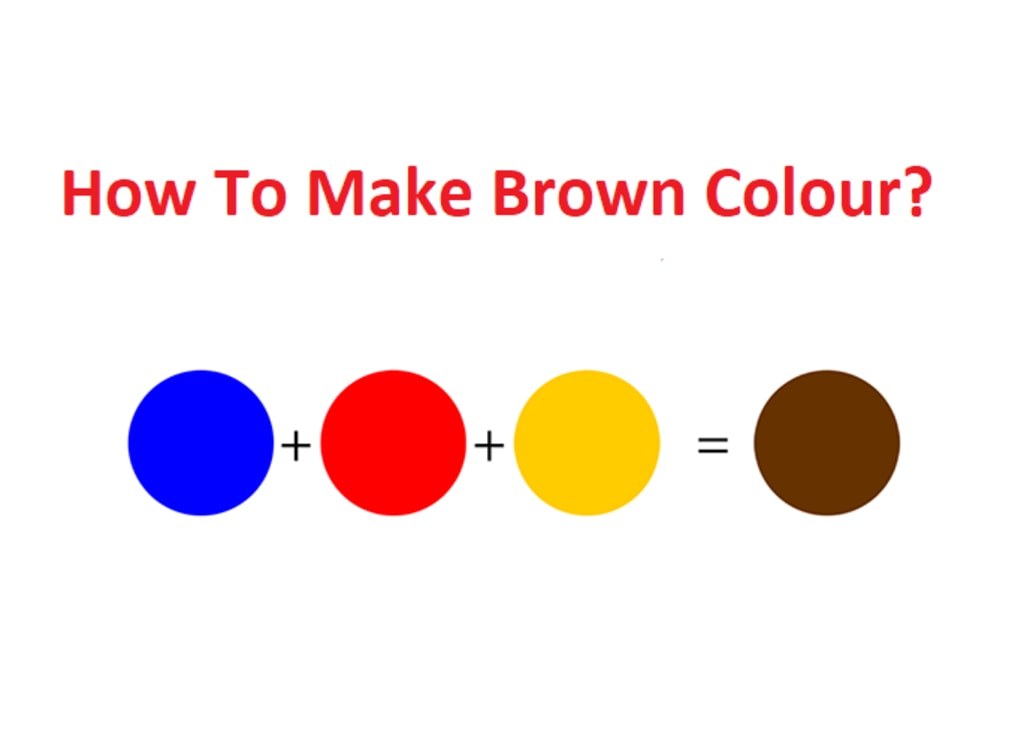
Creating a basic brown color is simple and requires just a few colors. Brown is a mix of the three primary colors: red, yellow, and blue. By combining these colors in different amounts, you can make many shades of brown. This mix is the foundation for all brown tones in art and design.
Understanding how to mix these colors helps you get the exact brown you want. The process is easy and perfect for beginners. You only need to know the right balance of each primary color.
Mixing Primary Colors
Start with equal parts of red, yellow, and blue. Mix them well to see a basic brown form. This brown is neutral and can be the base for other shades. Use a palette knife or brush to blend the colors thoroughly.
Adjusting The Shade
Add more yellow to make the brown lighter and warmer. More red will give you a reddish or rusty brown. Increasing blue will create a cooler, darker brown. Mix small amounts at a time to control the shade carefully.
Lightening Brown
To lighten the brown, add white paint slowly. White reduces the color’s intensity and creates soft, pastel browns. Be careful not to add too much white, or the color will lose its richness.
Credit: artincontext.org
Using Primary Colors
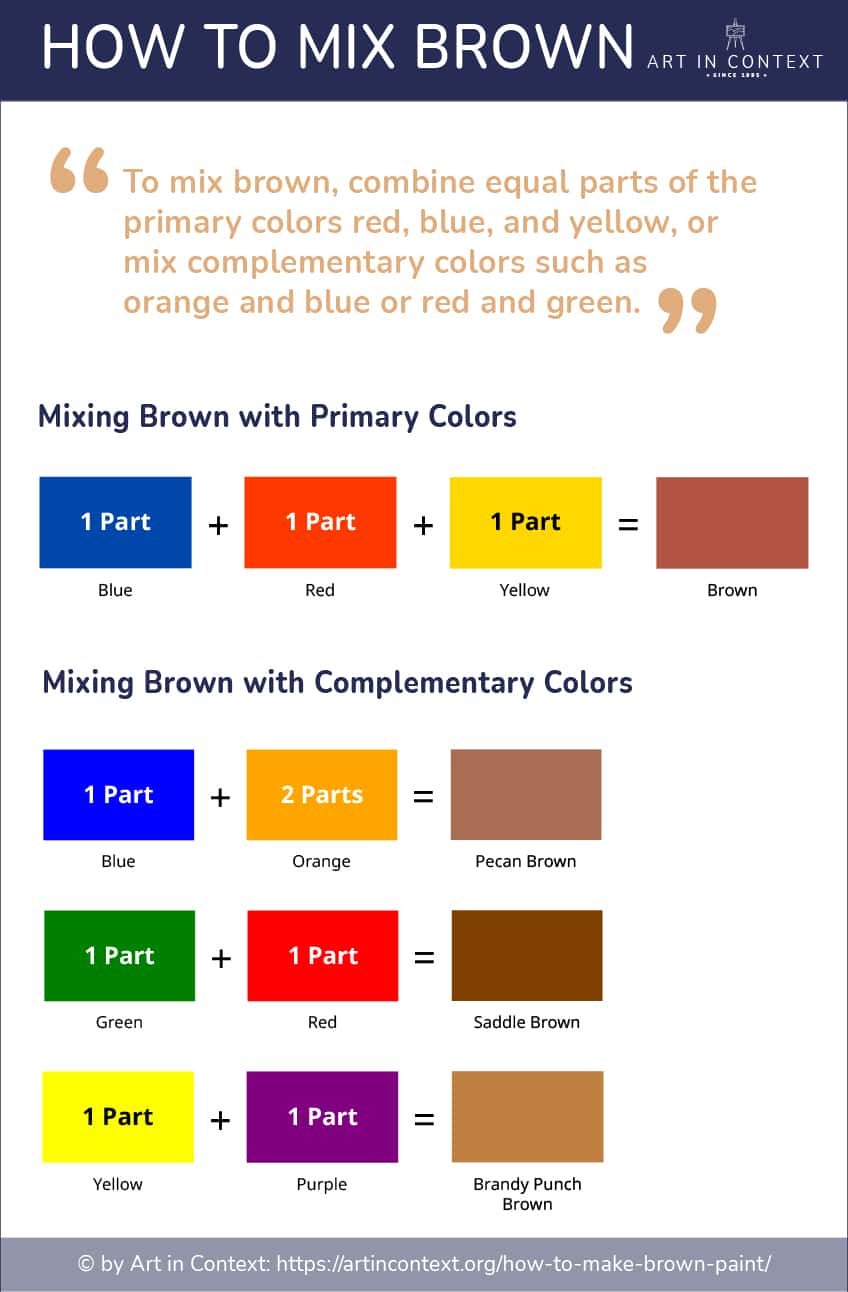
Using primary colors is the simplest way to make brown. The primary colors are red, yellow, and blue. By mixing these three colors, you can create many shades of brown. This method works well for paint, digital art, and other color mixing projects.
Start with equal parts of red, yellow, and blue. When mixed together, they form a neutral brown color. You can change the shade by adjusting how much of each color you add. For example, more red creates a warmer brown, while more blue gives a cooler tone.
Mixing Red, Yellow, And Blue
Take red, yellow, and blue paints or pigments. Mix equal amounts of each on your palette. Stir well until the color looks even. This mix usually results in a basic brown color. If the brown looks dull, try adding a bit more red or yellow.
Adjusting Brown Shades With Primary Colors
To make brown lighter, add a small amount of yellow or white. Adding more red creates a reddish brown. More blue makes the brown darker and cooler. Keep mixing in small amounts to get the exact shade you want.
Common Mistakes To Avoid
Adding too much blue can make the brown too dark. Too much red can make the color look orange. Avoid using large amounts of one color at first. Mix slowly and test the color on a scrap surface. This helps you control the final shade of brown.
Mixing Complementary Colors
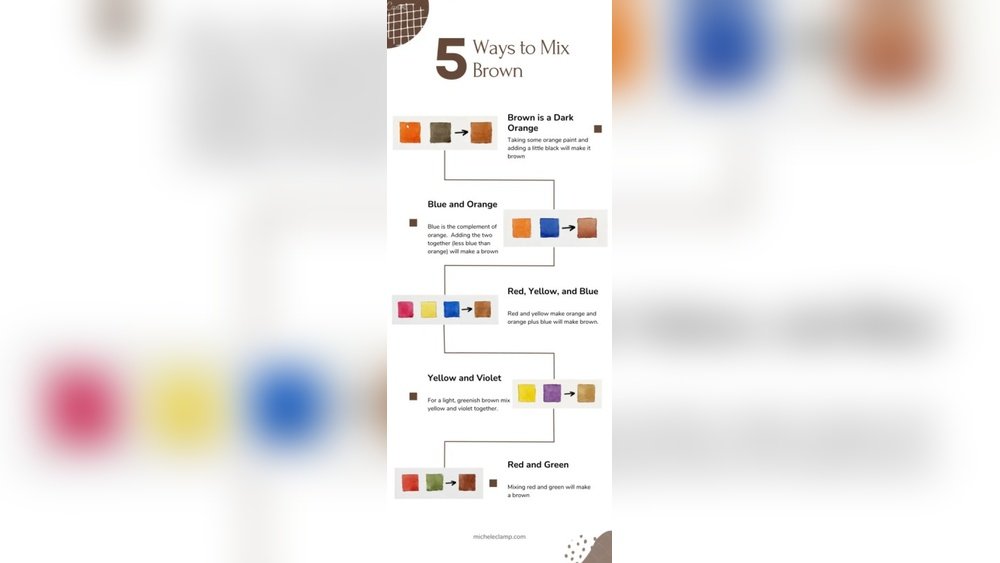
Mixing complementary colors is a simple way to create the color brown. Complementary colors are opposite each other on the color wheel. When combined, they cancel out each other’s brightness, producing a muted tone. This process helps to make various shades of brown easily.
For example, mixing blue and orange paints results in a rich brown color. Orange is made from red and yellow, which means this mix contains all three primary colors. By changing the amounts of blue or orange, you can make different brown shades. Adding a bit of white lightens the brown without changing its warmth.
What Are Complementary Colors?
Complementary colors sit opposite each other on the color wheel. They include pairs like red and green, blue and orange, and yellow and purple. Mixing these pairs creates natural browns or grays. This happens because the colors balance and neutralize each other.
How To Mix Blue And Orange For Brown
Start by mixing equal parts of blue and orange paint. Use a palette knife to blend them well. If the brown looks too dark, add a small amount of white paint. To make the brown warmer, add more orange. For a cooler brown, add more blue.
Using Red And Green To Make Brown
Mix red and green paints in equal amounts for a basic brown. Adjust the shade by adding more red to warm it or more green to cool it. Green is a mix of blue and yellow, so this method also uses all primary colors. Blend thoroughly to avoid streaks.
Tweaking Brown Shades With Complementary Colors
Changing the ratio of complementary colors shifts the brown tone. More yellow or red makes a brighter, warmer brown. More blue or green produces a darker, cooler brown. Adding white softens the color and makes it easier to use in light areas.

Credit: micheleclamp.com
Adjusting Warmth
Adjusting the warmth of brown color changes its mood and feel. Warmth means how much the color leans toward red, orange, or yellow tones. Cooler browns have more blue or green hints. Small changes in warmth can make brown look rich, soft, or bold.
Adding Warm Colors
To make brown warmer, add red or orange. These colors bring heat and brightness to the mix. Start with a small amount and mix well. Add more until the brown feels warm enough. This method makes brown appear cozy and inviting.
Using Cool Colors To Tone Down Warmth
Add a little blue or green to reduce warmth. This cools the brown and gives it a calm look. Use cool colors carefully. Too much can turn brown into gray or dull it. Mix slowly and check the color often.
Balancing Warmth For Perfect Brown
Mix warm and cool colors to find the right balance. This creates a natural and pleasing brown. Try small amounts of each until you see the perfect tone. Keep track of your mix to repeat the color later.
Creating Cooler Browns
Cooler browns have a subtle, calm feel. They lean toward gray or blue tones instead of red or orange.
These browns work well in designs that need a soft, muted look. They bring balance without feeling too warm or bright.
Use Blue To Cool Down Brown
Start with a basic brown from red, yellow, and blue. Add a small amount of blue paint slowly.
Blue reduces the warmth, shifting brown toward cooler shades. Add just a little to avoid turning it gray or black.
Mix Brown With Gray Or Black
Mix a bit of gray or black into your brown. This lowers the color’s warmth and brightness.
Gray softens the brown, making it less vibrant. Black deepens the shade while keeping it cool.
Try Adding Green For Earthy Cool Tones
Adding a touch of green cools the brown naturally. Green tones bring an earthy, fresh feel.
Use green sparingly to keep brown balanced. Too much green can turn the color muddy.
Balance With White For Softer Cool Browns
Lighten cool browns by mixing in white. This creates soft, pastel-like shades.
White mutes the color, making it gentle on the eyes. It helps keep cooler browns from looking too dark.
Lightening Brown Shades
Lightening brown shades helps create softer and brighter tones. It brings warmth and freshness to your brown color. Lightened browns work well in art and design. They also suit hair colors and interior decoration.
To lighten brown, you need to add lighter colors carefully. This process changes the brown without losing its natural look. Small adjustments make a big difference in the final shade.
Adding White To Brown
Mixing white with brown lightens the color effectively. Use small amounts of white paint or pigment. Stir well to see the true lighter shade. White makes brown softer and less intense.
Using Yellow To Brighten Brown
Yellow adds warmth and brightness to brown shades. Add yellow gradually to avoid turning brown into orange. This method keeps the brown natural and lively. It is perfect for warm brown tones.
Mixing Light Blue For Cooler Browns
Light blue helps create cooler, lighter brown shades. Add a tiny amount of light blue to brown. Mix well and check the tone before adding more. This gives brown a fresh and subtle coolness.
Experimenting With Cream Or Beige
Cream or beige colors soften brown gently. Mix these with brown for a light and creamy shade. This technique works well for natural and earthy browns. It creates a calm and smooth color effect.
Darkening Brown Tones
Darkening brown tones gives depth and richness to your color palette. It creates a more intense and warm shade. Dark brown works well in art, design, and decoration.
To darken brown, you need to add colors that absorb light. This makes the brown look deeper and more solid. Careful mixing helps avoid muddy or dull results.
Adding Black To Darken Brown
Mix a small amount of black paint into your brown. Black darkens the color quickly. Add black gradually to control the darkness. Too much black can make brown look gray or lifeless.
Using Dark Blue For Richness
Dark blue tones deepen brown without dulling it. Add a little dark blue to brown paint. This gives a cooler, richer dark brown. Dark blue keeps the color vibrant and natural.
Incorporating Dark Red Shades
Dark red tones warm up brown while darkening it. Mix a small amount of dark red with brown. It adds warmth and depth to the brown color. This method creates a cozy, earthy dark brown.
Complementary colors balance and darken brown naturally. For example, add a bit of blue to orange-based brown. This reduces brightness and adds depth. Use small amounts to keep the color balanced.
Common Brown Variations
Brown is a versatile color with many shades and tones. Each brown variation has a unique look and feel. Artists and designers often use different browns to create depth and warmth. Understanding common brown variations helps you choose the right shade for your project.
Warm Brown
Warm brown has red or orange undertones. It feels cozy and inviting. You get warm brown by adding more red or yellow to your mix. This shade works well in autumn designs and natural themes.
Cool Brown
Cool brown has blue or gray hints. It looks calm and muted. Mix more blue or a touch of black to create cool brown. This color suits modern and minimalist styles.
Light Brown
Light brown is soft and gentle. Add white or yellow to lighten your brown mix. Light brown is perfect for backgrounds and subtle details. It adds warmth without being too strong.
Dark Brown
Dark brown is rich and deep. Add more blue or black to darken your brown. Dark brown gives a bold and strong impression. Use it for shadows or to create contrast.
Neutral Brown
Neutral brown has balanced tones without strong warm or cool hints. Mix equal parts of red, yellow, and blue carefully to get neutral brown. It is versatile and works in many designs.
Using Brown In Art
Brown is a warm, earthy color widely used in art. It adds depth and realism to paintings. Artists use brown to paint natural elements like wood, soil, and skin tones. It also creates shadows and textures that bring artworks to life.
Using brown in art helps balance bright colors. It creates a natural and calm feeling in a piece. Different shades of brown can express various moods, from cozy to serious. Understanding how to make and use brown enriches an artist’s palette.
Using Brown To Create Natural Textures
Brown mimics colors found in nature. It works well for trees, animals, and landscapes. Artists layer browns to show rough bark or soft fur. This color helps create realistic surfaces and adds detail.
Mixing Brown For Skin Tones
Brown is essential for painting human skin. Mixing red, yellow, and blue produces many skin shades. Adjusting these colors changes warmth or coolness. Brown helps artists capture lifelike portraits with subtle color shifts.
Adding Depth With Brown Shadows
Shadows give paintings a three-dimensional look. Brown shadows create soft, natural dark areas. They contrast well with lighter colors. Using brown for shadows enhances realism without harshness.
Combining Brown With Other Colors
Brown pairs well with many colors. It tones down bright hues and makes them look grounded. Combining brown with green, blue, or yellow creates pleasing palettes. This makes artworks feel balanced and complete.
Troubleshooting Brown Mixes
Mixing brown paint can be tricky for many artists and hobbyists. The right balance of colors creates a warm, rich brown. A wrong mix leads to dull or muddy shades. Troubleshooting brown mixes helps you fix common problems fast. Understanding the cause of the issue brings better results.
Brown is made by combining primary or complementary colors. Small changes in the mix affect the final color. Learning how to adjust your mix saves time and paint. Let’s explore key tips for troubleshooting brown color mixes.
Uneven Brown Shades
Uneven shades happen when colors are not blended well. Stir the paint thoroughly to get a smooth color. Use a palette knife or brush to mix all pigments evenly. Check your paint consistency; thick or dry paint mixes poorly. Adding a drop of water or medium helps smooth the mix.
Muddy Or Dull Brown
Muddy brown looks gray or dirty. Too much blue or black often causes this. Add a bit of red or yellow to warm the color. Avoid overmixing all three primary colors; it dulls the hue. Use fresh paint to keep colors vibrant and clean.
Brown Too Dark Or Too Light
If brown is too dark, add a small amount of white or yellow. For a lighter brown, add more yellow or a touch of red. Avoid adding too much white; it can make the color chalky. Adjust slowly and test on paper until you get the right shade.
Unwanted Green Or Orange Tints
Green or orange tints appear when color ratios are off. Too much blue with yellow creates greenish tones. Excess red with yellow produces orange shades. Balance the mix by adding the complementary color to neutralize unwanted tints. For example, add a bit of red to reduce green.
Frequently Asked Questions
What Color To Mix To Make Brown?
Mix brown by combining red, yellow, and blue primary colors. Adjust shades by varying amounts or mix complementary colors like blue and orange. Add white to lighten brown.
What Is The Brown Mix?
The brown mix is created by blending red, yellow, and blue primary colors. Adjust ratios to change brown shades. Adding white lightens it.
Do Black And Yellow Make Brown?
Black and yellow alone do not make brown. Mix red, yellow, and blue or combine complementary colors to create brown.
Do Orange And Black Make Brown?
Yes, mixing orange and black can create a shade of brown. Adjust the ratio to get the desired brown tone.
What Colors Do I Mix To Get Brown?
Mix red, yellow, and blue in equal parts to create a basic brown color.
Can I Make Brown By Mixing Two Colors?
Yes, mix a secondary color with its complementary color, like blue and orange.
How To Make Light Brown Color?
Add a small amount of white to your brown mixture to lighten the shade.
What Is The Easiest Way To Make Brown Paint?
Combine the three primary colors—red, yellow, and blue—in equal amounts.
How Can I Make Dark Brown Color?
Add more blue or a tiny bit of black to your brown mix.
Which Colors Make Warm Brown Tones?
Use more red and yellow with a little blue for warm brown shades.
Conclusion
Making brown color is simple with the right mix of colors. Combine red, yellow, and blue to start. Adjust the amounts to get your desired shade. Adding white lightens the brown, while more blue cools it down. Using complementary colors like blue and orange also works well.
Experimenting helps find the perfect tone for your project. Keep practicing to see how small changes affect the color. Now, you can create many beautiful browns easily and confidently.