Have you ever wondered when color pictures were first invented? Imagine seeing the world in vibrant hues instead of just black and white.
Understanding the origins of color photography not only reveals fascinating stories of innovation but also shows how technology transformed the way you capture and remember moments. You’ll discover the key milestones, challenges, and breakthroughs that led to the colorful images you enjoy today.
Keep reading to uncover when color pictures came to life and how they changed the world of photography forever.
Early Experiments
Early experiments in color photography set the foundation for modern color images. Inventors and scientists worked hard to capture real-life colors on film. Their efforts led to key discoveries and techniques still important today.
Maxwell And The First Color Photo
James Clerk Maxwell created the first color photograph in 1861. He used three separate black-and-white photos taken through red, green, and blue filters. Combining these images produced a full-color picture. Maxwell’s experiment proved color photography was possible.
This method is known as the three-color process. It laid the groundwork for all future color photography techniques. Maxwell’s work showed that mixing colors from primary filters could recreate natural colors on film.
Pioneers And Techniques
Many inventors contributed to early color photography after Maxwell. Louis Ducos du Hauron developed a process using three color separations on paper. Gabriel Lippmann created a method capturing colors by interference patterns in 1891.
These pioneers faced many challenges. Early color photos required long exposure times and complex development steps. Film sensitivity to light was limited, making it hard to capture accurate colors quickly.
Despite these obstacles, their experiments pushed color photography forward. Their techniques formed the base for practical color film introduced decades later.
Autochrome Plates
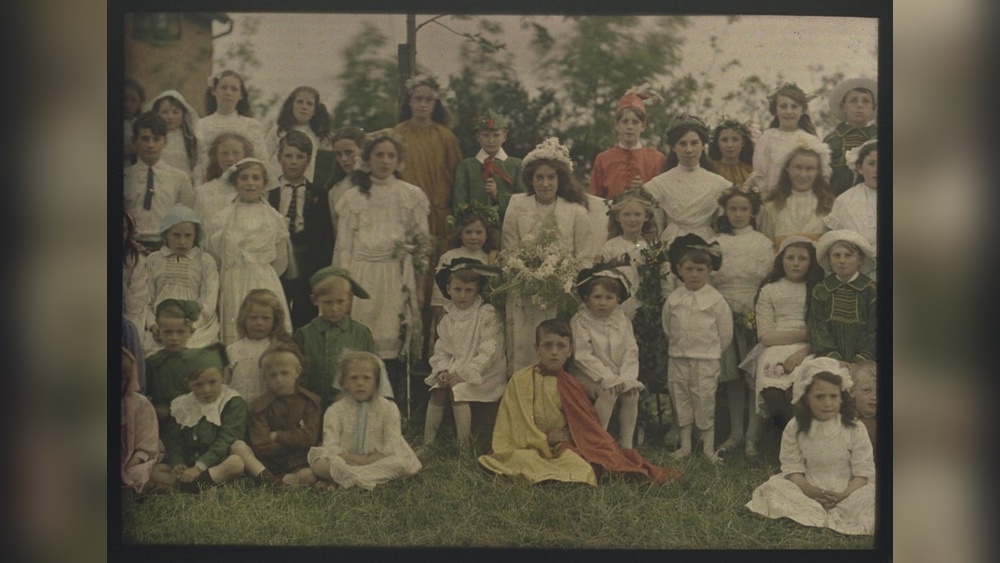
Autochrome plates marked a major step in early color photography. Invented by the Lumière brothers in 1907, this process allowed photographers to capture images in natural color for the first time. It used a glass plate coated with tiny dyed starch grains that acted as color filters.
This technology made color pictures accessible to amateur photographers. Before Autochrome, color photography was complex and expensive. Autochrome simplified the process and produced beautiful, soft images with a unique grainy texture.
Introduction Of Autochrome
The Autochrome process used a glass plate covered with microscopic potato starch grains dyed red, green, and blue. Photographers exposed the plate in a camera like black-and-white film. Light passed through these colored grains, creating a color image on a black-and-white emulsion beneath.
This invention was the first widely available method for color photography. It became popular between 1907 and the 1930s. Photographers appreciated Autochrome for its simplicity and vivid color reproduction compared to earlier methods.
Impact On Color Photography
Autochrome changed how people saw photography. It introduced the idea that photos could capture real-life colors. This inspired more research and development in color film technology.
Although Autochrome plates had limitations, like long exposure times and fragile glass bases, they showed the potential of color photography. They influenced later color films that were easier to use and more practical for everyday photography.
Autochrome was a key milestone. It bridged the gap between black-and-white photography and modern color films.
Challenges In Early Color
The invention of color pictures marked a significant milestone in photography. Early color photography faced many challenges that slowed its progress. These hurdles involved both the technology and the cost. Understanding these issues helps explain why color pictures took time to become common.
Technical Limitations
Early color photography had many technical problems. The film used was not very sensitive to light. Photographers needed bright light or flashbulbs for good results. Color layers in the film often faded or changed over time. Processing the film was complex and required precise handling. Cameras and developing equipment were not designed for color photography. These factors made producing clear and lasting color images difficult.
Cost And Accessibility
Color film and prints were much more expensive than black and white. The high cost limited who could afford color photography. Special equipment and skills were needed, which many did not have. Color film was rare during World War II and hard to get. Because of these costs, color photography was mainly used in advertising, fashion, and government projects. Ordinary people and news photographers rarely used it until costs dropped.
:max_bytes(150000):strip_icc()/1960s-couple-man-woman-men----563966211-5a63b2c4482c520037cbc1ef.jpg)
Credit: www.thoughtco.com
Color Film Innovations
Color film brought a new world of vivid images. It changed photography by adding life-like colors. This innovation took many years of research and trial. Early color film was complex and costly. Over time, new types emerged that improved quality and ease of use.
Color film innovations made capturing real-life scenes easier. These advances helped color pictures become more popular. Photographers could now show scenes closer to how the eye sees them. The journey of color film includes key breakthroughs and various film types.
Kodachrome Breakthrough
Kodachrome was one of the first successful color films. It was introduced in 1935 by Eastman Kodak. This film used a special process to create bright, lasting colors. Photographers loved Kodachrome for its sharpness and color richness. It became the go-to film for many years. Kodachrome helped color photography gain trust and popularity.
Other Film Types
Besides Kodachrome, many color films appeared over time. Agfacolor, introduced in Europe, offered a different color process. Later, Ektachrome allowed photographers to develop film at home. These films made color photography more accessible. Advances also improved film speed, letting photographers shoot in low light. More film types meant more choices for different needs.
World War Ii And Color
World War II had a significant impact on the development and use of color pictures. During this period, color photography was still new and rare. The war created challenges and opportunities that shaped how color images were made and used. Resources were limited, and the government took a strong interest in color photography for various projects.
Scarcity Of Materials
Color film was hard to find during World War II. Many materials needed to make color film were in short supply. Factories focused on producing war supplies, so less film was made for civilian use. This scarcity made color photography expensive and rare. Photographers faced many difficulties getting enough film to capture images in color.
Because of low availability, color film was mostly saved for important uses. Ordinary people rarely had access to color pictures. Black and white film remained the standard for everyday photography due to cost and supply.
Government Projects
The U.S. government used color photography for special projects during the war. Agencies like the Farm Security Administration (FSA) and the Office of War Information (OWI) hired photographers to document life in America. They used color film to show the impact of the war on citizens and soldiers.
These government projects helped improve color film technology and techniques. Photographers learned to work with the film’s challenges, such as lighting and exposure. The images captured offered a more vivid and realistic view of the war era compared to black and white photos.
Color pictures from this time provide valuable historical records. They show scenes of daily life, military activities, and the home front with rich detail and emotion. These efforts by the government helped pave the way for wider use of color photography after the war.
Notable Color Photographers
Color photography opened new doors for artists and historians. It captured life in a vivid way black and white could not. Early color photographers faced many challenges. They worked with expensive and tricky film. Their efforts helped color photography grow. Many of their images still inspire us today.
These photographers showed everyday scenes in bright, true colors. Their work helped people see the world differently. They told stories through their lenses. Their photos are valuable historical records. They made color photography more popular and accepted.
Farm Security Administration
The Farm Security Administration (FSA) hired photographers during the 1930s and 1940s. Their goal was to document rural life and struggles in America. Some FSA photographers used color film, a rare choice then. They captured farms, families, and workers in natural tones. These images brought attention to poverty and hope during the Great Depression.
Color added realism and emotion to their stories. The FSA photos helped people understand the hardships faced by many. Their work also preserved an important part of American history in color. Today, these photos remain powerful and moving.
Documenting American Life
Color photography also documented everyday American life beyond farms. Photographers used it to show cities, events, and culture. Their photos revealed changes in society and technology. They captured moments that black and white could not fully show.
Through color, viewers connect more deeply with the past. It feels more immediate and real. These photographers helped color film become more accepted for serious work. Their images remain a window to America’s rich history.
Color Film Popularization
Color film popularization marked a major shift in photography. It moved color pictures from rare experiments to everyday use. This change took time and many technical advances. The post-war years played a key role in spreading color film worldwide.
Color photography became easier and cheaper after World War II. More people and industries began to use it. This section explores how color film grew in popularity and became common.
Post-war Advances
After World War II, color film technology improved rapidly. New chemical processes made color film more stable and vibrant. Film companies worked hard to reduce costs and improve quality.
These advances made color film easier to produce and use. Photographers could shoot indoors and outdoors with better results. Color films became more sensitive to light, reducing the need for flashbulbs.
Widespread Availability
Color film became widely available to the public in the 1950s. Film manufacturers produced rolls for amateur and professional photographers. Cameras designed for color film were sold at affordable prices.
Color prints also became less expensive. This helped families capture everyday moments in color. Magazines and advertisers used color photos to attract readers and customers.
By the 1960s, color photography was common in homes and media. It changed how people saw and shared the world around them.

Credit: study.com
Impact On Art And Media
The invention of color pictures changed art and media deeply. It brought new life and realism to images. People could now see the world in natural hues, not just black and white. This shift influenced many fields, including advertising, fashion, and news. Color photos made stories and products more attractive and easier to understand. They also helped capture everyday moments with true-to-life detail.
Advertising And Fashion
Color pictures gave advertisers a powerful tool. They could show products in bright, vivid colors that caught the eye. This made ads more effective and helped sell more items. Fashion also gained from color photography. Designers showed their collections in full color, highlighting fabrics and styles better. Color images made fashion magazines and catalogs more exciting and inspiring. The use of color helped brands create strong identities and connect with customers.
News And Everyday Use
Color photography changed news reporting by making images more realistic. Readers could see events as they truly were. This added emotion and clarity to stories. Everyday people began using color photos to capture family moments and special events. Cameras and film became more affordable and easier to use. Color images helped preserve memories in a more lively and accurate way than before. This shift made photography a part of daily life for many.
Technical Evolution
The invention of color pictures marked a major shift in photography. This change did not happen overnight. It required many technical improvements over several decades. Early color photos faced many challenges. These included poor film quality and difficult developing processes.
As technology advanced, these problems started to fade. Photographers gained access to better tools and materials. This section explains key technical steps that helped color photography grow.
Improved Film Quality
Early color films had weak color accuracy and low sensitivity. Colors often appeared faded or unnatural. Film layers were not stable and could degrade quickly. Scientists worked on better chemical dyes to solve these issues.
New films used multiple layers to capture different colors. These layers combined to create vivid, true-to-life images. The increase in light sensitivity made shooting easier in various conditions. By the mid-20th century, color film became more reliable and affordable.
Simplified Developing Processes
Early color photo development was complex and time-consuming. It required many chemical baths and precise temperature control. Mistakes could ruin the entire image. This limited color photography to experts with special labs.
Later, the process was simplified with new chemicals and machines. This allowed faster and more consistent developing results. Film companies introduced ready-to-use kits for amateur photographers. The easier process helped color photography reach the mass market.

Credit: clickamericana.com
Modern Color Photography
Modern color photography changed how people see the world. It brought pictures to life with vivid colors. This form of photography grew from early experiments into everyday use. The technology became more accessible and affordable over time. Modern cameras and digital tools now make color photos easy to create and share.
Digital Transition
The digital age transformed color photography completely. Film cameras gave way to digital sensors. These sensors capture color information instantly and clearly. Digital photos can be edited easily on computers. Sharing images online became simple and fast. This shift helped popularize color photography worldwide. It lowered costs and expanded creative possibilities.
Legacy Of Early Innovations
Early color photography laid the groundwork for today’s technology. Inventors developed color films and processes that captured real-life hues. These experiments faced many challenges like cost and quality. Despite this, their work inspired future advances. Modern color photography owes much to these pioneers. Their innovations made color pictures a common part of life.
Frequently Asked Questions
When Did Color Pictures Become Common?
Color pictures became common in the 1950s when affordable, reliable color film and printing technology reached the mass market.
Why Did Photographers Not Use Color Before 1970?
Photographers avoided color before 1970 due to high costs, poor film quality, complex processing, and limited availability of color film.
Did Color Photos Exist In 1940?
Yes, color photos existed in 1940 but were rare, expensive, and mainly used in advertising and government projects.
Did They Have Color Photos In 1900?
Yes, color photos existed in 1900 but were rare and expensive. Early color photography had quality and lighting challenges.
When Was Color Photography First Invented?
Color photography was first invented in the early 1900s, with the first successful process in 1907.
Who Invented The First Color Photograph?
The first practical color photograph was invented by the Lumière brothers in 1907.
What Was The First Color Photography Process Called?
The first color photography process was called the Autochrome plate.
When Did Color Pictures Become Common?
Color pictures became common in the 1930s and 1940s after improvements in film technology.
Why Was Early Color Photography Not Popular?
Early color photography was expensive and had poor indoor lighting performance.
How Did World War Ii Affect Color Photography?
During World War II, color film was scarce and mainly used for government projects.
Conclusion
Color pictures began in the early 20th century. Inventors faced many challenges with cost and quality. Color film became more common after World War II. Advances made it easier and cheaper for many people. Today, color photography is part of everyday life.
It shows the world in vibrant and true colors. Understanding its history helps appreciate this important invention.