Are you ready to unlock the secret behind creating the perfect brown color? Whether you’re painting, decorating, or designing, knowing how to produce brown can elevate your work and give it that rich, warm touch you’re aiming for.
You don’t need to rely on pre-made paints or colors—you can mix your own brown right at home using simple techniques. In this guide, you’ll discover easy, step-by-step methods to mix various shades of brown that suit your style and project.
Keep reading, and you’ll gain the confidence to create beautiful browns that bring your creative ideas to life.
Primary Colors For Brown
Brown is a warm, earthy color made by mixing primary colors. The main colors used are red, yellow, and blue. These three colors combine to form various shades of brown. Understanding how to mix these primary colors helps you create the perfect brown for any project.
Red: The Warm Base
Red adds warmth to brown. It makes the brown more vibrant and rich. Too much red creates a reddish-brown shade. Use it carefully to keep the brown balanced and natural.
Yellow: The Lightener
Yellow brightens the brown tone. It helps create lighter, softer browns. Adding more yellow makes brown look warmer and sunnier. It balances the coolness of blue in the mix.
Blue: The Darker Shade
Blue deepens the brown color. It adds coolness and darkness. More blue results in a cooler, darker brown. Use blue in small amounts to avoid making the color too dull.
Using Complementary Colors
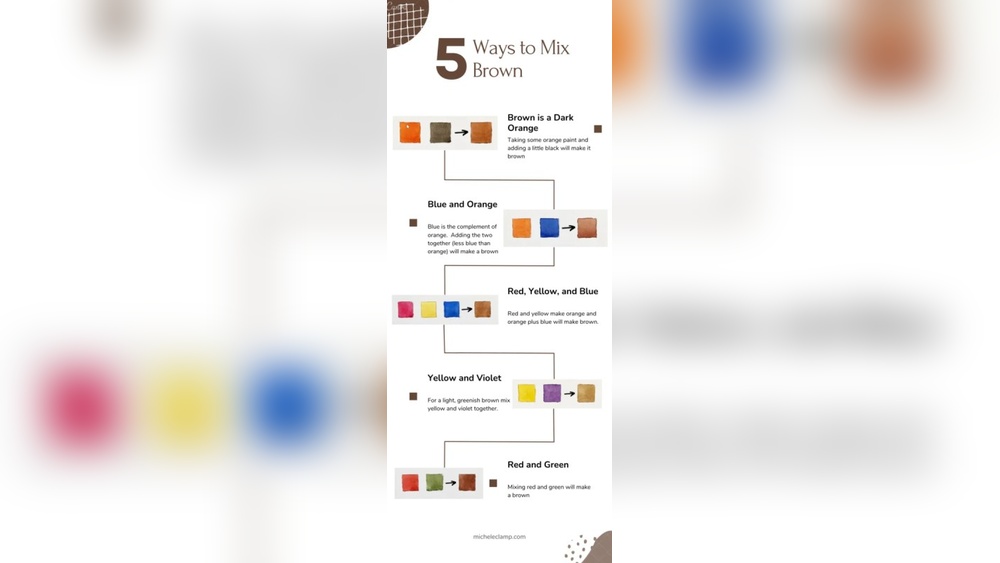
Using complementary colors is a smart way to produce brown color in painting and design. Complementary colors sit opposite each other on the color wheel. When mixed together, they cancel out each other’s brightness and create a neutral tone. This neutral tone often appears as brown.
Mixing a secondary color with its complementary primary color results in brown. For example, mixing orange and blue creates a rich brown. Red mixed with green also produces a warm brown shade. Yellow combined with purple gives a darker brown.
What Are Complementary Colors?
Complementary colors are pairs of colors opposite on the color wheel. Examples include red and green, blue and orange, yellow and purple. These pairs have the strongest contrast and balance each other perfectly.
How Mixing Complementary Colors Creates Brown
Mixing two complementary colors reduces their brightness. The result is a muted, neutral color. This neutral color often looks like brown. The exact shade depends on the ratio of colors mixed.
Adjusting Brown Shades Using Complementary Colors
Change the amount of each color to shift the brown shade. More red and green create a warm brown. More blue and orange make a cooler brown. Add yellow or purple to darken or lighten the brown.
Adjusting Brown Shades
Adjusting brown shades lets you create the perfect tone for your project. Brown is versatile, but small changes can make big differences. You can make brown warmer, cooler, or lighter by mixing different colors carefully. Understanding these tweaks helps you produce the exact brown you want.
Warmer Browns
Warmer browns have a cozy, rich feel. Add red or orange to your brown mix. This creates a reddish or golden brown shade. Warmer browns suit autumn themes and natural wood tones. Use small amounts of warm colors and mix slowly. Check the color often to avoid making it too bright.
Cooler Browns
Cooler browns appear calm and muted. Add a bit of blue or green to your brown mix. This shifts the tone toward grayish or olive shades. Cooler browns fit modern and industrial styles well. Mix little by little to keep the brown balanced. Avoid adding too much cool color to prevent dullness.
Lighter Browns
Lighter browns look soft and gentle. Add white or cream to your brown mix. This lightens the brown without changing its base tone. Lighter browns work great for backgrounds and subtle details. Add white gradually and stir well. Stop when you reach the shade you want.
Mixing Brown With Secondary Colors
Mixing brown with secondary colors offers a simple way to create rich, natural browns. Secondary colors—orange, green, and purple—are made by combining primary colors. Using these colors in your mix produces varied brown shades. This method helps you avoid mixing all three primary colors directly.
Secondary colors pair well with their complementary primary colors. This pairing balances hues and results in a brown tone. Adjusting the ratio changes the warmth or coolness of the brown you produce.
Mixing Orange And Blue To Make Brown
Orange and blue are complementary colors. Combine equal parts of orange and blue paint. The mixture turns into a deep, earthy brown. Adding more orange creates a warmer brown. More blue will cool the tone, making it darker.
Creating Brown By Mixing Green And Red
Green and red mix to form a natural-looking brown. Use equal amounts of both colors for a balanced brown. Increase red for a reddish-brown shade. Add extra green for a cooler, olive-like brown.
Using Purple And Yellow To Produce Brown
Purple and yellow also form a rich brown shade. Mix these colors evenly to get a neutral brown. Adding more yellow brightens the brown. More purple creates a cooler, deeper brown tone.
Creating Deep Brown Tones
Creating deep brown tones requires careful color mixing. Deep browns add richness and warmth to your artwork or design. These tones are darker and more intense than basic brown shades. Achieving this color involves balancing primary and secondary colors.
Start with a base of red, yellow, and blue. These three primary colors form the foundation for brown. Adjust the ratio to make the brown deeper and richer. Adding more blue or red darkens the tone. Adding a small amount of black can also deepen the brown without dulling it.
Using Primary Colors To Darken Brown
Mix equal parts of red, yellow, and blue to get basic brown. To make it deeper, slowly add more blue or red. Blue cools the brown, making it darker. Red warms it, adding a rich, reddish hue. Test small amounts first to avoid overpowering the mix.
Incorporating Complementary Colors
Complementary colors help create complex browns. Combine blue with orange or red with green. These pairs produce a deep brown with natural variation. Adjust the amount of each to control darkness and warmth. This method gives a more natural, earthy brown tone.
Adding Black Or Dark Shades
Use black paint sparingly to deepen brown tones. A tiny amount darkens the color without losing vibrancy. Mix thoroughly to avoid streaks. Alternatively, use dark blue or dark red for softer darkening. These alternatives keep the brown rich and lively.

Credit: micheleclamp.com
Neutral Brown Variations
Neutral brown variations offer a balanced, earthy tone that suits many design and art projects. These browns are neither too warm nor too cool. They appear natural and blend well with most color schemes.
Creating neutral browns involves mixing colors carefully. The goal is to avoid strong red, yellow, or blue dominance. This results in a soft, muted brown that feels calm and grounded.
Mixing Primary Colors For Neutral Brown
Start by combining equal parts of red, yellow, and blue. This mix often produces a true, neutral brown. Adjust each color slightly to fine-tune the shade. Add small amounts of each primary color until the desired tone appears.
Mix a secondary color with its complementary color to get neutral brown. For example, combine blue and orange or red and green. This method cancels out color intensity, creating a balanced brown. It helps achieve a more natural, subtle brown shade.
Adjusting Neutral Brown Shades
To lighten neutral brown, add a little white or cream. For darker shades, add a touch of black or dark blue. Keep changes gradual to maintain neutrality. These small adjustments create various neutral brown tones for different uses.
Adding White To Brown
Adding white to brown changes its tone and brightness. It creates lighter shades known as tan, beige, or cream. This technique is useful for softening the intensity of brown colors. White paint or white pigment helps achieve these softer, pastel-like browns.
Mixing white with brown allows artists to explore many new shades. These lighter browns can work well for skin tones, backgrounds, and natural objects. The key is to add white gradually to keep control over the final color.
How White Affects Brown
White lightens the brown color by increasing its brightness. It reduces the depth and richness of the original brown. The more white added, the paler and softer the brown becomes. This process creates colors that look less intense and more subtle.
Steps To Mix White With Brown
Start with your base brown color on a palette. Add a small amount of white paint using a brush or palette knife. Mix thoroughly to combine the two colors evenly. Observe the shade and add more white little by little. Stop once you reach the desired lightness.
Uses For Lightened Brown Shades
Lightened browns suit natural and warm visuals. They work well in paintings of skin, wood, and earth. These shades add softness and depth to designs. Light brown tones are perfect for creating shadows or highlights. They balance darker browns and other colors beautifully.

Credit: smart.dhgate.com
Common Mistakes To Avoid
Making brown color can be tricky without the right knowledge. Many beginners face common errors that affect the final shade. Avoiding these mistakes helps create the perfect brown every time.
Understanding what causes these errors is key to improving your color mixing skills. Paying attention to details like color proportions and mixing techniques makes a big difference.
Using Too Much Of One Primary Color
Mixing brown requires balance between red, yellow, and blue. Adding too much of one color changes brown into another color. For example, too much red creates a reddish tone, not brown.
Always start with equal parts and adjust slowly. Small changes help control the shade accurately.
Ignoring Complementary Color Mixing
Brown also forms by mixing complementary colors, such as blue and orange. Skipping this method limits your options. Using complementary pairs can produce richer browns.
Try mixing secondary colors with their complements to find new brown shades.
Not Testing Shade Adjustments Gradually
Adding too much paint at once causes unwanted color shifts. It is better to add small amounts and test the color frequently. This helps achieve the exact brown shade you want.
Mixing slowly prevents mistakes and saves paint.
Failing To Account For Paint Type Differences
Different paint brands and types react differently when mixed. Ignoring this can lead to unexpected results. Test your paints before mixing large amounts.
Understanding your materials ensures consistent brown shades.
Neglecting To Lighten Or Darken Properly
Adding white or black changes brown’s brightness and depth. Using too much white can make brown look dull. Too much black can make it muddy.
Use lightening and darkening colors carefully to keep brown vibrant.
Brown In Different Mediums
Brown appears differently across various creative mediums. Each medium requires unique methods to produce the perfect shade of brown. Understanding these methods helps in achieving consistent and vibrant results. Below are simple guides for mixing brown in acrylics, watercolors, and food coloring.
Acrylics
Mix equal parts of red, yellow, and blue acrylic paint. This combination produces a rich brown base color. Adjust the shade by adding more red for warmth or more blue for a cooler tone. Adding white lightens the brown without changing its hue. Use small amounts of each color to control the final shade precisely.
Watercolors
Start by mixing red and green watercolor paints to create brown. Alternatively, blend blue and orange for a different brown tone. Use a wet brush to mix colors on a palette or paper. Water dilutes the paint, allowing control over the color’s intensity. Layering washes can deepen the brown or create texture.
Icing And Food Coloring
Combine red, yellow, and blue food coloring to make brown icing. Mix these colors slowly to avoid overpowering one shade. Start with a small amount of each color and add more as needed. Use gel food coloring for vibrant colors without thinning the icing. Adjust by adding more yellow for a golden brown or red for a reddish tint.
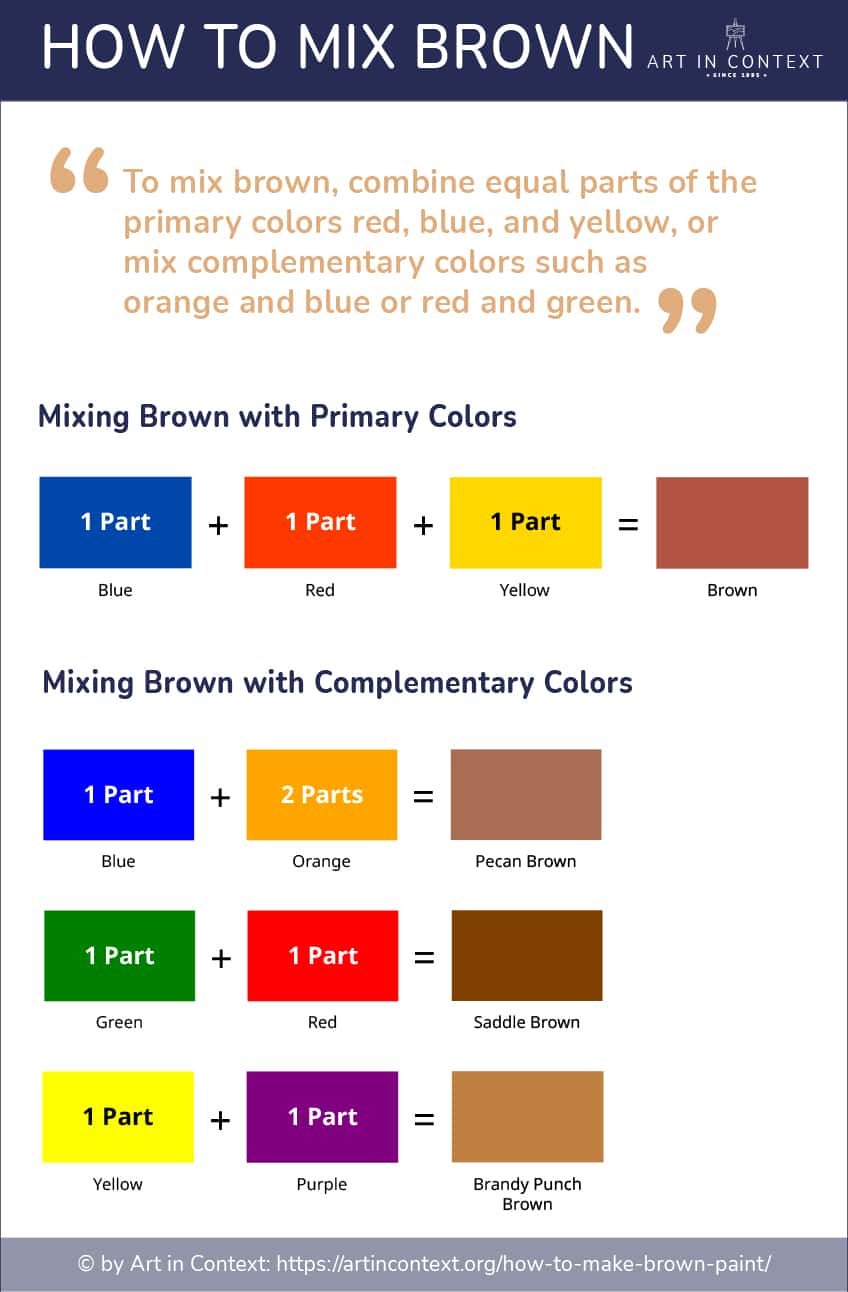
Credit: artincontext.org
Creative Uses For Brown Shades
Brown is a versatile color with warm, earthy tones. Its shades bring depth and comfort to various projects. Creative uses for brown shades span art, design, fashion, and home decor. Exploring these uses helps you see brown as more than just a background color. It adds richness and natural beauty wherever it appears.
Using Brown Shades In Interior Design
Brown tones create a cozy, inviting atmosphere in rooms. Use soft browns on walls for warmth without overwhelming space. Darker browns add elegance to furniture and wood finishes. Mixing browns with creams or greens brings balance and nature indoors.
Incorporating Brown In Fashion
Brown shades work well for timeless, classic fashion pieces. They match easily with many other colors. Light browns suit casual styles, while deep browns add sophistication. Accessories like belts and shoes in brown complement almost any outfit.
Brown In Artwork And Craft
Artists use brown to add shadows and depth in paintings. It blends well with other colors for natural effects. Craft projects benefit from brown’s earthy feel, especially in rustic or vintage themes. Mixing browns can produce unique tones for creative expression.
Brown As A Background Color In Design
Brown backgrounds provide a neutral base that enhances text and images. They reduce glare and are easy on the eyes. Use browns to create a warm, grounded look in websites and presentations. Light brown backgrounds work well for a soft, natural feel.
Frequently Asked Questions
What Color To Mix To Make Brown?
Mix red, yellow, and blue equally to make brown. Adjust shades by adding more red, yellow, or blue. Combine complementary colors like blue and orange for variations. Add white to lighten brown.
Do Black And Yellow Make Brown?
Black and yellow do not make brown directly. Brown forms by mixing red, yellow, and blue or combining complementary colors like blue and orange.
Do Red And Green Make Brown?
Yes, mixing red and green creates brown. Red and green are complementary colors that combine to form a neutral brown shade.
What Is The Brown Mix?
The brown mix is created by combining red, yellow, and blue primary colors. Adjust amounts for different brown shades. Mixing complementary colors like blue and orange also produces brown. Adding white lightens the color. This method yields various warm, cool, or neutral brown tones.
What Colors Mix To Produce Brown?
Mix equal parts of red, yellow, and blue primary colors to make brown.
How Can I Make Different Shades Of Brown?
Add more yellow for lighter brown, more red for warm brown, or more blue for dark brown.
Can Secondary Colors Create Brown?
Yes, mixing a secondary color with its complementary color, like blue and orange, makes brown.
How Do I Lighten Brown Color?
Add a small amount of white paint to your brown mix to lighten it.
What Is The Easiest Way To Make Brown Paint?
Mix the three primary colors—red, yellow, and blue—in equal amounts for basic brown.
Why Does My Brown Paint Look Dull?
Using too much blue or mixing colors unevenly can dull your brown paint.
Conclusion
Creating brown color is simple with basic mixing steps. Use equal parts of red, yellow, and blue for a standard brown. Change the look by adding more red, yellow, or blue. Mixing complementary colors like blue and orange also makes brown.
Play with amounts to get different shades and tones. Keep practicing to find the perfect brown for your needs. Enjoy the process and have fun with colors!