Have you ever stared at your palette and realized you don’t have any black paint? Or maybe you want a black shade with a unique twist—warmer, cooler, or richer than the usual store-bought black?
You’re not alone. Making black paint yourself is easier than you think, and it gives you full control over the tone and depth you want in your artwork. In this guide, you’ll discover simple, effective ways to mix black using colors you probably already have.
Whether you’re mixing two colors or blending all three primaries, you’ll learn tricks to create a true black or a near-black that fits your vision perfectly. Ready to unlock the secret to perfect black paint? Let’s dive in!

Credit: artmakespeople.com
Mixing Primary Colors
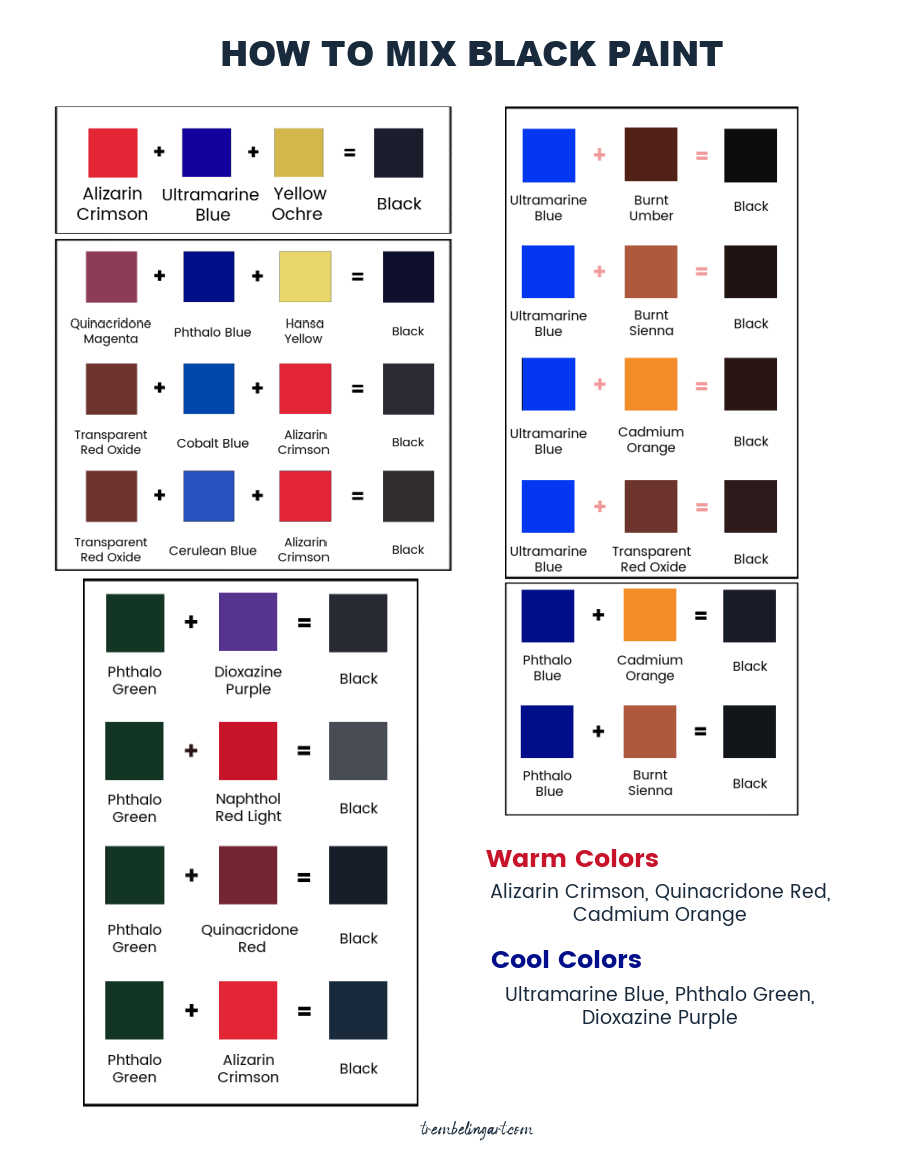
Mixing primary colors is the key to creating black paint at home. Primary colors are red, yellow, and blue. When combined in the right way, they produce a deep, rich black. This method works well for artists who want to customize their black tones.
Start with equal amounts of red, yellow, and blue. This creates a base that looks dark but may need adjustment. The exact shade depends on the type of paint and color quality.
Equal Parts Of Red, Yellow, And Blue
Use the same amount of red, yellow, and blue paint on your palette. Mix them slowly with a brush or palette knife. The result is a dark color close to black. This mix shows how primary colors combine to absorb light.
The black from equal parts might look muddy at first. It may lean towards brown or gray. That is normal and expected. Mixing more paint or adjusting proportions can fix this.
Balancing For True Black
Adjust the mix by adding small amounts of each color. Add more blue for a cooler black. More red can warm up the color. Yellow should be added carefully to avoid a dull tone.
Test your mix on a white surface. Let it dry to see the true color. Keep adjusting until you get a deep, balanced black. This process lets you control the black’s warmth and depth.
Credit: trembelingart.com
Using Complementary Colors
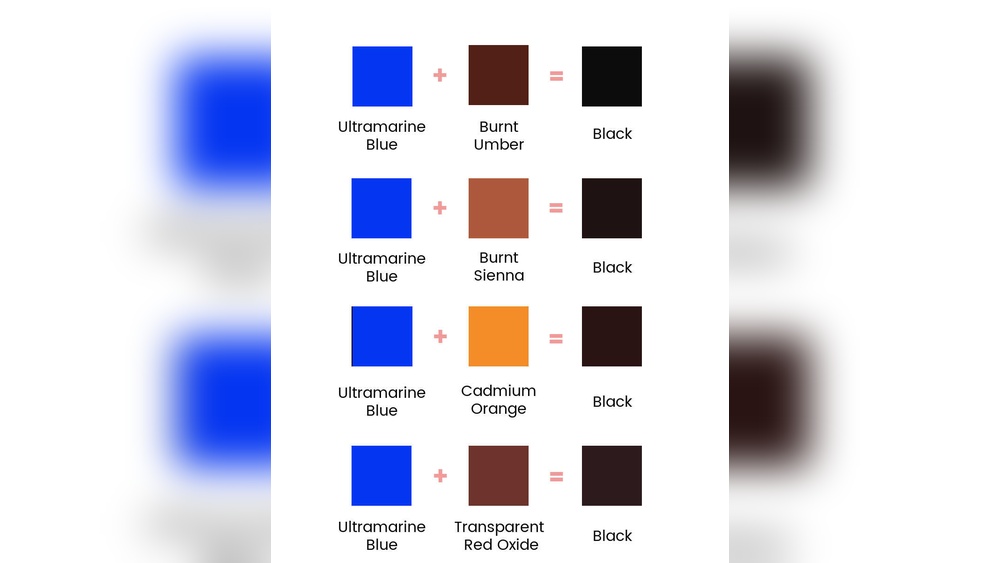
Combining blue and brown paints offers a simple way to create a rich, dark color close to black. This method uses the depth of blue and the earthiness of brown to produce a balanced, natural black shade. Adjusting the mix lets you control the warmth or coolness of the black, perfect for different painting needs.
Ultramarine And Burnt Umber
Start with ultramarine blue, a deep, vibrant blue with cool tones. Mix it with burnt umber, a warm, dark brown. These two colors blend well to create a dark, near-black shade. Use more ultramarine for a cooler black. Add more burnt umber to warm up the color. This combination works well for landscapes and portraits.
Adjusting Warmth And Coolness
To change the tone of your black, adjust the ratio of blue to brown. More blue gives a cooler, bluer black. More brown creates a warmer, reddish black. Test your mix on a white surface to see the true color. Add small amounts of other colors if needed to refine the shade. This method gives you control over your black’s temperature.
Combining Blue And Brown
Avoiding common mistakes helps you create a perfect black color with paint. Small errors can make your black look muddy or dull. Knowing what to avoid saves time and paint. Follow simple tips to get a deep, rich black every time.
Too Much One Color
Using too much of one color can make your black unbalanced. For example, adding too much blue may create a cool black with a blue tint. Too much red or yellow makes the black look warm or muddy. Always mix colors in small amounts. Adjust slowly to keep the shade even and dark.
Overmixing Colors
Overmixing colors can dull the vibrancy of your black paint. Mixing for too long blends colors into a flat, lifeless tone. Stop mixing once you reach a deep, uniform color. Gently stir instead of stirring fast. This keeps your black rich and avoids muddy spots.

Credit: smart.dhgate.com
Creating Warm Black Shades
Different paint types require unique methods to create black color. Knowing these tips helps you mix black effectively. Each paint behaves differently when mixed. Understanding the base and drying time is key. Follow simple steps for each paint type below.
Acrylic Paint Mixing
Acrylic paint dries fast and changes color slightly as it dries. Mix equal parts of blue, red, and yellow to get a dark base. Adjust by adding a little burnt umber for warmth. Use small amounts at first to avoid muddy colors. Stir well for even color. Add tiny black paint if needed to deepen the shade.
Oil Paint Mixing
Oil paint dries slowly and blends smoothly. Start by mixing ultramarine blue and burnt umber. These two create a rich, deep black tone. Add small amounts of alizarin crimson to warm the black if desired. Work on a palette and mix thoroughly. Use linseed oil to thin and blend the paint for smooth application.
Watercolor Approaches
Watercolors are transparent and require layering to achieve black. Mix equal parts of ultramarine blue and burnt sienna on your palette. Apply multiple layers to build darkness gradually. Let each layer dry before adding the next. Avoid mixing too much paint at once to keep the color vibrant. Small touches of black watercolor paint can enhance depth.
Frequently Asked Questions
What Two Colors Make Black?
Mixing blue and orange or red and green creates a dark, near-black shade. Combining dark blue with brown also works well. True black requires mixing red, yellow, and blue equally.
How Do You Make The Color Black In Paint?
Mix equal parts of red, yellow, and blue paint to create true black. Alternatively, blend complementary colors like blue and orange or red and green for near-black shades. Mixing dark blue with brown also produces a rich black tone. Adjust ratios to achieve desired warmth or coolness.
What Colors Make Black Coloring?
Mix equal parts of red, yellow, and blue to make black. Alternatively, mix complementary colors like blue and orange, red and green, or yellow and purple. Mixing dark blue with dark brown also creates a rich black shade. Adjust proportions for warmer or cooler tones.
Do Green And Purple Make Black?
Green and purple do not make true black. Mixing complementary colors like red and green creates a dark, near-black shade. For true black, combine all three primary colors: red, yellow, and blue.
What Two Colors Mix To Create Black Paint?
Mixing complementary colors like blue and orange or red and green creates near-black shades.
Can You Make True Black By Mixing Paints?
True black requires mixing all three primary colors: red, yellow, and blue in equal parts.
How Do You Make A Warm Black Color?
Add more red or brown to your mix to create a warmer black tone.
What Is The Easiest Way To Make Black Paint?
Mix equal parts of dark blue (ultramarine) and dark brown (burnt umber) paint.
Can Mixing Blue And Brown Make Black Paint?
Yes, blue and brown mix to form a dark, almost black color.
How To Make Cool Black Paint With Acrylics?
Use more blue than brown or red to get a cooler black shade.
Conclusion
Creating black paint is simple with the right color mixes. Blend equal parts of red, yellow, and blue for true black. Mixing complementary colors like blue and orange also gives deep, dark shades. Adjust amounts to get warmer or cooler blacks.
Experimenting with these methods helps you find the perfect tone. Now you can make black paint easily at home. Keep practicing, and enjoy your painting projects with custom colors.