Are you curious about how to make the perfect brown color for your next art project or design? Whether you’re mixing paints, creating digital art, or just exploring colors, knowing how to make brown gives you control over your palette and creativity.
In this guide, you’ll learn simple, effective ways to mix brown using basic colors you probably already have. Plus, you’ll discover how to tweak your mix to get exactly the shade you want—warm, cool, light, or deep. Ready to unlock the secrets behind brown?
Keep reading, and soon you’ll be mixing browns like a pro!
Primary Colors For Brown
To create the color brown, you start with the primary colors. These are red, yellow, and blue. Each color plays an important role in mixing brown. Using these colors correctly makes it easy to get the shade you want.
Mixing the three primary colors in different amounts produces many shades of brown. You can make the brown darker or lighter by changing the amount of blue or red. Adding a little white paint lightens the brown for softer tones.
Red: The Warm Base
Red adds warmth and richness to brown. It is a strong color that influences the final shade. Using more red creates a reddish or rust-like brown. Red pairs well with yellow and blue to balance the mix.
Yellow: The Brightener
Yellow lightens the mix and adds brightness. It helps create a golden or earthy brown. Yellow combined with red and blue creates natural-looking browns. Adjust yellow to make the brown more vibrant or muted.
Blue: The Darker Tone
Blue deepens the brown color. It adds coolness and richness to the mix. Using more blue results in a darker or chocolate brown. Blue balances the warmth of red and yellow for a natural brown shade.

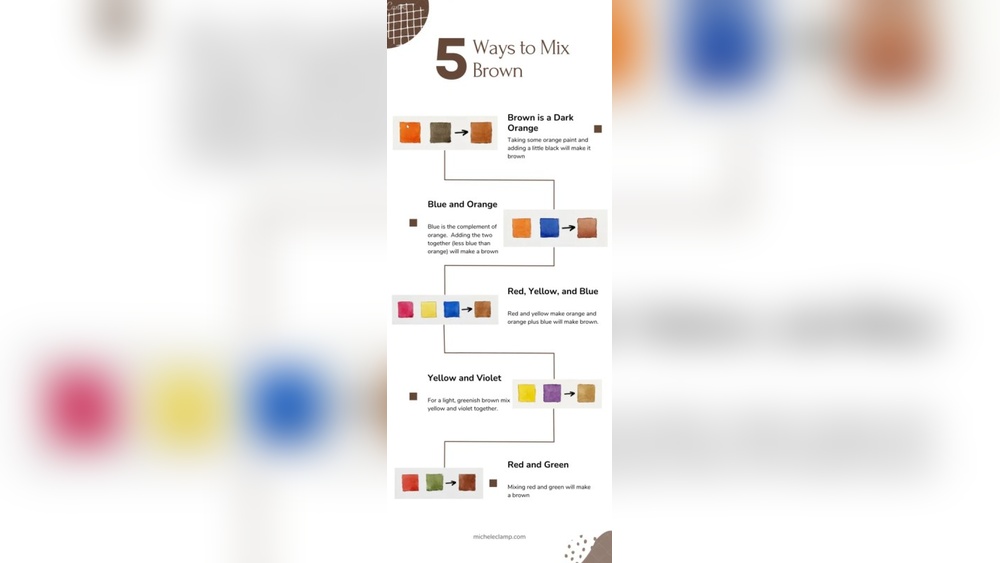
Credit: micheleclamp.com
Mixing Equal Parts
Mixing equal parts of colors is a simple way to create brown. This method uses basic colors in balanced amounts. It is perfect for beginners and easy to follow.
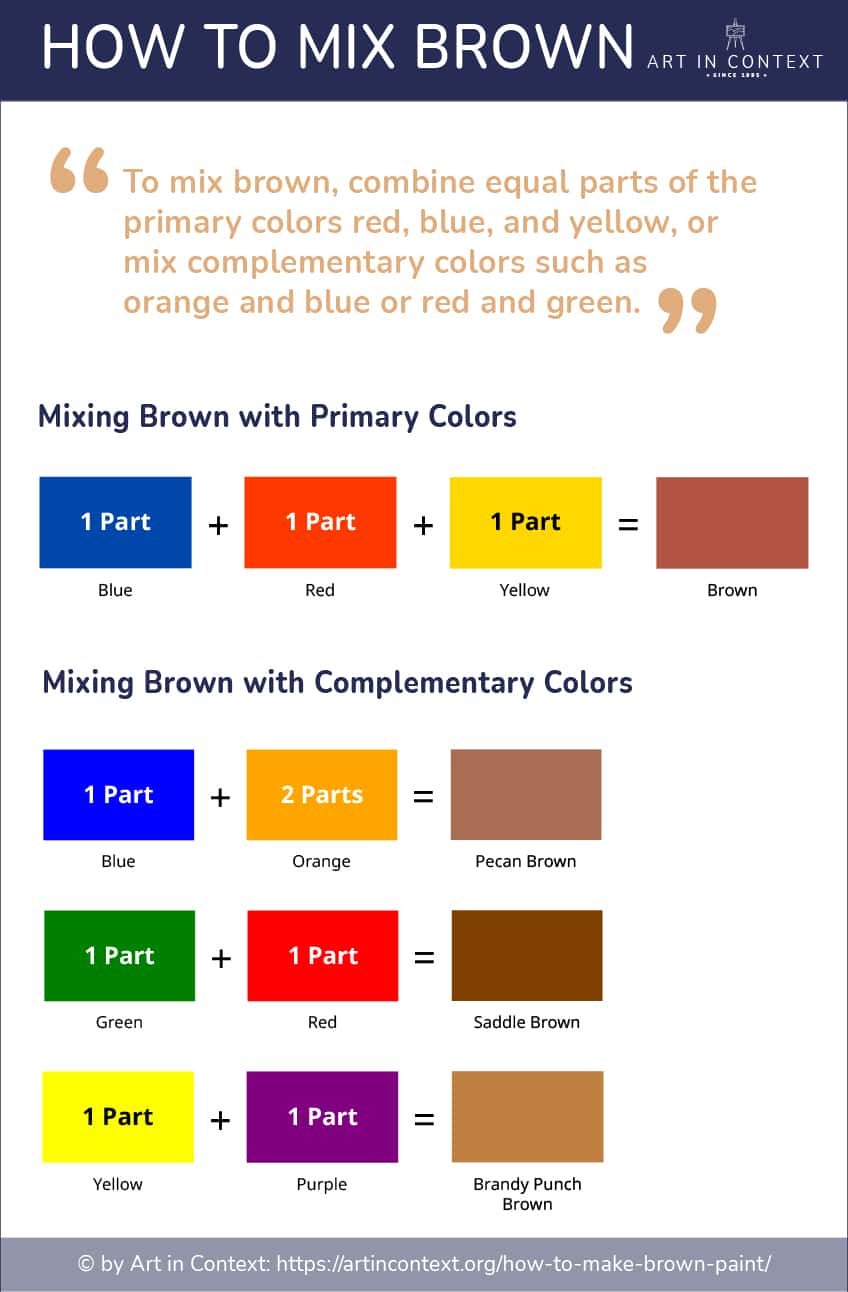
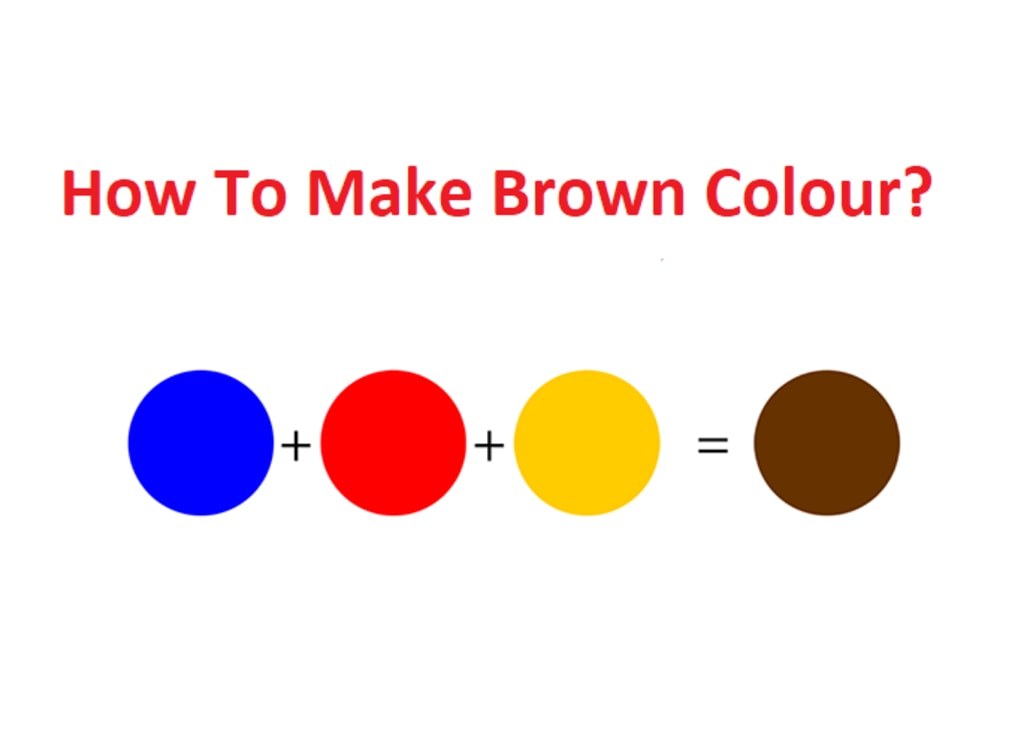
The key is to mix red, yellow, and blue in equal amounts. These three colors are called primary colors. When mixed together equally, they produce a natural brown color.
What Colors To Use
Use pure red, yellow, and blue paint or pigment. Avoid using tinted or mixed colors for best results. The pure colors give a rich, true brown.
Steps To Mix Equal Parts
Start with small amounts of each color. Place equal drops or scoops on a palette. Blend them thoroughly using a brush or a mixing tool.
Adjusting The Brown Shade
Add more red to warm the brown. Add more blue for a cooler brown. More yellow makes the brown lighter and brighter.
Lightening Or Darkening Brown
To lighten brown, add a little white paint. For a darker brown, add a small amount of black or blue. Mix well after each addition.
Adjusting Brown Shades
Adjusting brown shades allows you to create a wide variety of warm and rich tones. Small changes in the mix can produce different moods and effects. Understanding how each primary color affects brown helps you customize the shade you want.
Adding More Yellow
Adding yellow to brown makes the color warmer and lighter. It creates a golden or tan shade. This adjustment works well for earth tones and natural looks.
Adding More Red
Adding red deepens the brown and adds richness. It creates reddish or mahogany shades. This change is great for warm, cozy designs and autumn themes.
Adding More Blue
Adding blue cools down the brown and darkens it. It creates a deeper, more muted shade. This tone fits well in modern or neutral color schemes.
Credit: artincontext.org
Using Complementary Colors
Using complementary colors is a simple way to create brown. Complementary colors sit opposite each other on the color wheel. When mixed, they cancel each other out, producing a rich brown tone. This method gives you control over the warmth or coolness of the brown.
Blue And Orange
Blue and orange are direct complements. Mixing these two yields a deep, natural brown. More blue creates a cooler brown, while more orange gives a warmer shade. This pair is excellent for earthy, muted tones in art and design.
Red And Green
Red and green blend to form a strong brown color. Adjust the red for warmer browns or add more green for cooler browns. This combination is great for creating natural wood or soil colors in paintings.
Purple And Yellow
Purple and yellow create a balanced brown mix. Increase purple for a darker brown or add more yellow for a lighter, golden brown. This mix works well for soft, subtle brown shades in creative projects.
Lightening Brown
Lightening brown color helps achieve softer, brighter shades. It allows more versatility in design and art. Light brown tones often feel warm and natural. Understanding how to lighten brown is useful for painters and designers alike.
Adding White To Brown
Mix a small amount of white paint with brown. This will lighten the brown without changing its hue. Add white gradually to control the lightness. Too much white can make the color pale or washed out.
Using Yellow To Brighten Brown
Yellow can brighten brown and add warmth. Mix yellow with brown slowly to get a golden shade. This method is good for natural and earthy tones. Avoid adding too much yellow to keep the brown balanced.
Mixing Light Brown With Red
Add a tiny bit of red to light brown for a richer tone. This deepens the color while keeping it light. Red helps create warm and inviting brown shades. Use sparingly to avoid turning the color too dark.
Credit: vocal.media
Creating Warm Browns
Creating warm browns adds richness and depth to your color palette. Warm browns feel cozy and inviting. They often remind us of autumn leaves, chocolate, or wood. These shades work well in art, design, and decoration.
Warm browns are made by mixing colors that lean toward red, orange, or yellow. This gives the brown a glowing, sunny tone. You can adjust the mix to get just the right warmth.
Mixing Red And Yellow With Blue
Start with equal parts of red, yellow, and blue. Red and yellow make orange, which adds warmth. Blue balances the mix to form brown. Use more red or yellow for warmer tones. Add less blue to keep the brown soft and bright.
Using Orange And Blue
Mix orange and blue to create warm brown shades. Orange is made from red and yellow. It gives the brown a rich, golden glow. Blue is the complementary color to orange. Balancing these creates earthy browns with warmth.
Adding A Touch Of Red Or Yellow
After mixing brown, add a little red or yellow. This makes the brown warmer and more vibrant. A small amount can change the feel completely. Red adds a reddish tint, while yellow adds brightness.
Creating Cool Browns
Brown is a warm, earthy color widely used in art. It adds depth and richness to paintings. Artists use brown to create natural textures and realistic shadows.
Brown can express comfort, stability, and simplicity. It often appears in landscapes, portraits, and still life. Understanding how to use brown improves artwork balance and mood.
Creating Natural Textures
Brown helps artists mimic wood, soil, and leather textures. Mixing brown with other earth tones enhances realism. Layering different shades of brown adds dimension and detail.
Using dry brush techniques with brown can simulate rough surfaces. This method works well for tree bark and stone. Subtle variations in brown bring life to natural objects.
Adding Depth And Shadows
Brown is excellent for shading and creating depth. It softens harsh black shadows and adds warmth. Artists blend brown with darker colors to avoid flatness.
Shadows in brown tones look more natural and inviting. This technique suits skin tones and fabric folds. Gradual transitions with brown enhance three-dimensional effects.
Balancing Color Compositions
Brown balances bright and bold colors in a painting. It grounds vibrant hues, making them easier to view. Small brown accents prevent colors from overwhelming the scene.
Using brown as a neutral background highlights focal points. It also helps unify different color areas. Thoughtful use of brown can improve overall harmony in art.
Frequently Asked Questions
What Color To Mix To Make Brown?
Mix equal parts of red, yellow, and blue to make brown. Adjust ratios for different shades or mix complementary colors like blue and orange.
Do Black And Yellow Make Brown?
Black and yellow do not make brown. Mixing yellow with red and blue creates brown shades. Black darkens colors but doesn’t produce brown alone.
What Is The Brown Mix?
The brown mix is created by combining primary colors red, yellow, and blue in equal parts. Adjusting these colors changes the brown shade. Mixing complementary colors like blue and orange or red and green also produces brown tones. Adding white lightens the brown color.
Why Do Two Colors Make Brown?
Two colors create brown by mixing complementary hues, like blue and orange, balancing all primary colors. This blending results in brown.
What Colors Do I Mix To Make Brown?
Mix red, yellow, and blue in equal parts to create a basic brown color.
Can Brown Be Made By Mixing Secondary Colors?
Yes, combine a secondary color with its complementary color, like blue and orange.
How To Adjust Brown Shade After Mixing Colors?
Add more red for warm brown, or more blue for cooler brown shades.
Is It Possible To Lighten Brown Color?
Yes, add a small amount of white paint to make brown lighter.
How To Make Dark Brown Color Easily?
Mix equal parts of red, yellow, blue, then add a little black.
Can I Make Brown Using Only Primary Colors?
Yes, mixing red, yellow, and blue primary colors creates brown.
Conclusion
Creating brown color is simple by mixing primary or complementary colors. Experiment with red, yellow, and blue in different amounts to find your perfect brown. Adjust shades by adding more of one color or a little white to lighten. Practice helps you see how colors blend and change.
Enjoy making various brown tones for your art or projects. Keep trying different mixes and have fun with colors.