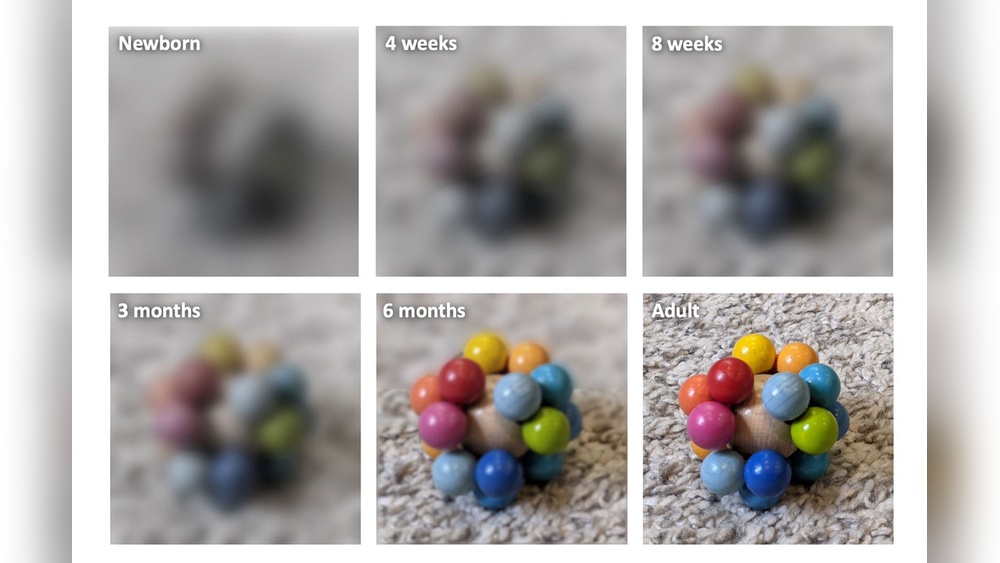
Have you ever caught yourself wondering what your baby sees when they look at the world around them? You might be curious—can babies actually see color right from birth, or does this ability develop over time?
Understanding how your little one’s vision works can help you connect with them in new and meaningful ways. You’ll discover the surprising journey of your baby’s color vision—from the first blurry black-and-white images to the vibrant colors they’ll soon recognize.
Keep reading to learn exactly when and how your baby begins to see the colorful world you enjoy every day.

Credit: intheplayroom.co.uk
Newborn Vision Basics
Newborn babies do not see the world clearly at first. Their vision is blurry and mostly in black, white, and gray shades. This helps them focus on high-contrast patterns. These patterns are easier for their developing eyes to recognize.
In the first few weeks, babies begin to see the color red. Red is the first color their eyes can pick out. This early color vision is important for their brain development and helps them start to make sense of their surroundings.
As weeks pass, babies slowly begin to see other colors. Yellow and blue become visible around two months of age. Green appears later, between four and six months. Their color vision improves step by step over time.
Initial Vision: Black, White, And Gray
At birth, babies see mostly black, white, and gray. Their eyes cannot focus well yet. High-contrast images like stripes or checkerboards catch their attention best. These simple patterns help stimulate their visual system.
First Colors Seen: Red
Red is the first color newborns recognize. This usually happens within weeks after birth. Red objects stand out because of their brightness and contrast. This early color helps babies start to explore the world visually.
Developing Color Vision: Yellow And Blue
By about two months, babies begin to see yellow and blue. These colors add more variety to their visual experience. Seeing multiple colors helps their brain grow and learn to tell colors apart.
Later Color Recognition: Green
Green appears later, usually between four and six months. This shows that babies’ eyes and brains are maturing. Their color vision becomes more like an adult’s over time.
Colors Babies See First
Babies do not see the world in full color right at birth. Their vision starts in black, white, and shades of gray. Colors appear gradually as their eyes and brain develop. Understanding which colors babies see first helps caregivers choose toys and clothes that attract their attention.
Newborns respond best to high-contrast colors. These colors are easier for their eyes to detect. Over weeks, babies begin to notice more colors in their surroundings. This gradual change supports their visual growth and learning.
Black And White
At birth, babies see mainly black, white, and gray tones. Their vision is blurry and unfocused. High-contrast patterns with black and white are easiest to see. These patterns help stimulate their developing eyesight. Objects with clear edges attract their attention most.
Red
Within a few weeks, babies start to recognize the color red. Red is usually the first color they can identify. It stands out because it has a strong wavelength. Bright red objects are good choices for early toys and decorations.
Yellow And Blue
By about two months, babies begin to see yellow and blue. These colors appear after red in their visual development. Yellow is bright and cheerful, while blue is calm and soothing. Using these colors can keep babies engaged and interested.
Green
Green becomes visible to babies between four and six months. It is a softer color compared to red, yellow, or blue. This color helps babies notice plants and natural objects. Green adds variety to the colors babies can explore.
How Color Vision Develops
Babies do not see the world in full color right after birth. Their color vision grows step by step as their eyes and brain develop. Understanding this process helps parents know what their babies experience visually.
At first, newborns see mostly in black, white, and shades of gray. Their eyes focus poorly, and details are blurry. Bright, high-contrast patterns catch their attention best.
Immediate Vision After Birth
Newborns can only see black, white, and gray colors. Their eye muscles are weak and do not focus well. They notice strong contrasts, like black and white stripes. This limited vision helps their brain start to process images.
First Few Weeks: Seeing Red
Within a few weeks, babies begin to see red. Red is usually the first color they recognize. This color stands out because it has a long wavelength and is easier for immature eyes to detect.
Two Months: Adding Yellow And Blue
At about two months old, babies start distinguishing yellow and blue. These colors have shorter wavelengths and need better eye development. Their brains also improve at processing different colors.
Four To Six Months: Seeing Green
Between four and six months, babies begin to see green. Their color vision becomes more balanced. By this time, babies can see many colors clearly, similar to adults.
Timeline For Color Recognition
The timeline for color recognition in babies shows steady progress. At birth, babies see mostly black, white, and gray. Their vision is blurry and unclear. They notice high-contrast patterns more easily than colors.
Within a few weeks, babies begin to recognize the color red. Red is usually the first color they can identify. As weeks pass, their color vision improves.
By around two months, babies start to see other colors. Yellow and blue become distinguishable. Their eyes and brain work together to process these colors better.
Between four and six months, babies develop the ability to see green. This marks an important step in their color vision growth. Over time, their color recognition becomes closer to adult levels.
Immediately After Birth
Newborns see mostly in black, white, and gray. Their vision is blurry and unfocused. They respond best to high-contrast patterns.
A Few Weeks Later
Babies begin to see red. It is the first color they recognize. This helps them notice toys and faces.
Two Months Old
Yellow and blue colors become visible to babies. Their brain processes these colors more clearly now. This helps with visual learning.
Four To Six Months
Babies start to see green. Color vision becomes more complete. Their world becomes brighter and more colorful.
Why Red Is The First Color
The role of eye development is crucial in understanding how babies see color. At birth, a baby’s eyes are still maturing. Their vision starts off blurry and mostly in shades of black, white, and gray. The ability to detect color depends on how the eyes and brain grow and connect.
The eye’s development happens in stages. The retina, a key part of the eye, contains cells called cones. These cones are responsible for detecting color. In newborns, these cones are not fully formed or working well. Over time, the cones develop, allowing babies to see more colors clearly.
Early Retinal Development
The retina is not fully mature at birth. The cones that detect color are few and less sensitive. This limits a newborn’s ability to see colors well. The retina continues to grow during the first few months. This growth improves color detection gradually.
Connection Between Eyes And Brain
Color vision requires the brain to interpret signals from the eyes. At birth, the pathways between the eyes and brain are still forming. This slow connection means babies cannot fully process colors. As the brain matures, it gets better at understanding color signals.
Stages Of Color Vision Development
Babies first notice high-contrast colors like red. This happens within a few weeks after birth. By two months, they start to see colors like yellow and blue. Green and other colors appear around four to six months. This step-by-step process matches the eye’s and brain’s development.

Credit: www.amazon.com
High-contrast Patterns And Sight
Choosing the best colors for a baby’s environment supports their visual and emotional growth. Babies see colors gradually, starting with black and white. Soft, gentle hues create a calm space, while bright colors help with focus and stimulation. Understanding which colors suit babies’ vision helps parents set a nurturing atmosphere.
High-contrast Colors
Newborns notice black and white first. High-contrast colors catch their attention easily. Patterns with sharp contrasts help develop their sight. Use black and white toys, books, and decorations. These colors keep babies engaged and curious.
Red And Warm Tones
Babies start seeing red within weeks. Warm colors like red, orange, and pink are clear to them early on. These shades can excite and stimulate babies. Adding red accents in the nursery can boost alertness.
Soft Pastels
Soft pastel colors calm babies and create a soothing space. Light blues, greens, and yellows ease stress and help babies relax. Pastels work well for walls, bedding, and clothing. They balance stimulation with comfort.
Blue And Green Hues
Blue and green become visible around two to six months. These colors support relaxation and focus. Blue tones help with sleep, while green promotes harmony. Use these colors in play areas and nap spaces.

Credit: intheplayroom.co.uk
Frequently Asked Questions
What Colors Can A Baby First See?
Babies first see black, white, and gray. Within weeks, they begin to recognize red. By two months, they see yellow and blue, and green appears by four to six months.
What Is The 5 8 5 Rule For Babies?
The 5-8-5 rule for babies guides feeding: 5 ounces per feeding, every 8 hours, totaling 5 feedings daily.
Is It True That Babies Can’t See Color?
Babies see mostly black, white, and gray at birth. They begin to perceive red within weeks, then yellow, blue, and green by six months.
What Can A 2 Month Old Baby See?
A 2-month-old baby sees high-contrast patterns clearly and begins to distinguish red, yellow, and blue colors. Their vision remains blurry but improves daily.
Can Newborn Babies See Colors At Birth?
Newborns mostly see black, white, and gray with blurry vision at birth.
When Do Babies Start To See The Color Red?
Babies begin to see red within the first few weeks after birth.
What Colors Can Babies See By Two Months Old?
By two months, babies can see red, yellow, and blue colors.
How Does A Baby’s Color Vision Develop Over Time?
Color vision improves from red first, then yellow, blue, and later green.
Why Do Babies See High-contrast Colors Better?
High-contrast colors are easier for babies to focus on and recognize early.
When Can Babies Distinguish Green And Other Colors?
Babies start to see green around four to six months of age.
Conclusion
Babies start life seeing mostly black, white, and gray. Red is usually the first color they notice. Over weeks, yellow and blue come into view. By four to six months, green joins the mix. Their vision sharpens slowly but surely.
Color helps babies learn about their world. Watching this growth is truly fascinating. Every new color means a new discovery. Understanding baby vision helps parents support their child. Keep observing and enjoy these early milestones.