
Thinking about starting your own business in Colorado? Forming an LLC (Limited Liability Company) is one of the smartest moves you can make.
It offers you personal liability protection, flexible management options, and potential tax benefits. But where do you start? This guide breaks down everything you need to know about how to start an LLC in Colorado—step by step, in simple language, and without the confusion.
Whether you’re launching a small side hustle or a full-scale company, you’ll find clear answers to your biggest questions, from picking the perfect business name to filing the right paperwork. Keep reading, and you’ll be on your way to owning a Colorado LLC with confidence and ease.
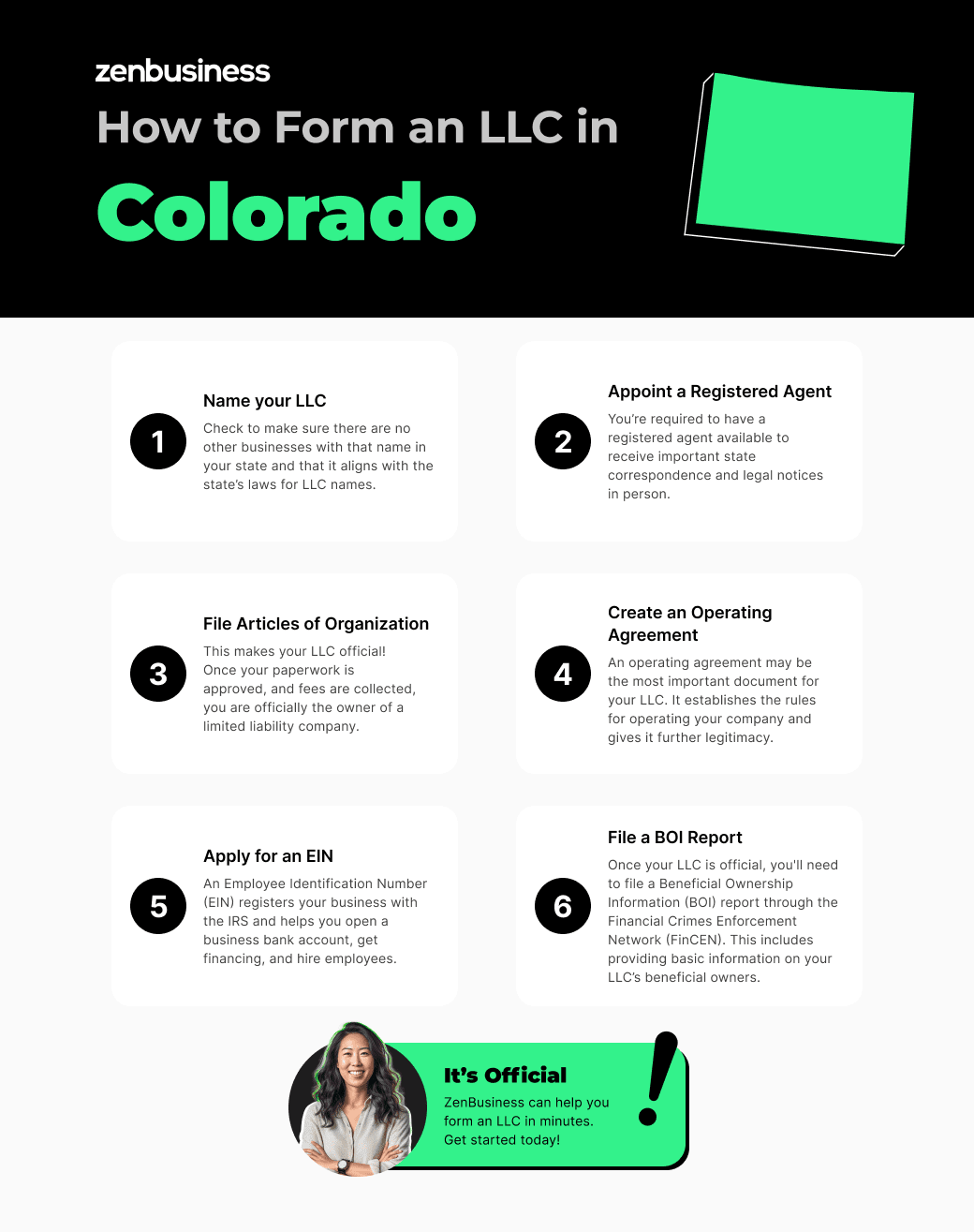
Credit: www.zenbusiness.com
Choose A Business Name
Choosing the right business name is a key step in forming your Colorado LLC. The name represents your brand and must follow state rules. Picking a clear and unique name helps your business stand out. It also ensures legal compliance and smooth registration. Take time to find a name that fits your business purpose and meets Colorado’s requirements.
Include Llc In The Name
Your business name must include “Limited Liability Company” or an abbreviation like “LLC.” This shows your company’s legal structure. It informs customers and partners that your business has limited liability protection. Avoid using other abbreviations or terms that do not clearly state the LLC status. This rule is strict and helps avoid confusion.
Avoid Restricted Words
Some words are not allowed in your LLC name. Words like “bank,” “insurance,” or “trust” require special permission. These terms are regulated by other state agencies. Using restricted words without approval can delay or block your registration. Choose simple, clear words that describe your business without legal risks.
Check Name Availability
Check if your chosen name is available in Colorado before filing. Use the Colorado Secretary of State’s online tool to search existing business names. This prevents choosing a name already in use or too similar to another. Reserving your name early keeps it safe while you prepare your paperwork. A unique name helps build your brand and avoids legal issues.
Appoint A Registered Agent
Appointing a registered agent is a crucial step in forming an LLC in Colorado. This person or company receives important legal and tax documents on behalf of your business. The registered agent ensures your LLC stays compliant with state laws. Without a registered agent, your LLC may face penalties or loss of good standing.
Choosing the right registered agent helps maintain smooth communication with the state. The agent must have a physical address in Colorado and be available during business hours. You can select an individual or hire a professional service to fulfill this role.
Agent Requirements
The registered agent must have a physical street address in Colorado. P.O. Boxes are not allowed. The agent needs to be present during normal business hours to accept documents. This ensures your LLC receives official papers like lawsuits or tax notices promptly. The agent can be a Colorado resident or a business authorized to do business in the state.
Self-appointment Option
You may act as your own registered agent if you have a Colorado address. This option saves money but requires you to be available during all business hours. You must accept legal documents and forward them quickly to yourself or your LLC. Keep in mind, your address becomes public record.
Hiring A Service
Registered agent services offer reliability and privacy. They handle all official mail and notify you immediately. These services provide a professional address and reduce the risk of missing important documents. Hiring a service also means you don’t need to be home during business hours. Many companies offer affordable plans suited for new LLCs.
File Articles Of Organization
Filing the Articles of Organization is the key step to officially create your LLC in Colorado. This document registers your business with the state and makes your LLC legal. It includes important details about your company. Prepare carefully to avoid delays. The process is straightforward but requires accuracy and attention to detail.
Prepare Required Information
Gather all necessary information before starting the filing. You will need your LLC’s name. The name must include “Limited Liability Company” or “LLC.” It cannot contain restricted words like “bank” or “insurance.” Also, decide on the LLC’s principal office address. Choose a registered agent with a physical Colorado address. This person or company will receive legal documents for your LLC. Finally, provide the names and addresses of the LLC’s organizers. Double-check all details for accuracy.
Submit To Secretary Of State
File the Articles of Organization online through the Colorado Secretary of State’s website. The online system guides you step-by-step. Upload the completed form and enter all required information. Review everything carefully before submitting. Once filed, the state will process your documents. You will receive confirmation by email. Keep a copy of your filed Articles for your records.
Filing Fees
The filing fee for Articles of Organization in Colorado is $50. Pay this fee online during submission. The state accepts credit cards and other electronic payments. This fee covers the processing of your LLC’s formation. Remember to budget for this cost as part of your startup expenses. Additional fees may apply for other services like expedited processing.
Create An Operating Agreement
Creating an operating agreement is a crucial step when starting an LLC in Colorado. This document outlines the rules and structure of your business. It helps define roles, responsibilities, and ownership shares clearly. Even though Colorado does not require an operating agreement, having one protects your company. It also helps avoid conflicts among members. Drafting this agreement early can save time and money later on.
Purpose And Benefits
An operating agreement sets clear expectations for all LLC members. It explains how decisions are made and profits are shared. This agreement protects your limited liability status. It shows the business is separate from its owners. It also helps prevent misunderstandings and legal disputes. Having a written agreement strengthens your business’s credibility with banks and investors.
Key Elements To Include
Include member names and ownership percentages. Define each member’s duties and voting rights. Outline how profits and losses will be split. Describe the process for adding or removing members. Set rules for meetings and decision-making. Explain how the LLC will handle disputes and dissolve if needed. Including these elements creates a solid framework for your business.
Not Required But Recommended
Colorado does not require an operating agreement to form an LLC. Yet, writing one is highly recommended. It provides legal protection and clarifies business operations. Without it, state default rules will apply. These rules may not fit your unique business needs. Creating an agreement tailored to your LLC keeps everyone on the same page.
Obtain An Ein
Obtaining an Employer Identification Number (EIN) is a key step in starting your LLC in Colorado. This unique number identifies your business for federal tax purposes. It acts like a Social Security number for your company. Most banks and government agencies require an EIN to open accounts or file taxes.
Getting an EIN is free and simple. It helps separate your personal and business finances. This number also allows you to hire employees and manage payroll. Knowing how to apply and use your EIN can save time and avoid legal issues.
What Is An Ein
An EIN is a nine-digit number given by the IRS. It stands for Employer Identification Number. The IRS uses it to track your business for tax reasons. Every LLC needs one to operate legally. It helps the government see your company’s income and expenses.
How To Apply
You can apply for an EIN online on the IRS website. The process takes about 10 minutes. Fill out the form with your LLC’s information. You need your LLC name, address, and the owner’s Social Security number. After submitting, you get your EIN immediately. Keep this number safe for future use.
Uses Of Ein
Use your EIN to open a business bank account. It is also required to file federal and state taxes. Employers use it to report employee wages. Your EIN helps apply for business licenses and permits. It separates your business identity from your personal one.

Credit: www.youtube.com
File Periodic Reports
Filing periodic reports is a crucial step to keep your Colorado LLC active and compliant. These reports update the state on your business status and information. Missing or late filings can lead to penalties or even dissolution of your LLC. Understanding the requirements and deadlines helps you avoid trouble and maintain good standing.
Annual Report Requirements
Colorado requires every LLC to file an annual report each year. This report confirms your business details, such as your address and registered agent. You must submit accurate information to keep your LLC records current. The state uses this data to communicate with your business.
Filing Deadlines
Annual reports are due on the anniversary month of your LLC’s formation. For example, if your LLC started in June, your report is due each June. Filing early is allowed and recommended to avoid last-minute issues. Late filings can cause your LLC to lose good standing.
Fees And Penalties
The filing fee for the annual report is $10 as of now. Paying this fee on time keeps your LLC active and in good standing. If you miss the deadline, a penalty may apply. Continued failure to file can result in your LLC being suspended or dissolved by the state.
Secure Business Licenses
Securing the right business licenses is a key step in starting an LLC in Colorado. Licenses and permits keep your business legal and help avoid fines. Different types of licenses depend on your business activities and location. It is important to know which licenses apply to your LLC before you start operating.
Identify Needed Permits
Identify all permits your business needs. This depends on your business type and services offered. Some common permits include health permits, professional licenses, and environmental permits. Check state and local government websites for specific requirements. Missing a permit can cause delays or penalties.
City And County Requirements
Each city and county in Colorado has its own rules. You must comply with local licenses even if you have a state permit. Contact the city or county clerk’s office where your LLC is located. They provide information about business licenses and fees. Some areas require a home occupation permit for businesses run from home.
Sales Tax License
A sales tax license is necessary if your LLC sells goods or taxable services. Register with the Colorado Department of Revenue to collect and pay sales tax. This license allows you to charge customers the correct sales tax rate. Operating without this license can lead to fines and back taxes.
Understand Llc Costs
Maintaining compliance is vital for every Colorado LLC. It keeps your business legal and protects your personal assets. Staying organized and aware of rules avoids penalties and fines. Focus on key areas to keep your LLC in good standing.
Record Keeping
Keep all your business documents organized and safe. This includes financial records, contracts, and meeting minutes. Good records show your LLC operates as a separate entity. Store these documents for at least seven years. Proper record keeping helps with audits and legal matters.
Tax Obligations
Pay your state and federal taxes on time. Colorado LLCs must file income tax returns and may owe sales tax. Understand your tax deadlines to avoid late fees. Keep track of employee taxes if you hire workers. Using a tax professional can simplify this process.
Renewals And Updates
File your periodic reports with the Colorado Secretary of State. These reports update your business information and keep your LLC active. Submit changes like new addresses or managers promptly. Missing renewals can lead to your LLC’s cancellation. Set reminders to meet all deadlines without fail.
Maintain Compliance
Starting an LLC in Colorado becomes easier with the right online tools. The internet offers many resources to help you complete the process smoothly. These tools save time and reduce errors during registration.
You can find all official forms and guidelines on state websites. Name checkers help ensure your LLC name is unique and valid. Filing platforms allow you to submit documents electronically without visiting offices.
Secretary Of State Website
The Colorado Secretary of State website is the main source for LLC registration. It provides all forms needed to start your business. You can find instructions, fees, and processing times here. This site also hosts online filing services for your convenience.
Name Check Tools
Name check tools help confirm if your business name is available. They prevent you from choosing a name that someone else already uses. These tools are free and easy to use on the Secretary of State’s website. A unique name is necessary to avoid legal problems.
Filing Platforms
Online filing platforms let you submit your Articles of Organization quickly. They guide you through each step and reduce the chance of mistakes. Many platforms also offer payment options for filing fees. Using these services speeds up the approval process.
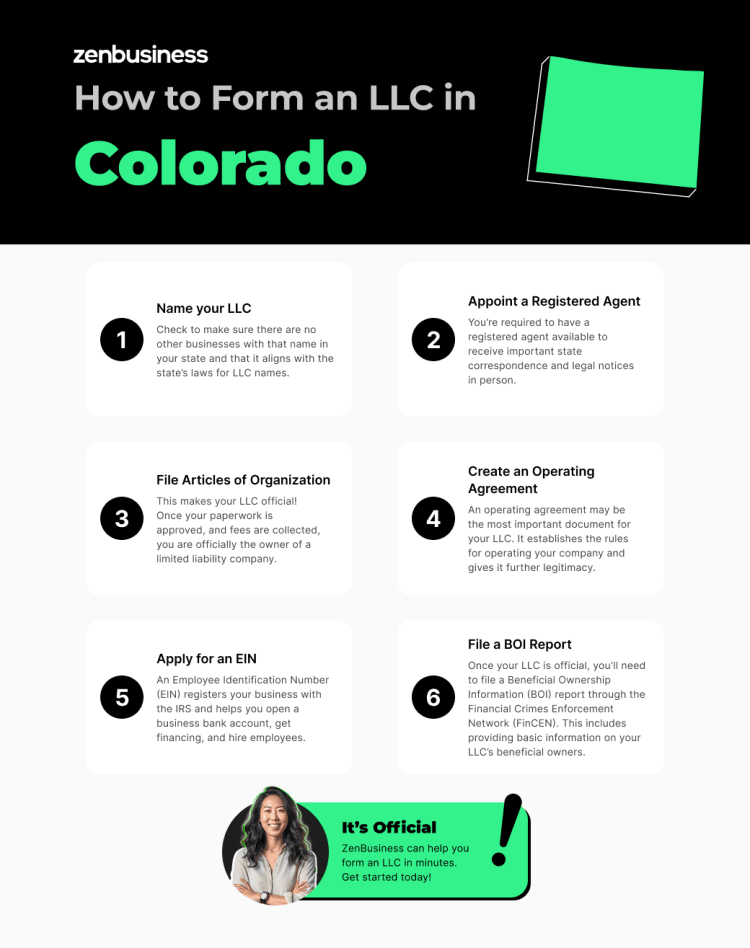
Credit: www.zenbusiness.com
Frequently Asked Questions
How Much Does It Cost To Set Up An Llc In Colorado?
Setting up an LLC in Colorado costs $50 to file the Articles of Organization. Annual reports cost $10. Additional fees may apply.
What Do I Need To Start An Llc In Colorado?
To start an LLC in Colorado, choose a unique name with “LLC,” appoint a registered agent, and file Articles of Organization. Obtain an EIN and create an operating agreement for smooth operations.
What Is The Downside Of Starting Llc?
Starting an LLC involves initial and ongoing fees, complex paperwork, and potential self-employment taxes. It also requires strict compliance with state regulations.
How Long Does It Take To Get An Llc In Colorado?
Colorado processes LLC filings typically within 3 to 5 business days online. Mail submissions may take longer, around 7 to 14 days. Expedited services can shorten processing time.
What Is An Llc And Why Choose It In Colorado?
An LLC is a business type that limits personal liability and offers tax benefits in Colorado.
How Do I Name My Llc In Colorado?
Choose a unique name with “LLC” or “Limited Liability Company” included, avoiding restricted words.
What Documents Are Needed To Start An Llc In Colorado?
File Articles of Organization with the Colorado Secretary of State and appoint a registered agent.
How Much Does It Cost To Start An Llc In Colorado?
The filing fee is $50, with additional costs for registered agents or licenses.
Who Can Be A Registered Agent For My Colorado Llc?
A person or business with a physical Colorado address who accepts legal documents for your LLC.
Do I Need An Operating Agreement For My Colorado Llc?
Though not required by law, an Operating Agreement helps define management and ownership clearly.
Conclusion
Starting an LLC in Colorado is a clear, step-by-step process. Choose a unique name that meets state rules. Appoint a registered agent with a Colorado address. File your Articles of Organization correctly to avoid delays. Keep track of fees and ongoing requirements.
Planning well saves time and stress later. Your LLC will give your business a strong legal foundation. Take action today to build your company with confidence.