Have you ever wondered why a ripe apple looks red or why the sky appears blue on a clear day? The colors around you are not just random; they are the result of a fascinating process that happens inside your eyes and brain.
When light bounces off objects and enters your eye, special cells called cones get to work. These cones detect different colors and send signals to your brain, which then creates the vivid world of color you see every day. Understanding how you see color will change the way you look at everything—from the clothes you wear to the food you eat.
Ready to discover the simple science behind this colorful experience? Let’s dive in and explore how your eyes and brain team up to bring the world to life in color.
Light And Color
Color is all about light. Without light, color does not exist. Light is a form of energy that travels in waves. These waves have different lengths. Each wavelength corresponds to a different color.
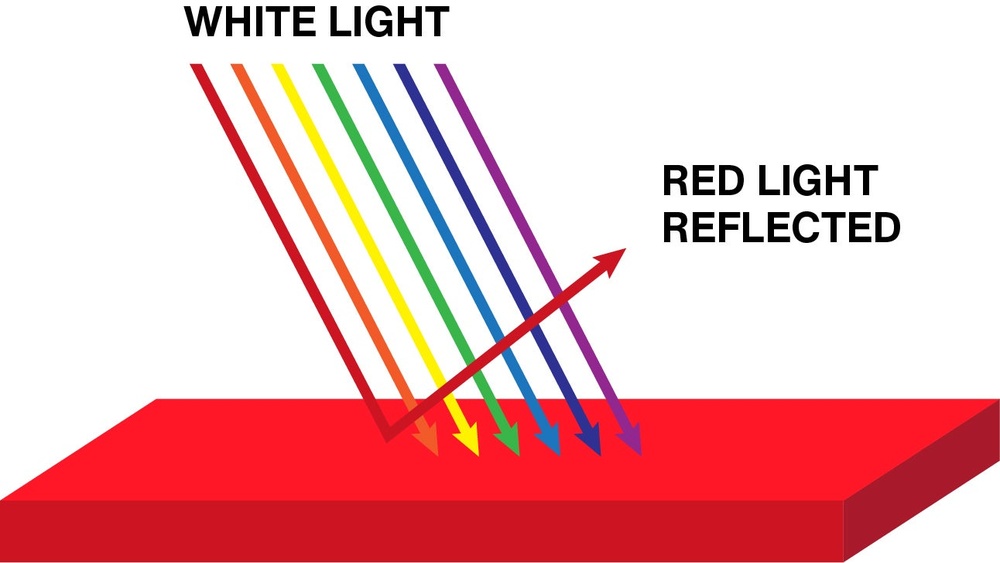
When light hits an object, some wavelengths bounce off. Others are absorbed by the object. The colors we see are the wavelengths that reflect to our eyes. This is how objects show their colors to us.
What Is Light?
Light is a type of energy visible to the human eye. It moves very fast and travels in waves. These waves have different sizes called wavelengths. Each wavelength makes a different color.
The shortest wavelengths look blue or violet. The longest wavelengths look red. Light from the sun contains all these colors mixed together.
How Light Interacts With Objects
When light touches an object, it can do three things. It can be absorbed, reflected, or transmitted. Absorbed light changes into heat inside the object. Reflected light bounces off and reaches our eyes. Transmitted light passes through clear objects like glass.
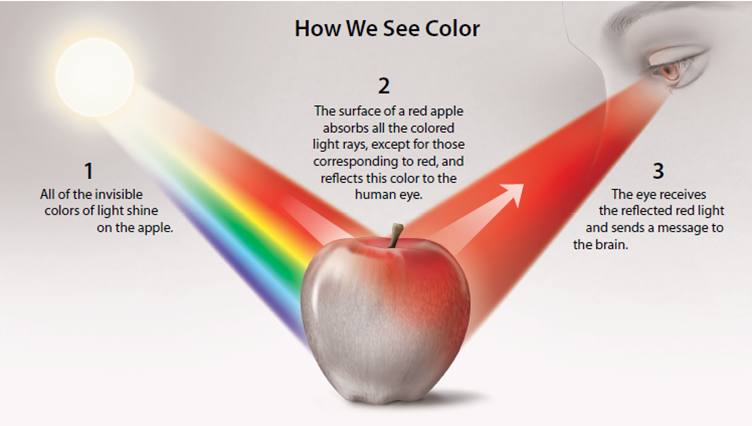
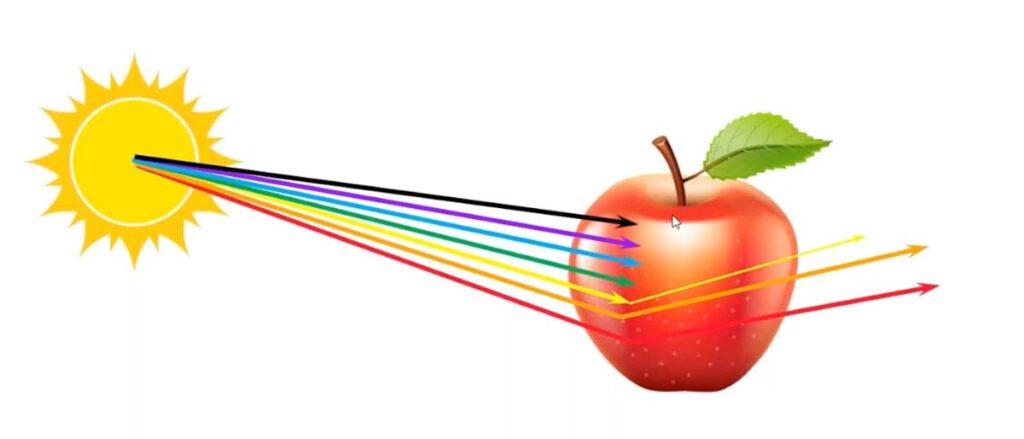
The colors we see depend on which light waves are reflected. For example, a red apple reflects red light but absorbs other colors.
The Role Of Cone Cells In Color Vision
Our eyes have special cells called cones. These cones detect different colors of light. There are three types of cones. One senses red light, another green, and the last one blue.
Each cone sends signals to the brain based on the light it detects. The brain mixes these signals to create the full range of colors we see every day.
Reflection And Absorption
Color perception begins with how objects interact with light. Reflection and absorption play key roles in this process. These two phenomena determine which colors reach our eyes. Understanding them helps explain why we see the colors we do.
Reflection Of Light
Reflection happens when light bounces off an object’s surface. The color we see depends on the light reflected. For example, a red apple reflects red light and absorbs other colors. The reflected red light enters our eyes, allowing us to perceive the apple’s color.
Surfaces can reflect light in two ways: specular and diffuse. Specular reflection is like a mirror, sending light at a single angle. Diffuse reflection scatters light in many directions. Most objects show diffuse reflection, which helps us see them from different viewpoints.
Absorption Of Light
Absorption occurs when an object takes in certain wavelengths of light. The absorbed light does not reach our eyes. This process removes some colors from the visible spectrum. The remaining light that is not absorbed becomes the color we perceive.
Materials have different absorption patterns based on their makeup. For example, a green leaf absorbs most colors except green. The green light reflects, making the leaf appear green. Absorption shapes the color by filtering the light before it reaches our eyes.
Pathway Of Light Into The Eye
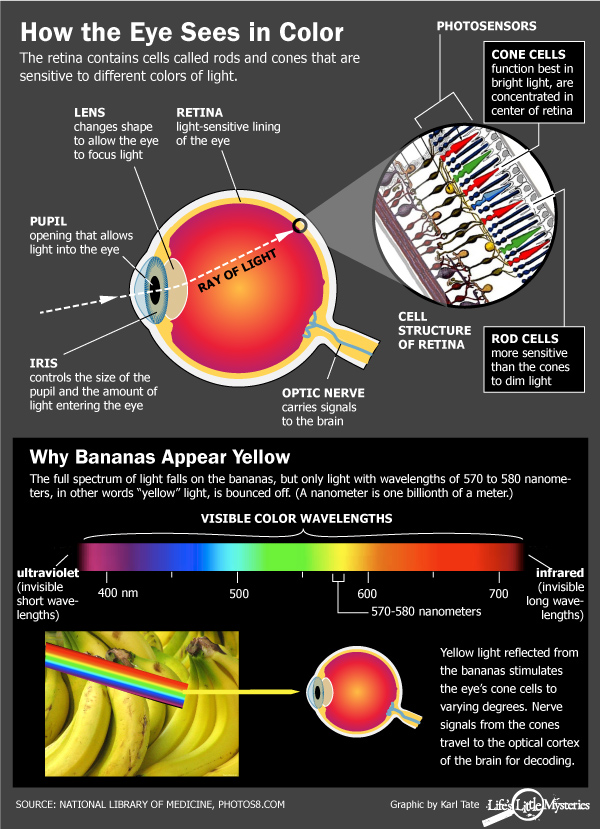
Seeing color starts with light entering the eye. Light travels from objects and passes through many parts of the eye. Each part plays a role in focusing and sensing this light. This process allows the brain to receive clear signals. These signals help us recognize colors and shapes.
The journey of light is quick but complex. Understanding this path reveals how our eyes capture the world around us.
The Cornea: The Eye’s Clear Window
The cornea is the eye’s outer layer. It is clear and curved. Light first hits the cornea. The cornea bends the light to help focus it. This step is important to see sharp images. The cornea protects the eye from dust and germs.
The Pupil And Iris: Controlling Light Entry
After the cornea, light passes through the pupil. The pupil is the black circle in the eye. The iris is the colored part around the pupil. It controls how much light enters the eye. In bright places, the iris makes the pupil smaller. In the dark, it makes the pupil bigger.
The Lens: Fine-tuning Focus
The lens sits behind the pupil. It changes shape to focus light on the retina. This focusing is called accommodation. The lens adjusts to see objects near or far. It ensures light rays meet at the right spot inside the eye.
The Retina: Where Light Becomes Signals
The retina lines the back of the eye. It contains cells that detect light called rods and cones. Cones are sensitive to colors—red, green, and blue. Rods help us see in low light but not color. The retina turns light into electrical signals. These signals travel to the brain through the optic nerve.
Credit: www.dentalcare.com
Retina And Photoreceptors
The retina plays a vital role in how we see color. It is a thin layer of tissue at the back of the eye. The retina contains special cells called photoreceptors. These cells detect light and send signals to the brain.
Photoreceptors come in two main types: rods and cones. Rods help us see in low light but do not detect color. Cones are responsible for color vision. They work by sensing different wavelengths of light.
Structure Of The Retina
The retina is made of several layers of cells. Light passes through these layers to reach the photoreceptors. At the center of the retina is the fovea, which has a high concentration of cone cells. This area provides sharp and clear color vision.
Types Of Photoreceptors
There are about 120 million rods and 6 million cones in the retina. Rods detect brightness and motion but not color. Cones detect colors by responding to different light wavelengths. Each cone type is sensitive to red, green, or blue light.
How Photoreceptors Detect Color
Cones absorb light and convert it into electrical signals. Each cone type reacts best to a specific range of wavelengths. The brain compares signals from all three cone types to create the perception of color. This process allows us to see millions of colors.
Role Of Cone Cells
Our ability to see color depends on special cells in the eye. These cells are called cone cells. They are found in the retina, the light-sensitive layer at the back of the eye.
Cone cells detect different wavelengths of light. Each type of cone cell reacts to a specific range of colors. Together, they help the brain understand the colors we see.
There are three main types of cone cells. Each type is sensitive to a different color: red, green, or blue. These colors are the primary colors of light.
The red-sensitive cones detect long wavelengths. Green-sensitive cones respond to medium wavelengths. Blue-sensitive cones react to short wavelengths. This variety allows us to see many colors.
How Cone Cells Work
Light enters the eye and reaches the retina. The cone cells absorb the light and convert it into electrical signals. Each type of cone sends signals based on the light’s color.
The brain receives these signals and mixes them. This mixing creates the perception of different colors. It is how we see millions of colors from just three types of cones.
Importance Of Cone Cells For Color Vision
Cone cells are essential for color vision in bright light. They allow us to see fine details and vibrant colors. Without cone cells, the world would look gray and dull.
People with damaged or missing cone cells may have color blindness. This condition affects their ability to distinguish certain colors. Cone cells play a key role in how we enjoy the colorful world around us.
Types Of Cone Cells
Our eyes use special cells called cone cells to see colors. These cone cells react to different parts of the light spectrum. Each type of cone cell detects a specific range of colors. Together, they help the brain understand what color we are seeing.
There are three main types of cone cells. Each type plays a key role in how we perceive color. Knowing about these cones helps explain how we see a full spectrum of colors.
S-cone Cells (blue Cones)
S-cone cells respond mostly to short wavelengths of light. This range corresponds to blue colors. They are less common than other cone types but are crucial for detecting blues and some violet shades.
M-cone Cells (green Cones)
M-cone cells detect medium wavelengths. These wavelengths appear as green light. They are more numerous than S-cones and help us see many shades of green and yellow.
L-cone Cells (red Cones)
L-cone cells are sensitive to long wavelengths of light. This range includes red and orange colors. They are the most common cone cells and are important for seeing reds and warm tones.
Signal Transmission To Brain
After cone cells in the eye detect color, they convert light into electrical signals. These signals travel through the optic nerve to the brain. The brain then processes these signals to create the image and color we see.
This step is crucial. Without it, the eye’s detection would not become a visual experience. The brain acts like a powerful interpreter of color signals.
Role Of The Optic Nerve
The optic nerve carries electrical signals from the retina to the brain. It acts as a communication cable. Each eye has an optic nerve that sends millions of signals every second.
Signals from the cone cells travel along this nerve. It ensures fast and accurate delivery of color information.
Processing In The Visual Cortex
The visual cortex is the brain area responsible for interpreting signals from the eyes. It receives data from the optic nerve. Here, the brain combines signals from red, green, and blue cones.
This combination helps the brain identify the exact color seen. The brain also adjusts colors based on lighting and surroundings.
Integration Of Signals
The brain integrates signals from both eyes to create a full color image. This process helps with depth and color accuracy. Each eye sends slightly different information.
The brain merges these inputs to form a single clear picture with vibrant colors.
Credit: www.livescience.com
Brain’s Color Processing
The brain plays a key role in how we see color. It receives signals from the eyes and turns them into the colors we perceive. This process happens in a special part of the brain called the visual cortex.
Our eyes detect light, but the brain interprets this information. It combines signals to create the colors we see in the world around us. This makes color perception a complex and fascinating process.
Signal Reception From The Retina
The retina contains cells called cones that detect color. These cones send electrical signals to the brain through the optic nerve. The signals represent different colors based on light wavelengths.
The brain receives these signals as raw data. It must then process and interpret them to form a clear image of color.
Color Interpretation In The Visual Cortex
The visual cortex is the brain area responsible for processing color signals. It analyzes the input from cones and compares the signals. This comparison helps the brain identify exact colors.
This region also helps us distinguish between subtle color shades. It adjusts perception depending on light and surroundings.
Role Of Neural Pathways
Neural pathways connect the retina to the brain. These pathways carry color information quickly and efficiently. Different pathways process different parts of the color spectrum.
The brain integrates signals from these pathways to create a full-color experience. This helps us see vibrant and varied colors every day.
Color Perception Examples
Color perception shows how our eyes and brain work together. Light reflects off objects and enters our eyes. Cone cells in the retina detect this light. Each cone cell type senses red, green, or blue light. The brain combines signals from these cones. This creates the colors we see every day.
Different situations can change how we perceive color. Small changes in light or surroundings affect our color experience. Here are some simple examples to explain this process.
Seeing Colors In Daylight Vs. Artificial Light
Colors look different in sunlight compared to indoor light. Sunlight has all colors mixed evenly. Artificial lights can have more red or blue tones. This changes how colors appear to us. A red apple may look brighter outside. Under a yellow light bulb, it looks warmer and softer.
Color Illusions And How They Trick The Eye
Sometimes colors seem to change because of nearby colors. This is called a color illusion. For example, a gray square can look lighter or darker. It depends on the background color around it. Our brain compares colors and changes what we see. This shows how color is not just about light but also context.
Color Blindness: Different Ways To See Color
Some people see colors differently due to color blindness. Their cone cells may not work properly. They might confuse red and green or blue and yellow. This affects daily life but also shows how color perception is personal. It proves that color is a mix of biology and brain processing.
Color Vision Variations
Color vision does not work the same for everyone. Many people see colors differently due to variations in their eyes and brains. These differences affect how colors appear and how clearly we can tell them apart.
Understanding these variations helps us appreciate the diversity of human vision. It also explains why some colors may look strange or confusing to others.
Color Blindness
Color blindness means a person cannot see certain colors properly. It happens when cone cells in the eye do not work well or are missing. The most common types affect red and green colors. People with color blindness may mix up reds, greens, and browns. Some rare types make it hard to see blue and yellow.
Color Deficiency
Color deficiency is a milder form of color blindness. People can see colors but not as vividly as others. They might have trouble telling similar colors apart. This happens when cone cells are weak or fewer in number. Color deficiency is more common than full color blindness.
Tetrachromacy
Tetrachromacy is a rare condition where a person has four types of cone cells. Most people have three types. This extra cone allows them to see more colors and finer differences. Tetrachromats can often notice shades invisible to others. This variation is mostly found in women.
Credit: www.datacolor.com
Frequently Asked Questions
How Can We See Colors?
We see colors when light reflects off objects and enters our eyes. Cone cells detect red, green, and blue wavelengths. These signals travel to the brain, which combines them to create the color we perceive.
What Is The Science Behind Colors?
Colors arise when light reflects off objects and stimulates red, green, and blue cone cells in our eyes. These cones send signals to the brain, which combines them to create the perception of color.
How Do You See The Color?
We see color when light reflects off objects and enters our eyes. Cone cells detect red, green, and blue wavelengths. These signals travel to the brain, which combines them to create the colors we perceive.
Is Color Real Or An Illusion?
Color is an illusion created by the brain interpreting light wavelengths detected by eye cone cells. It is not a physical property.
What Is The Basic Process Of Seeing Color?
Light reflects from objects and enters our eyes, where cone cells detect it and send signals to the brain.
How Do Cone Cells Help Us See Color?
Cone cells in the retina respond to red, green, and blue light, helping the brain identify colors.
Why Do We See Different Colors?
Different objects reflect different wavelengths of light, which our eyes and brain interpret as various colors.
What Role Does The Brain Play In Color Vision?
The brain processes signals from cone cells to create the perception of color we see.
How Do Rods Differ From Cones In Vision?
Rods detect light and dark but do not detect color, unlike cone cells which detect color.
Can Humans See All Colors In The Spectrum?
Humans see most colors from red to violet, but some animals see beyond this range.
Conclusion
Seeing color is a complex but fascinating process. Light bounces off objects and enters our eyes. Cone cells in the retina detect different colors of light. Our brain then combines these signals to create the colors we perceive. This amazing system helps us enjoy the world in vibrant hues every day.
Understanding how we see color shows the simple beauty of human vision.