Choosing the right paint color can transform your space, but with so many options, it can feel overwhelming. If you’re considering soft whites, you’ve likely come across Shoji White and Alabaster from Sherwin-Williams.
Both colors are popular choices, but they bring different vibes and undertones to your home. Are you unsure which one fits your style best? This article will break down the key differences between Shoji White and Alabaster, helping you make an informed decision.
You’ll discover how each color interacts with light, how they complement different color schemes, and real-life examples of both in action. By the end of this post, you’ll have a clearer vision for your space and the confidence to choose the perfect shade. Let’s dive in!
Shoji White Characteristics
Shoji White and Alabaster are both popular paint choices. Shoji White is a warm off-white with beige and gray undertones, creating a cozy feel. In contrast, Alabaster appears creamier and softer, with a hint of yellow, giving it a brighter look.
### Shoji White CharacteristicsShoji White is a delightful off-white shade that brings a touch of warmth to any space. Its unique characteristics make it a popular choice for homeowners looking to create an inviting atmosphere. Let’s dive into what sets Shoji White apart, focusing on its warm tones, undertones, suitability for various color schemes, and some limitations to consider.Warm And Versatile Tones
Shoji White leans into warm tones that offer a cozy, inviting feel.This warmth creates a comfortable environment, perfect for living rooms and bedrooms.When you walk into a room painted in Shoji White, you immediately sense its welcoming ambiance.Do you want a space that feels both stylish and homey? Shoji White might be your answer.Beige And Gray Undertones
Shoji White features subtle beige and gray undertones that add depth to its color.These undertones allow the paint to change slightly in different lighting conditions.At times, it can appear greige, giving it a modern twist while still feeling classic.If you’re looking for a neutral that doesn’t feel stark, this could be the perfect choice for you.Suitability For Various Color Schemes
One of the standout qualities of Shoji White is its versatility with color schemes.It pairs beautifully with both warm and cool colors, making it adaptable for diverse decor styles.Whether you have a contemporary, rustic, or traditional space, Shoji White can blend seamlessly.What color palette are you considering? Shoji White can complement almost any choice you make.Limitations In Certain Applications
While Shoji White has many strengths, it does have some limitations.For instance, its warmth may not work well in very bright or overly cool spaces, where it can appear dull.Additionally, it may be too dark for use as interior trim, as it lacks the crispness typically desired for trims.Have you thought about how lighting can change the perception of this color in your home? Consider testing it in your space before committing fully.Shoji White is a fantastic option for creating warmth and versatility in your home. Understanding its characteristics helps you make informed choices for your next painting project.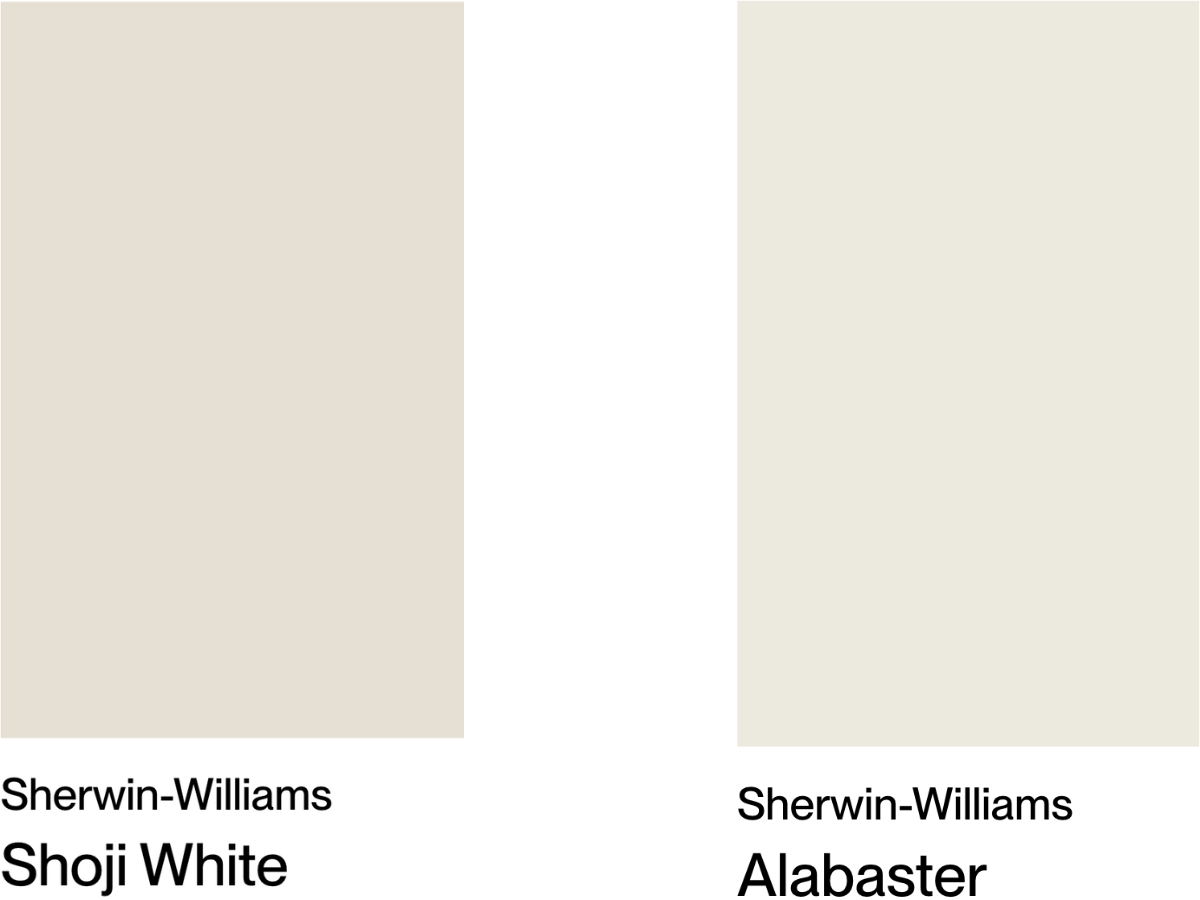
Credit: yourpaintconsultant.com
Alabaster Characteristics
Shoji White and Alabaster are popular soft whites from Sherwin-Williams. Shoji White is a warm, creamy off-white with beige and gray undertones, while Alabaster has a softer, creamier look with a hint of yellow. Both colors create inviting spaces, but their undertones offer distinct vibes.
When considering paint options, understanding the characteristics of Alabaster is essential for making an informed choice. This beautiful shade offers unique features that can transform your space. Below, we delve into the key characteristics of Alabaster that make it an appealing choice for various interiors.Soft And Creamy Appearance
Alabaster has a soft and creamy aesthetic that instantly warms up any room. This gentle hue creates an inviting atmosphere, making spaces feel cozy and welcoming. Whether you use it in a living room or bedroom, it adds a touch of elegance without being overpowering.Consider how a soft white can enhance your home’s natural light. It can create a harmonious balance, especially when paired with darker furnishings. Have you noticed how a room can feel more expansive with the right shade?Yellow Undertones In Bright Lighting
One of the distinctive features of Alabaster is its subtle yellow undertones, which become more pronounced in bright lighting. This quality can give your space a sunny, cheerful vibe, especially in sunlit rooms. However, it’s important to test it in your specific environment to see how it interacts with other colors.You might find that this warmth complements wooden accents beautifully. It adds depth and richness, creating a cohesive look. Are you ready to embrace this warmth in your own home?Adaptability To Room Lighting
Alabaster’s adaptability is another reason for its popularity. It can shift in appearance depending on the lighting conditions. In dim light, it can take on a more subdued tone, while in bright settings, it radiates warmth.This flexibility makes it suitable for various applications, from walls to trim. You can confidently use Alabaster in spaces with different light exposures. Have you thought about how your room’s lighting affects your color choices?Popularity As An All-purpose White
Alabaster has earned its status as an all-purpose white for a reason. Homeowners and designers alike appreciate its versatility. It works well across a range of styles, from traditional to modern.You can pair it effortlessly with a variety of colors and materials. This trait ensures that it remains a favorite choice for interior designers. Are you considering how Alabaster can fit into your design vision?Incorporating Alabaster into your spaces can yield stunning results. Its unique characteristics provide both beauty and functionality, making it a top contender when choosing your next paint color.Key Differences Between Shoji White And Alabaster
Shoji White and Alabaster are both popular choices for soft white paint. Each color brings unique qualities to a space. Understanding their key differences helps in making the right choice for your home.
Tone And Undertone Comparison
Shoji White is a warm off-white. It has subtle beige and gray undertones. This makes it feel cozy and inviting. On the other hand, Alabaster is also warm but leans creamier. It has a hint of yellow that can be noticeable. Alabaster may appear softer than Shoji White. The undertones in each color greatly affect how they look on walls.
Impact Of Lighting Conditions
Lighting plays a big role in how each color appears. Shoji White can look more beige in warm light. In cooler light, it appears more neutral. Alabaster, however, tends to glow in warm light. It can look almost buttery, especially in sunlight. Consider the lighting in your space before choosing a color.
Room Suitability And Application
Both colors suit various rooms, but they have different strengths. Shoji White works well in living rooms and bedrooms. Its warmth creates a cozy atmosphere. Alabaster is great for kitchens and bathrooms. Its soft glow makes spaces feel airy. Think about the mood you want for each room.
When To Choose Shoji White
Shoji White offers a unique charm for various spaces. Its warm, creamy nature creates a welcoming environment. This color suits many styles and preferences. Understanding when to choose Shoji White can enhance your home’s vibe.
Creating A Cozy Atmosphere
Shoji White excels in creating a cozy feel. It brings warmth to living areas and bedrooms. This off-white shade wraps rooms in a soft embrace. Ideal for spaces where comfort is key. Use it to invite relaxation and tranquility.
Pairing With Warm Or Cool Palettes
Shoji White pairs beautifully with both warm and cool colors. It complements earth tones, soft blues, and muted greens. This versatility allows for creative combinations. It balances bold colors without overwhelming the space. Shoji White encourages harmony in your design choices.
Avoiding Overly Yellow Or Beige Tones
Shoji White avoids strong yellow or beige undertones. It maintains a neutral appearance that feels fresh. This quality prevents rooms from feeling too warm or dated. Choose Shoji White for a timeless look that remains modern.
When To Choose Alabaster
Choosing Alabaster over Shoji White depends on the desired warmth and undertones in your space. Alabaster offers a soft, creamy look with slight yellow hints, ideal for cozy settings. In contrast, Shoji White presents a warmer, off-white vibe, perfect for versatile color schemes.
Choosing Alabaster for your space can create a stunning aesthetic that feels both inviting and refreshing. This soft, creamy hue stands out for its ability to enhance light and bring warmth to any room. If you’re contemplating whether Alabaster is the right choice for your walls, consider the following scenarios where this paint truly shines.Achieving A Soft, Creamy Finish
Alabaster is perfect when you want a soft, creamy finish that feels cozy and welcoming. This shade adds a touch of elegance without overwhelming the senses.Imagine walking into a room painted in Alabaster; the walls seem to embrace you with warmth. It’s ideal for bedrooms or living spaces where you want to create a relaxing atmosphere.If you’re looking for a neutral backdrop, Alabaster allows your decor to pop while maintaining a serene vibe.Creating A Crisp Look In Bright Settings
In bright settings, Alabaster can create a crisp, clean look that feels airy and open. Its subtle warmth complements natural light beautifully, making spaces feel larger and more inviting.If your room gets a lot of sunlight, Alabaster ensures that the light reflects softly, without harsh contrasts. This makes it an excellent choice for kitchens or sunrooms where brightness is a priority.Consider how your furniture and decor will interact with this shade. Alabaster provides a fresh canvas that enhances the overall aesthetic.Enhancing Spaces With Natural Light
Natural light is a game changer, and Alabaster maximizes its effect. This color transforms spaces by allowing light to bounce off the walls, creating an uplifting atmosphere.If you have large windows or a sun-drenched room, Alabaster can enhance that natural glow, making the area feel vibrant.Think about your daily experience in that space. The right shade can not only elevate the look but also improve your mood by making your environment feel more connected to the outdoors.Choosing Alabaster means embracing a beautiful, versatile option that adapts to your unique style and enhances your living experience. Will you take the plunge and let this creamy hue transform your space?Tips For Deciding Between The Two
Choosing between Shoji White and Alabaster can be tricky. Both colors are beautiful. Each has its unique qualities. Consider a few important factors before making your choice.
Consider Room Lighting And Fixtures
Lighting greatly impacts how paint colors appear. Natural light can make colors look different. Shoji White may appear warmer in bright light. Alabaster can look softer and creamier in the same setting.
Examine the room at different times of the day. Observe how the light changes the colors. Also, consider the type of light bulbs in the room. Warm bulbs can enhance Alabaster’s yellow undertones. Cool bulbs can highlight Shoji White’s subtle gray tones.
Evaluate Existing Color Schemes
Your current decor should influence your choice. Shoji White blends well with both warm and cool colors. It pairs nicely with earthy tones. Alabaster complements cream and beige shades well.
Look at your furniture and accessories. Decide which color enhances your space. A cohesive palette creates a calming atmosphere. Choose the color that fits your style best.
Test Samples In Different Conditions
Before committing, test paint samples on your walls. Apply swatches in various areas of the room. Observe them in daylight and artificial light. This helps you see how each color behaves in your space.
Move furniture around and see how colors interact. Take your time to decide. Remember, the right choice should feel welcoming and comfortable.
Popular Applications For Both Colors
Choosing between Shoji White and Alabaster can be tricky, especially when considering their popular applications. Both colors offer unique advantages that can enhance your home’s aesthetic. Let’s dive into how each shade shines in various settings.
Interior Walls And Ceilings
Shoji White is perfect for creating a warm, inviting atmosphere in your living spaces. It works beautifully on interior walls and ceilings, making rooms feel cozy yet spacious. Alabaster, with its creamy softness, adds a subtle brightness that can help smaller areas feel more open.
Imagine walking into a room painted in Shoji White; it wraps you in comfort. In contrast, Alabaster can give your space a fresh, airy vibe. Which ambiance resonates more with your personal style?
Trim And Cabinetry Options
When it comes to trim and cabinetry, both colors excel but in different ways. Shoji White complements natural wood tones beautifully, enhancing a rustic or farmhouse style. Alabaster, on the other hand, pairs excellently with sleek modern finishes, creating a clean, polished look.
Consider how each color will interact with your existing elements. Are you aiming for a cozy, traditional feel or a crisp, contemporary design? Your choice can significantly influence the overall mood of your space.
Exterior Uses And Combinations
For exterior applications, Shoji White can stand out against darker hues, offering a warm contrast that feels welcoming. Alabaster shines in bright sunlight, reflecting a soft glow that enhances curb appeal. Combining these colors can also create stunning visual contrasts.
Think about your home’s architecture and surrounding landscape. Would a warm Shoji White bring out the charm of your traditional home? Or does the fresh allure of Alabaster suit your modern aesthetic better? Your color choice can transform the first impression your home makes.

Credit: www.facebook.com

Credit: thewhitelaurel.com
Frequently Asked Questions
What’s The Difference Between Shoji White And Alabaster?
Shoji White is an off-white with warm, subtle beige and gray undertones. Alabaster, while still white, has a creamier appearance with hints of yellow. Choose Shoji White for a versatile, cozy feel, and Alabaster for a softer, warmer tone that can appear brighter in light.
Does Sherwin Williams Shoji White Look Yellow?
Sherwin Williams Shoji White does not look yellow. It features warm undertones but remains neutral, with a soft beige quality. This off-white hue complements various color schemes without appearing overly warm or yellowish.
When Not To Use Shoji White?
Avoid using Shoji White for interior trim, as it may appear too dark. It’s also not ideal for spaces needing a bright, crisp white. Opt for lighter alternatives in well-lit areas or where a brighter ambiance is desired.
What Is Sherwin Williams’ Most Popular White?
Sherwin Williams’ most popular white is Alabaster (SW 7008). This warm white features subtle yellow undertones, creating a soft, inviting look. It works well in various lighting conditions and complements different color palettes, making it a favorite for both interiors and exteriors.
Conclusion
Choosing between Shoji White and Alabaster depends on your style. Shoji White offers warmth and a cozy feel. It complements various color schemes well. Alabaster, on the other hand, brings a soft, creamy touch. It can appear brighter in certain lighting.
Think about the atmosphere you want to create. Consider how light affects each color in your space. Both colors can enhance your home beautifully. Select the one that feels right for you. Your choice will reflect your personal taste and style.