Have you ever wondered how many primary colors there really are? It might seem simple at first—everyone talks about red, yellow, and blue—but the answer isn’t that straightforward.
Depending on whether you’re mixing paint, light, or digital images, the set of primary colors changes. Understanding this can completely change the way you see colors around you and even improve your creativity, whether you’re painting, designing, or just curious about the world.
Keep reading, and you’ll discover the fascinating science behind primary colors and why knowing the right ones matters more than you think.
Primary Colors In Art
Primary colors in art form the foundation for all other colors. Artists mix these colors to create a wide range of hues. Understanding primary colors helps in painting, drawing, and design.
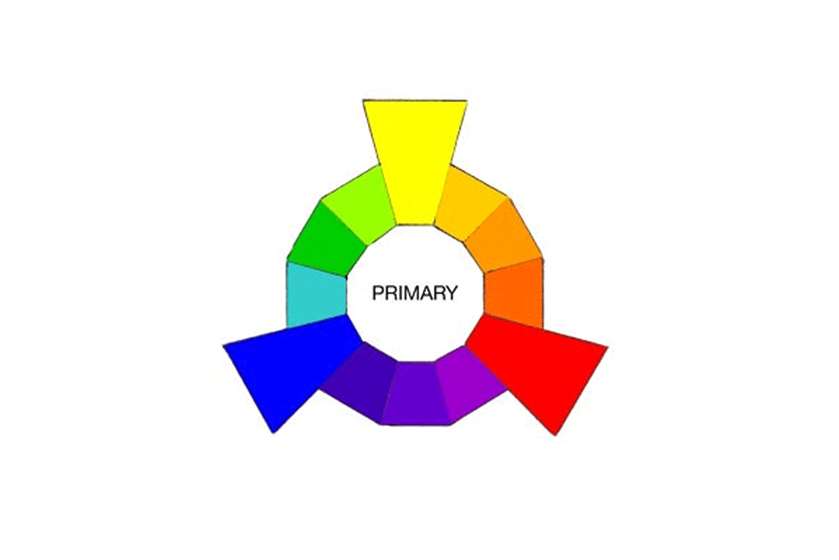
The traditional primary colors in art are red, yellow, and blue. These colors cannot be made by mixing other colors. They serve as the starting point for color mixing with paints and pigments.
Red, Yellow, Blue Basics
Red, yellow, and blue are the basic primary colors in art. Each has a unique role in mixing. Red is warm and intense. Yellow is bright and cheerful. Blue is cool and calming.
These colors combine to make secondary colors like green, orange, and purple. Mixing red and yellow makes orange. Yellow and blue make green. Blue and red make purple.
Subtractive Mixing Explained
Subtractive mixing uses pigments like paint or ink. When you mix colors, the pigments absorb light. This changes the color you see.
Mixing all three primary colors usually creates a dark brown or black. This happens because the pigments subtract most light. Artists use this method to create shades and tones.

Credit: www.britannica.com
Primary Colors In Light
Primary colors in light form the foundation of how digital screens and many light sources display colors. These colors differ from paint or pigment primaries. They work by mixing light waves instead of mixing physical colors. Understanding these light primaries helps explain how devices show millions of colors from just a few base tones.
Red, Green, Blue Overview
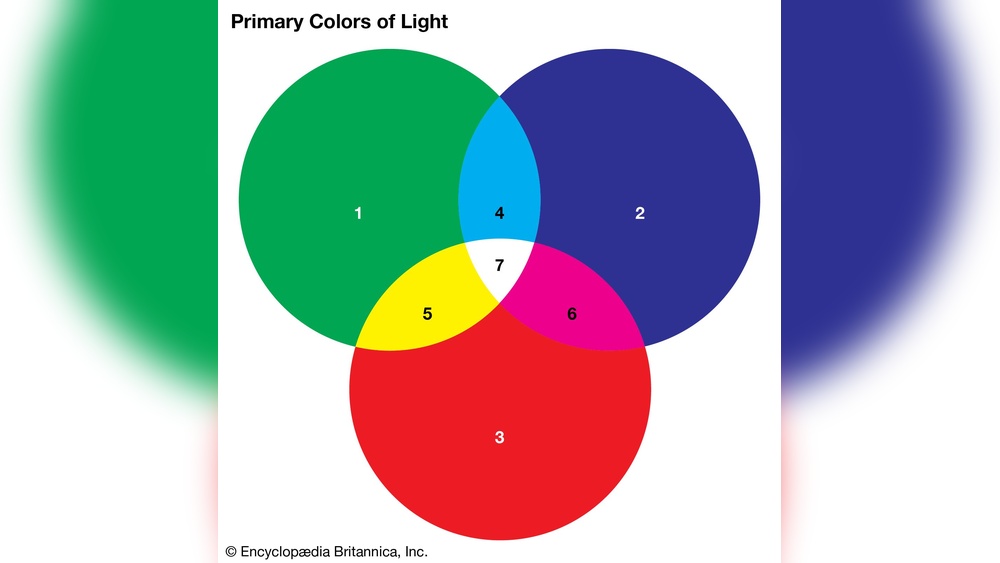
Red, green, and blue are the three primary colors of light. They represent the main colors that our eyes detect from light sources. These colors cannot be created by mixing other colors of light. Instead, they combine in different ways to produce all other colors we see on screens and lighting.
Each primary color has a specific wavelength range. Red has the longest wavelength, green is in the middle, and blue has the shortest. Together, they cover a large portion of the visible spectrum.
Additive Color Mixing
Additive color mixing happens when red, green, and blue light combine. Adding all three at full brightness creates white light. Mixing two primaries produces secondary colors: red plus green makes yellow, green plus blue makes cyan, and blue plus red makes magenta.
This process is called additive because light adds up to form new colors. It is the principle behind how TVs, computer monitors, and phone screens show vibrant images. The intensity of each primary light changes the final color we see.
Why Seven Rainbow Colors Exist
The seven colors of the rainbow have fascinated people for centuries. These colors are red, orange, yellow, green, blue, indigo, and violet. They appear when white light passes through a prism or raindrops. The question is, why exactly seven colors? The answer lies in both science and history.
These seven colors represent the visible spectrum of light. Each color blends smoothly into the next, forming a continuous band. The choice of seven colors is a mix of natural observation and human culture.
Newton’s Color Spectrum
Isaac Newton was the first to study light in detail. He split white light with a prism and saw the rainbow colors. Newton divided the spectrum into seven parts. He chose seven because of its cultural and scientific importance. Seven was linked to musical notes and planets known at the time. Newton’s seven colors became a standard way to describe the rainbow.
These colors are not primary colors. They show all colors visible to the human eye. The colors merge into each other without clear borders. Newton’s work laid the foundation for understanding light and color.
Color And Musical Harmony
The idea of seven colors connects to music. Ancient scholars saw a link between color and sound. They thought color could follow musical harmony rules. Music has seven notes in a scale, matching the seven rainbow colors. This idea helped Newton and others justify using seven colors.
Scientists and artists used this concept to explore how colors relate. The connection between color and music shows how humans seek patterns in nature. The seven rainbow colors are a blend of science, art, and tradition.
Difference Between Pigment And Light
Colors appear differently based on how we see them and how they mix. The difference between pigment and light is key to understanding primary colors. Pigments reflect some colors and absorb others. Light, however, mixes by adding colors together. This difference changes how we use primary colors in art and technology.
Subtractive Vs Additive Models
The subtractive model uses pigments like paint or ink. It starts with white light and removes colors. The primary colors here are red, yellow, and blue. Mixing these pigments creates new colors by absorbing light. For example, mixing blue and yellow pigments makes green.
The additive model uses light itself. It starts with darkness and adds colors. The primary colors for light are red, green, and blue. Combining these lights creates white. For example, red and green light combine to make yellow light.
Practical Applications
Artists use subtractive primary colors for painting and printing. Mixing pigments gives them many color choices. Printers use cyan, magenta, and yellow, which are close to red, yellow, and blue.
Screens and digital devices use additive colors. Red, green, and blue light mix to create all screen colors. This method works for TVs, computers, and phones.
Common Misconceptions
Many people confuse the idea of primary colors. This confusion often comes from mixing color systems and natural phenomena. Understanding these mistakes helps clarify how primary colors really work.
Rainbow Colors As Primaries
The rainbow shows seven colors: red, orange, yellow, green, blue, indigo, and violet. People often think these are the primary colors. They are not. These colors are part of a spectrum of light split by a prism. Each color blends smoothly into the next. They represent a range, not the basic colors needed to mix others.
Primary colors are the base colors used to create all other colors. The rainbow colors cannot mix each other to form new colors. They simply appear in natural light. This misunderstanding leads to the wrong belief that there are seven primary colors.
Color Spectrum Reality
The real primary colors depend on the color model used. For paints and inks, the primary colors are red, yellow, and blue. These are called subtractive primaries. Mixing these colors removes light, creating darker shades.
For light, like on computer screens, the primary colors are red, green, and blue. This is the additive color model. Combining these colors adds light and creates brighter colors. Understanding the difference between subtractive and additive models clears up many misconceptions.
Credit: medium.com
Historical Views On Primary Colors
The idea of primary colors has changed over time. Different thinkers saw colors in unique ways. These views helped shape how we understand colors today. History shows us the journey of color theory and its key figures.
Exploring historical views gives insight into why primary colors are chosen. Early ideas were based on observation and art. Later, science brought more clarity and precision.
Isaac Newton’s Contributions
Isaac Newton was one of the first to study color scientifically. He used a prism to split white light into seven colors. These colors were red, orange, yellow, green, blue, indigo, and violet.
Newton’s discovery showed that white light contains many colors. He did not call these seven colors “primary.” Instead, they form a spectrum. Newton’s work laid the groundwork for later color theories.
Evolution Of Color Theory
After Newton, artists and scientists debated which colors are primary. The traditional model used red, yellow, and blue. These colors mix to create many others in painting.
Later, the study of light led to a new model with red, green, and blue. This model fits how screens and digital devices show color. It uses light mixing, called the additive color model.
These changes reflect growing knowledge. The idea of primary colors depends on context—paint or light. History shows how color theory evolved with new discoveries.
Modern Color Models
Modern color models explain how colors mix and display in various media. They differ from traditional ideas about primary colors. These models help in printing, photography, and digital screens. Understanding these models clarifies how many primary colors exist today.
Cmy And Cmyk Models
The CMY model uses cyan, magenta, and yellow as primary colors. It works by subtracting light to create other colors. Mixing all three ideally produces black, but in practice, it creates dark brown.
To solve this, the CMYK model adds black (K) ink. This model is standard in printing. It produces deeper blacks and better color accuracy. Printers use CMYK to combine these four inks on paper.
Rgb In Digital Displays
The RGB model uses red, green, and blue as primary colors. It works by adding light to create colors. Mixing all three at full brightness creates white light.
Digital screens, like TVs and smartphones, use RGB. Pixels combine red, green, and blue light to show millions of colors. This model suits devices that emit light directly.
Primary Colors In Printing
Printing uses a special set of primary colors. These colors work differently from paint or light. The printing primary colors mix to create many other colors. This system is called CMYK. It stands for Cyan, Magenta, Yellow, and Key (black). Each color plays a unique role in printing processes.
Cyan, Magenta, Yellow Roles
Cyan, magenta, and yellow are the main colors in printing. They are subtractive primaries. This means they absorb light and reduce brightness. Combining these inks creates a wide color range. For example, cyan and yellow make green. Magenta and yellow make red. Cyan and magenta make blue. These three colors mix to form many shades.
Black Addition For Depth
Black ink, called Key or K, adds depth and detail. Mixing cyan, magenta, and yellow creates dark brown, not pure black. Black ink gives true darkness and sharp lines. It improves contrast and saves ink cost. Black also helps text and fine details stand out clearly. This is why black is important in printing.
Psychology Of Primary Colors
The psychology of primary colors reveals how these basic hues affect our minds. Primary colors influence feelings and behaviors deeply. They are simple yet powerful tools in design and communication.
Each primary color carries unique psychological meanings. Understanding these effects helps in art, marketing, and daily life.
Emotional Impact
Red often signals excitement and urgency. It can raise energy and grab attention quickly. Yellow brings cheerfulness and warmth. It inspires optimism and happiness. Blue evokes calmness and trust. It promotes peace and reliability.
These colors trigger emotions automatically. People respond to them without much thought. This reaction shapes moods and decisions.
Cultural Variations
Colors mean different things worldwide. Red may symbolize luck in some cultures and danger in others. Yellow can represent joy or caution depending on the region. Blue might stand for spirituality or sadness in various traditions.
Cultural backgrounds shape color interpretation. Marketers and artists must consider this diversity. It ensures their message connects well everywhere.

Credit: gelpress.com
Choosing Primary Colors Today
Choosing primary colors today depends on the context and purpose. Different fields use different sets of primary colors. This choice affects how colors mix and how final results appear.
Design And Art Considerations
Artists often use red, yellow, and blue as primary colors. These colors mix to create a wide range of other colors. This traditional set works well with paints and physical media. It helps artists create natural and vibrant tones. Many art schools still teach these three primaries for painting.
Designers sometimes choose colors based on the project needs. They consider how colors look on various materials and lighting. Some designers use variations like cyan, magenta, and yellow for print work. These colors offer more control and accuracy when printing.
Technology Influence
Technology uses a different set of primary colors: red, green, and blue. These are the primary colors of light for screens and digital displays. Mixing these colors creates millions of colors on TVs, phones, and computers. This additive color model is essential for all digital design.
Understanding these differences helps creators choose the right primaries. It affects the final look whether on paper or screen. Technology also drives new trends in color use and mixing methods.
Frequently Asked Questions
What Are The Primary 7 Colors?
The primary seven colors are red, orange, yellow, green, blue, indigo, and violet. These form the visible light spectrum.
What Are The Five True Primary Colors?
The five true primary colors are not universally defined. Traditional models use three: red, yellow, blue or red, green, blue. Newton identified seven rainbow colors: red, orange, yellow, green, blue, indigo, violet. Only three serve as true primaries in color mixing.
What Are 12 Primary Colors?
The 12 primary colors include red, yellow, blue (pigment model), red, green, blue (light model), plus red, orange, yellow, green, blue, indigo, violet from the rainbow spectrum. These sets serve different purposes in art, digital displays, and light spectrum analysis.
What Are The 7 Pure Colors?
The seven pure colors are red, orange, yellow, green, blue, indigo, and violet. They form the visible spectrum.
How Many Primary Colors Exist In Traditional Painting?
There are three primary colors in painting: red, yellow, and blue.
What Are The Primary Colors For Light Or Screens?
Primary colors for light are red, green, and blue.
Why Are There Different Sets Of Primary Colors?
Different models use colors based on mixing pigments or mixing light.
How Do Primary Colors Mix To Create Other Colors?
Mixing two primary colors forms secondary colors like green, orange, or purple.
Are Rainbow Colors The Same As Primary Colors?
No, rainbows show seven colors, which are a spectrum, not primary colors.
What Colors Make Up The Visible Spectrum?
The visible spectrum includes red, orange, yellow, green, blue, indigo, and violet.
Conclusion
Primary colors are the base of all other colors we see. Paint uses red, yellow, and blue as primaries. Screens and lights use red, green, and blue instead. The seven rainbow colors are different from primary colors. Knowing which primary colors to use helps in art and design.
Color mixing becomes easier with this simple knowledge. Remember, primary colors create the colors around us every day.