Have you ever stopped to wonder what feelings the color brown stirs inside you? Most people see brown as warm, stable, and grounding—like the earth beneath your feet or the comfort of a cozy home.
But could brown also carry a hidden edge of tension? Maybe it’s the dullness that makes you uneasy or the melancholy shadow lurking in its darker shades. You’ll discover how brown can represent more than just reliability and comfort. You’ll learn why this seemingly calm color might also create subtle feelings of tension, and how understanding this can change the way you see your surroundings, your designs, and even your moods.
Keep reading—because the true story behind brown is more complex and fascinating than you might expect.
Brown’s Emotional Range
Brown is a complex color with many emotional layers. It often represents stability and comfort. At the same time, it can carry tones of tension and unease.
This wide emotional range makes brown a unique color in design and psychology. It connects us to the earth and nature but also hints at dullness or sadness. Understanding these feelings helps explain how brown can represent tension.
Brown is closely tied to warmth and safety. It reminds people of cozy spaces and natural materials. These feelings create a sense of calm and security.
Because of this, brown often brings comfort rather than stress. It feels familiar and grounding, reducing tension instead of increasing it.
Stability And Reliability
Brown signals strength and dependability. It is like the solid earth beneath our feet. This makes it a symbol of a strong foundation.
These qualities promote trust and steadiness. Such feelings can ease anxiety rather than cause it. Brown’s stable nature usually lowers tension.
Dullness And Melancholy
Brown can sometimes feel dull or boring. It lacks the brightness of more vibrant colors. This can create a sense of monotony or sadness.
In some moods, this dullness may increase feelings of tension. Darker browns can suggest loneliness or a heavy emotional weight.
Tension And Unease
Brown’s earthy tones can also evoke feelings of restriction. It may feel confining or heavy in certain settings. This can lead to subtle tension.
In spaces that need energy, brown might feel oppressive. Its close ties to earth and soil can suggest being stuck or trapped. This emotional pull adds to its tension range.
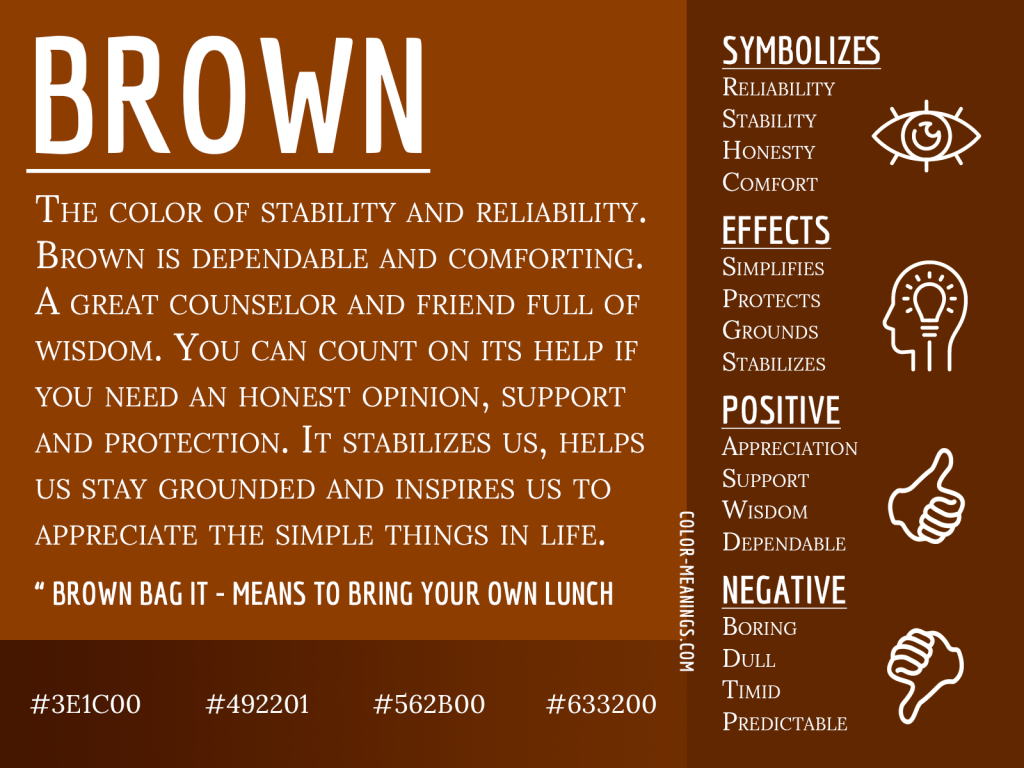
Credit: www.color-meanings.com
Stability And Grounding
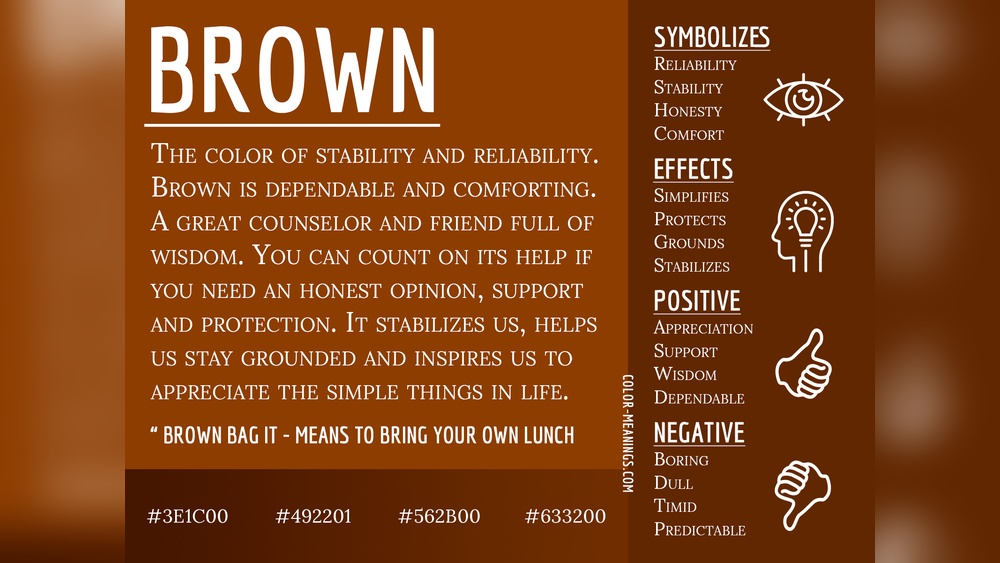
Brown is a color strongly linked to stability and grounding. It reflects the earth beneath our feet, providing a sense of security and safety. This connection with nature makes brown feel reliable and steady.
People often see brown as a solid foundation. It represents the soil that supports plants and trees, symbolizing endurance and strength. This grounding quality makes brown a color of trust and dependability.
Brown’s warmth creates a comforting atmosphere. It reminds us of cozy homes, wooden furniture, and natural materials. These feelings help reduce anxiety and promote calmness.
Brown As A Symbol Of Stability
Brown stands for a strong and steady presence. It suggests reliability in uncertain times. This makes brown popular in places where trust matters, such as logos or uniforms.
The color helps people feel anchored. It offers a mental space that is calm and secure. Brown’s stability often brings comfort during stressful moments.
Grounding Effects Of Brown In Design
Designers use brown to create natural and earthy themes. It gives a sense of warmth and approachability. Brown tones can balance brighter colors and soften visual tension.
In interiors, brown shades make rooms feel inviting and grounded. This enhances relaxation and focus. The color supports emotional balance and a connection to nature.
Emotional Impact Of Brown’s Grounding Nature
Brown’s grounding effect helps reduce feelings of instability. It connects emotions to something solid and real. This can lower tension and create peace of mind.
People often turn to brown in stressful times. The color’s natural vibe encourages calm and steadiness. Brown is a reminder of roots and safety in daily life.
Warmth And Comfort
Brown often brings feelings of warmth and comfort. It reminds us of cozy spaces and natural surroundings. This color creates a safe and inviting atmosphere. People feel relaxed and grounded around brown shades.
Brown’s connection to earth and wood adds to its comforting nature. It feels familiar, like a favorite sweater or a wooden chair. This sense of familiarity can reduce stress and tension. Brown offers a steady, calm presence in busy or chaotic settings.
Brown As A Symbol Of Home And Hearth
Brown evokes the feeling of a warm home. It represents the hearth, a place of safety and rest. This color suggests stability and protection. Brown tones make spaces feel lived-in and welcoming.
The Soothing Effect Of Brown In Design
Designers use brown to create a peaceful mood. It helps soften harsh environments. Brown adds depth without overwhelming the senses. This color works well in cozy cafes and quiet reading nooks.
Natural Connection Enhances Comfort
Brown links us to nature’s elements like soil and trees. This natural bond promotes relaxation and ease. People feel more connected and at peace with brown around them. The color supports a grounded, balanced state of mind.
Shades Of Dullness And Melancholy
Brown often carries a heavy, muted tone that can feel dull or lifeless. This color sometimes reflects feelings of sadness or melancholy. Its deep, earthy shades can make a space or image seem heavy or somber.
These dull tones do not always bring comfort. Instead, they can create tension by emphasizing gloom or a lack of energy. Brown’s connection to earth and nature sometimes turns into a symbol of stagnation or heaviness.
Brown’s Role In Evoking Melancholy
Dark browns can remind people of fading leaves or bare soil. These images often link to endings or decay. Such associations can stir feelings of loneliness or sorrow.
The color’s dullness may also lower mood or energy. It can make a room feel smaller or more closed off. This effect adds to the sense of tension or unease.
Why Brown Can Feel Dull Or Uninspired
Brown lacks brightness and vibrancy. It does not draw the eye like red or yellow. This absence of energy can make brown appear boring or dull.
In design, too much brown may cause a space to feel heavy or outdated. It can also make people feel stuck or unmotivated. This dullness often creates a subtle tension in visual settings.
The Fine Line Between Warmth And Sadness
Brown can feel warm and cozy in small doses. It reminds us of wood, soil, and natural textures. Yet, these same qualities can turn gloomy if the shade is too dark or flat.
This dual nature shows how brown carries complex emotions. It can soothe or unsettle, comfort or depress. The mood depends on the shade and context.
Brown In Nature And Its Symbolism
Brown is one of the most common colors in nature. It appears in soil, tree bark, and animals. This connection to the earth gives brown a strong natural symbolism.
Brown often stands for stability and reliability. It is the color of the ground beneath our feet. This makes it a symbol of being grounded and secure.
At the same time, brown carries warmth. It reminds us of cozy places and natural comfort. People feel calm and safe around this color.
Brown As The Color Of Earth And Soil
Soil is the source of life for plants and animals. Brown soil shows fertility and growth. It symbolizes a solid foundation and strength.
This makes brown a symbol of support and endurance. It represents nature’s ability to provide and sustain life.
Brown In Trees And Wood
Tree bark and wood are rich shades of brown. These natural elements stand for age and wisdom. Brown in wood also suggests warmth and shelter.
People often associate brown wood with home and security. It creates feelings of trust and comfort.
Brown In Animals And Natural Textures
Many animals have brown fur or feathers. This helps them blend into their environment. Brown in animals suggests camouflage and survival.
Natural textures like leather and nuts also come in brown. These materials feel authentic and organic. Brown in these forms shows simplicity and honesty.

Credit: shine365.marshfieldclinic.org
Tension Through Subtle Shades
Brown is more than a simple earthy tone. It carries hidden layers of emotion. Subtle shifts in brown’s shades can create a quiet tension.
These slight variations affect how we feel about the color. They can make brown seem warm and comforting or dull and uneasy. This dual nature makes brown interesting in art and design.
Dark Browns And Unease
Deep, dark browns often bring a heavy mood. These shades remind us of shadows or dense forests. They create a feeling of mystery and slight discomfort.
This tension is soft but real. It can make a space feel closed or confining. Artists use dark brown to hint at hidden worries or tension beneath calm surfaces.
Muted Browns And Subtle Anxiety
Muted or greyish browns can feel dull and lifeless. These shades lack brightness and can evoke subtle unease. They seem to drain energy rather than bring warmth.
This quiet anxiety is not loud or obvious. It is a slow, creeping feeling. Designers use muted browns to suggest hesitation or uncertainty without harshness.
Warm Browns And Conflicted Comfort
Warm browns usually feel safe and cozy. Yet, if too intense, they can create tension. This is because too much warmth may feel overwhelming or clingy.
Such browns can pull emotions in two directions. Comfort and tension blend, showing how feelings can be complex. This makes brown a rich color for storytelling.
Brown In Branding And Trust
Brown plays a unique role in branding and trust. It connects brands with feelings of reliability and warmth. Many companies choose brown to appear grounded and dependable. The color links products to nature and simplicity. This choice helps build a strong bond with customers.
Brown suggests comfort and honesty. It reminds people of earth, wood, and natural materials. These connections create a sense of security. Brands using brown often feel approachable and sincere. This helps customers trust the business easily.
Brown As A Symbol Of Reliability
Brands use brown to show they are stable and reliable. It gives a message of strength and durability. Customers often see brown as a sign of something that lasts. This perception helps build long-term relationships.
Warmth And Comfort In Brown Branding
Brown creates a cozy and inviting atmosphere. It feels like a warm home or familiar place. Brands use this feeling to make customers feel safe. This emotional link increases trust and loyalty.
Natural And Earthy Appeal
Brown’s connection to nature adds authenticity to brands. It suggests organic and genuine qualities. This helps companies appear honest and down-to-earth. Customers tend to trust brands that feel natural.
Brown In Luxury And Sophistication
Some shades of brown show elegance and quality. Luxury brands use deep browns to express sophistication. This adds a sense of richness without being flashy. It appeals to customers seeking subtle refinement.
Credit: www.eternalhospital.com
Interior Spaces And Emotional Impact
Interior spaces influence how people feel. Colors play a big role in setting the mood. Brown is common in many rooms. It can create a warm and cozy feeling. Yet, it can also stir tension in some settings. The emotional impact of brown depends on its shade and use.
Brown As A Grounding Element
Brown often feels stable and solid. It mimics earth and wood tones. This connection brings a sense of security. People can feel calm and safe in brown spaces. This grounding effect reduces anxiety and stress.
When Brown Creates A Heavy Atmosphere
Dark or dull browns may feel oppressive. These shades can make a room feel smaller and heavier. This can increase feelings of tension and discomfort. Too much brown can make spaces seem closed off or gloomy.
Balancing Brown With Other Colors
Pairing brown with lighter colors softens its impact. Cream, beige, or soft greens brighten the room. This balance prevents brown from feeling too tense. It helps keep the space inviting and relaxed.
Brown’s Texture And Material Influence
Wood and leather in brown add warmth and comfort. Rough or worn textures can evoke nostalgia. Smooth finishes might feel more formal or reserved. These textures change how brown affects the room’s mood.
Psychological Effects On Mood
Brown often feels warm and stable but can also create a tense or heavy mood. Its deep, earthy tones sometimes suggest discomfort or pressure. This color’s effect on mood varies with context and personal experience.
The color brown can affect mood in many ways. It often gives a sense of stability and warmth. People feel grounded and secure around brown tones. This color connects us to nature and earth. It can create comfort and calmness in a space.
Yet, brown can also stir tension. Some find it dull or heavy, which may lead to feelings of sadness. The mood brown sets depends on shade and context. Its psychological effects are complex and varied.
Brown And Comfort
Brown brings a feeling of safety and home. It reminds people of wood, soil, and natural materials. This connection can soothe the mind and reduce stress. Brown tones help create a cozy environment. Comfort from brown can lower anxiety levels.
Brown And Dullness
On the other hand, brown can feel dull or boring. Too much brown may cause a mood to drop. It might make a place feel old or lifeless. This dullness can build tension inside. People may feel restless or uneasy in an all-brown setting.
Brown And Melancholy
Dark brown shades sometimes link to sadness or loneliness. These feelings can increase tension quietly. Brown’s heaviness may weigh on emotions. This effect may cause some people to feel withdrawn. It shows how color can influence mood deeply.
Balancing Brown’s Dual Meanings
Brown carries strong and opposite feelings at once. It can feel warm and safe or dull and tense. This mix makes brown a complex color to use well.
Understanding how to balance these meanings helps in using brown wisely. This balance affects mood and message in art, design, and everyday life.
Embracing Brown’s Warmth
Brown often brings a sense of comfort and stability. It reminds people of nature, earth, and home. These feelings help create calm and trust.
Using lighter and softer browns highlights warmth. These tones invite relaxation and a secure atmosphere. They reduce tension and promote peace.
Recognizing Brown’s Tension
Darker or dull browns can feel heavy and somber. They might cause a sense of tension or sadness. This happens when brown feels closed or tired.
Brown can also suggest boredom or a lack of energy. This side of brown warns to use it carefully. Too much can make spaces or designs feel dull.
Finding Balance Through Context
Context changes how brown feels. A brown wall in a cozy room feels different than in a dark office. Surroundings and lighting shift its mood.
Mixing brown with other colors eases tension. Soft greens or warm yellows bring out the positive side. Contrast breaks the heaviness and keeps brown friendly.
Using Brown In Design And Life
Designers use brown to show reliability and honesty. It is popular in brands that want to feel grounded and natural. Balanced browns build trust without pressure.
In daily life, brown clothes or furniture add warmth. They make spaces inviting without loudness. Choosing the right shade keeps tension low and comfort high.
Frequently Asked Questions
What Does The Color Brown Symbolize?
Brown symbolizes stability, warmth, nature, and comfort. It represents reliability, grounding, and security, while also evoking coziness and trust. Brown can suggest simplicity and sophistication but may sometimes feel dull or melancholy. It often conveys authenticity, dependability, and a calming effect in design and psychology.
What Color Is Associated With Tension?
The color red is commonly associated with tension. It evokes strong emotions like stress, urgency, and alertness, increasing anxiety levels.
What Emotions Are Associated With The Color Brown?
Brown evokes emotions of stability, warmth, comfort, and reliability. It also suggests nature, security, and honesty. Some shades may feel dull, melancholy, or frugal. Brown creates a grounded, calming atmosphere while symbolizing trust and sophistication.
What Colors Create Tension?
Colors that create tension include red and green, blue and orange, and yellow and purple. These are complementary pairs that contrast sharply, provoking visual conflict and emotional intensity. Using such colors together heightens energy and unease in design or art.
Can The Color Brown Symbolize Tension In Psychology?
Brown can sometimes reflect tension due to its association with dullness or melancholy.
Why Might Brown Evoke Feelings Of Discomfort Or Unease?
Brown’s darker tones may feel heavy or gloomy, causing subtle emotional strain.
Is Brown Linked To Any Negative Emotions Like Tension?
Yes, brown can suggest frustration or sadness in certain contexts, triggering tension.
How Does Brown Compare To Other Colors In Expressing Tension?
Brown is less intense but can quietly represent tension through its earthiness and dullness.
Can The Use Of Brown In Design Create A Tense Atmosphere?
Brown can create a subdued, serious mood that some may interpret as tense.
Does Cultural Background Affect How Brown Represents Tension?
Cultural differences influence brown’s meaning; some see it as stable, others as somber or tense.
Conclusion
Brown carries both warmth and tension within its shades. Its earthiness brings comfort but can also feel heavy or dull. This dual nature makes brown a complex color in design and psychology. It can ground a space or mood while hinting at unease or melancholy.
Understanding brown’s full range helps use it wisely. Whether in branding or décor, brown’s tension adds depth and meaning. The color’s power lies in its balance between stability and subtle unrest. Brown truly shows how color can express mixed emotions and ideas.