
Choosing the right paint color can be a daunting task, especially when it comes to whites. If you’re considering a fresh coat for your walls, you might be torn between Benjamin Moore’s White Dove and Sherwin-Williams’ Alabaster.
Both are beloved warm whites, but they have unique qualities that can dramatically affect your space. Do you want a soft, creamy feel, or a brighter, more neutral tone? Understanding the subtle differences between these two colors can help you make the best choice for your home.
We’ll break down the key aspects of BM White Dove and SW Alabaster. You’ll discover their undertones, brightness, and how they perform in different lighting conditions. By the end, you’ll have the information you need to confidently select the perfect white for your project. Let’s dive in and find the right shade for your space!
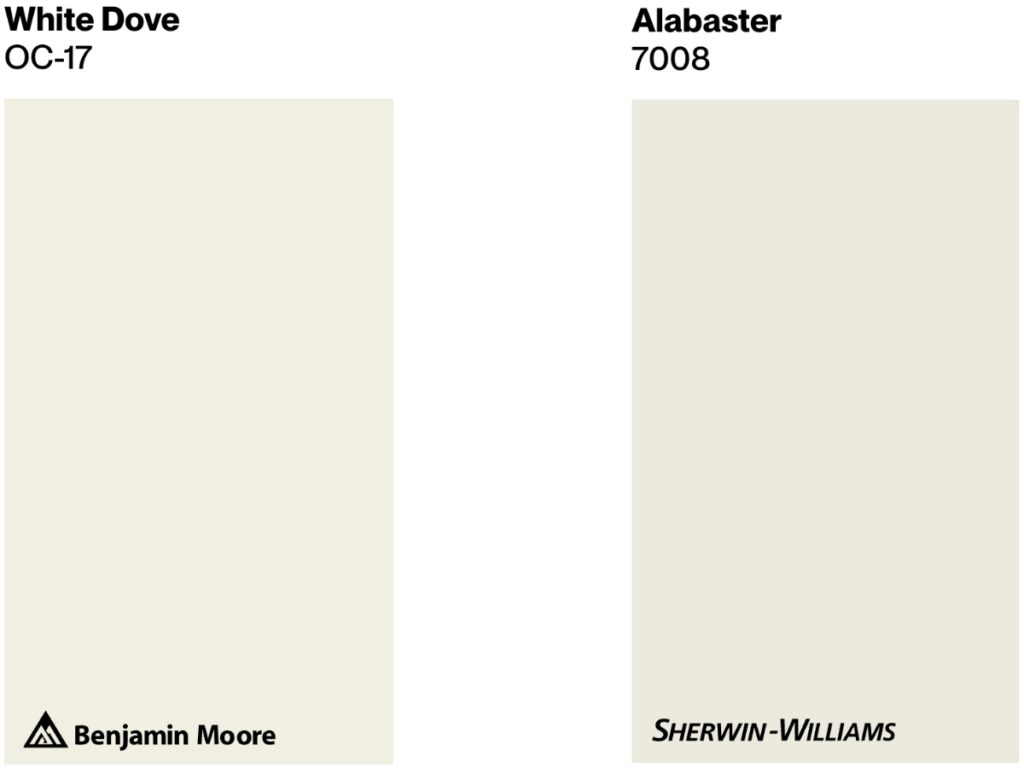
Credit: yourpaintconsultant.com
Color Characteristics
Bm White Dove and Sw Alabaster are both popular warm white paints. White Dove has a soft, creamy look, while Alabaster appears brighter and slightly more neutral. Lighting affects their undertones, with Alabaster sometimes showing a yellowish hue. Choose based on your desired warmth and ambiance.
When choosing the perfect white paint for your home, understanding the color characteristics of Benjamin Moore’s White Dove and Sherwin-Williams’ Alabaster is crucial. These two shades are beloved for their warm, inviting qualities, but they differ subtly in warmth, brightness, and their behavior under varying lighting conditions. Let’s break down these aspects to help you make an informed decision.Warmth And Undertones
Both White Dove and Alabaster are warm whites, but they radiate different vibes.White Dove features soft, creamy undertones, making it feel cozy in any space.On the other hand, Alabaster tends to have a slightly more pronounced warmth, often described as a subtle creaminess.Have you ever noticed how a warm white can change the mood of a room?These undertones can affect how you perceive the space, especially in contrast with other colors.Consider your existing decor and how these undertones complement or clash with your furnishings.Brightness And Light Reflectance
When it comes to brightness, Alabaster generally shines a bit brighter than White Dove.Alabaster’s light reflectance value is higher, which means it can help a small room feel larger and airier.In contrast, White Dove offers a softer glow that can create a more intimate atmosphere.What kind of ambiance are you aiming for in your home?Choosing between these two can depend on whether you want a vibrant, open feel or a cozy, inviting space.Impact Of Lighting Conditions
The impact of lighting on these colors can be quite dramatic.In natural light, White Dove appears soft and delicate, while Alabaster may take on a brighter, more neutral quality.Under artificial lighting, Alabaster can sometimes reveal a yellow undertone, especially in warmer bulbs.Have you tested how these colors look at different times of the day?It’s essential to sample both paints in your space to see how they respond to various lighting conditions.Understanding these nuances will help ensure your chosen color enhances your home’s beauty.Key Differences
Benjamin Moore White Dove and Sherwin-Williams Alabaster are both warm white paints, yet they differ subtly. White Dove appears creamier and softer, while Alabaster leans brighter with a hint of yellow undertone. Choosing between them depends on the desired warmth and brightness for your space.
When choosing the perfect white paint for your home, understanding the key differences between Benjamin Moore’s White Dove and Sherwin-Williams Alabaster is essential. Both colors are popular choices for their warm, inviting tones, but they each bring unique characteristics that can dramatically affect your space. Let’s dive into the specific attributes that set these two whites apart.White Dove’s Subtle Gray Undertones
White Dove is known for its soft, creamy appearance that is enhanced by delicate gray undertones. This subtle hint of gray gives it a sophisticated edge, making it versatile for various design styles, from modern to traditional.You might find that in certain lighting, White Dove creates a calming effect, allowing other colors in the room to stand out.It’s an excellent choice for spaces where you want to achieve a balanced and serene ambiance. Have you ever noticed how the right undertone can change the feel of a room?Alabaster’s Yellow-beige Hues
On the other hand, Alabaster has a warm, yellow-beige quality. This warmer hue can bring a cozy and inviting feel to your space, particularly in areas like living rooms or kitchens.Alabaster’s yellow undertones can become more pronounced in direct sunlight, giving it a unique warmth that some may find appealing.However, if your room tends to receive less light, these hues might appear more muted. Consider how different lighting can change your perception of a color—how does your space feel in the morning versus the evening?How They Compare In Neutrality
Both White Dove and Alabaster are considered neutral whites, but their undertones affect how they interact with other colors. White Dove’s gray undertones allow it to harmonize beautifully with cooler colors, while Alabaster’s warmth pairs well with earthy tones and warm wood finishes.When selecting between the two, think about the overall color scheme of your home.Are you leaning toward a cooler palette, or do you prefer a warmer, more inviting atmosphere? Your choice can significantly impact the cohesion of your interior design.Understanding these key differences will help you make an informed decision that aligns with your vision for your home. Which color resonates more with your style?Best Use Cases
Choosing the right paint color makes a big difference. Benjamin Moore White Dove and Sherwin-Williams Alabaster are both excellent options. Each has unique qualities that suit different spaces. Understanding their best use cases helps in making the right choice.
Choosing For Cabinets And Trim
White Dove shines in kitchens and bathrooms. Its soft, creamy tone complements wood tones well. Alabaster also works nicely for cabinets. It offers a brighter look that feels clean and fresh. Both colors enhance the beauty of trim work. They provide an elegant finish without overwhelming the space.
Highlighting Walls And Ceilings
For walls, Alabaster provides a light and airy feel. It brightens up small rooms and makes them feel larger. White Dove adds warmth to walls, creating a cozy atmosphere. It pairs well with natural light. Use Alabaster on ceilings to achieve a seamless, bright look. White Dove can soften the edges of your decor.
Blending With Different Decor Styles
White Dove fits beautifully in traditional and modern spaces. Its versatility allows for easy mixing with various colors. Alabaster suits contemporary and minimalist designs. It offers a clean backdrop for bold accents. Both colors can adapt to any style. They enhance the overall aesthetic without clashing.

Credit: jacobowensdesigns.com
Common Challenges
Choosing between BM White Dove and SW Alabaster presents challenges. Each color has its unique traits. Knowing these can help in making the right choice. Let’s explore some common issues.
Dealing With Yellowing In Alabaster
Alabaster can develop a yellowish tint over time. This happens due to its natural composition. Impurities in the paint can also cause discoloration. Environmental factors play a role too. Dust and grime can accumulate and lead to yellowing. Regular cleaning can help maintain its true color.
Ensuring True Color Under Various Lighting
Lighting greatly affects how paint colors appear. Alabaster might look bright in natural light. Under fluorescent lights, it can seem cooler. White Dove tends to maintain its softness in different settings. Testing samples in various lights is essential. This ensures the color looks right throughout the day.
Matching With Surrounding Colors
Both colors need careful consideration with other hues. Alabaster’s slightly warmer undertone can clash with cooler colors. White Dove’s creamy finish pairs well with many shades. Use color swatches to see how they blend. Take time to find the best match for your space.
Tips For Decision-making
Choosing between BM White Dove and SW Alabaster can be tricky. Both paints offer warm white tones but differ in subtle ways. White Dove appears creamier, while Alabaster leans brighter with potential yellow undertones. Consider lighting and room style to make the best choice for your space.
Choosing between Benjamin Moore’s White Dove and Sherwin-Williams’ Alabaster can be a challenge, especially when trying to create the perfect ambiance in your home. It’s crucial to make an informed decision. Here are some tips to guide you through the decision-making process.Testing Paint Samples
Always start by testing samples of both paints on your walls. Paint a sizable swatch to see how each color looks in your space.Observe how the colors change throughout the day as the light shifts.You might be surprised by how different they can appear in various lighting conditions.Don’t rush this step; the right shade can transform your room.Considering Space Size And Lighting
Take a close look at the size of your room and the natural light it receives.If your space is small and lacks natural light, White Dove’s soft warmth can create an inviting atmosphere.On the other hand, if you have a larger room with plenty of sunlight, Alabaster’s brightness can open up the space and make it feel airy.Think about how you want to feel in that room. Do you prefer cozy or expansive?Seeking Expert Advice
Don’t hesitate to ask for help from professionals at your local paint store.They can provide insights based on their experience with the products.You may also want to consult with an interior designer, especially if you’re still uncertain after testing.Their perspective can help you visualize the final look, making your decision easier.Remember, the right color is not just about the paint but how it fits into your overall vision for your home. What do you want your space to say about you?Expert And User Opinions
Understanding the opinions of experts and users can clarify the differences between Bm White Dove and Sw Alabaster. Professionals and homeowners provide valuable insights. Their experiences help others make informed choices.
Designers’ Preferences
Many designers favor Bm White Dove for its soft, creamy tone. This shade adds warmth to spaces. It works well in traditional and modern designs. Sw Alabaster is preferred by some for its brighter, more neutral look. Designers appreciate its versatility in various lighting conditions.
White Dove often creates a cozy atmosphere. It pairs beautifully with darker colors. Alabaster, on the other hand, enhances natural light. It can make rooms feel more open and airy.
Feedback From Homeowners
Homeowners have mixed feelings about these colors. Many love the warm feel of White Dove. They find it perfect for living rooms and bedrooms. Others prefer Alabaster for its clean appearance. It suits kitchens and bathrooms well.
Some users mention that Alabaster can appear yellowish in certain lights. This can be a drawback for some. White Dove is praised for its consistent look across different settings.
Online Discussions And Reviews
Online forums show lively discussions about both paints. Users share photos, tips, and experiences. Many agree that White Dove offers a softer touch. It blends seamlessly with various design elements.
Alabaster receives praise for its brightness. Users like how it reflects light. Reviews highlight the importance of testing samples before deciding. The right choice depends on personal style and home lighting.
Popular Comparisons
Choosing between BM White Dove and SW Alabaster can be tough. Both are popular for their warm white tones. Each paint color has unique qualities that appeal to different styles. Understanding these differences helps in making an informed choice.
Let’s explore some key comparisons, including why Joanna Gaines prefers Alabaster.
Why Joanna Gaines Uses Alabaster
Joanna Gaines often uses SW Alabaster in her designs. This paint creates a warm and inviting atmosphere. Alabaster enhances natural light, making spaces feel larger. Its soft, neutral tone complements various decor styles. It works well in both modern and traditional homes.
Joanna appreciates Alabaster’s versatility. It pairs nicely with wood tones and other colors. Homeowners love how it brightens up their spaces. Alabaster’s subtle warmth adds a cozy feel. This is why it remains a favorite among many designers.
Alternatives To White Dove And Alabaster
If you seek alternatives, consider other warm whites. BM Simply White offers a bright, clean option. SW Extra White is another choice for a more crisp look. Both colors can give a fresh feel to any room.
For a softer touch, BM Cloud White works well. It has a gentle warmth that many find appealing. Each of these alternatives provides unique characteristics. They can suit different preferences and design needs.
Insights From Paint Consultants
Paint consultants often share valuable insights on these colors. They highlight the importance of lighting in color choice. Natural light can change how colors appear on walls. For example, Alabaster may look brighter in sunlight.
Consultants also recommend testing samples in your space. What looks good in a store may not suit your home. They suggest painting swatches on walls and observing them at different times. This way, you can see the true colors in various lighting conditions.

Credit: modandmood.com
Frequently Asked Questions
Which Is Better, Alabaster Or White Dove?
Alabaster and White Dove both have unique qualities. Alabaster leans warmer and creamier, while White Dove is softer with subtle gray undertones. Choose Alabaster for a brighter look and White Dove for a more neutral, delicate appearance. Testing samples in your space can help make the best choice.
What Is The Sw Equivalent To Bm White Dove?
The Sherwin-Williams equivalent to Benjamin Moore’s White Dove is Alabaster. Both are warm whites, but Alabaster has a slightly brighter and creamier appearance. Testing samples in your space is essential to see how they look under different lighting conditions.
Why Does Alabaster Turn Yellow?
Alabaster turns yellow due to its natural mineral composition, which may contain impurities like iron. Environmental factors, such as dust and pollutants, can also contribute to discoloration. Additionally, certain cleaning products and coatings may oxidize over time, leading to a yellowish hue.
Proper care can help maintain its color.
Does Joanna Gaines Use Alabaster White?
Yes, Joanna Gaines often uses Alabaster white in her design projects. This warm white color is favored for its versatility and soft elegance, making it a popular choice in many of her home transformations.
Conclusion
Choosing between BM White Dove and SW Alabaster can be tricky. Each color has its unique qualities. White Dove offers a soft, creamy feel. Alabaster shines with a brighter, warmer tone. Consider your space and lighting carefully. Think about the mood you want to create.
Both colors work well in various settings. Test samples on your walls for the best results. Ultimately, your choice should reflect your style and preferences. Happy painting!